
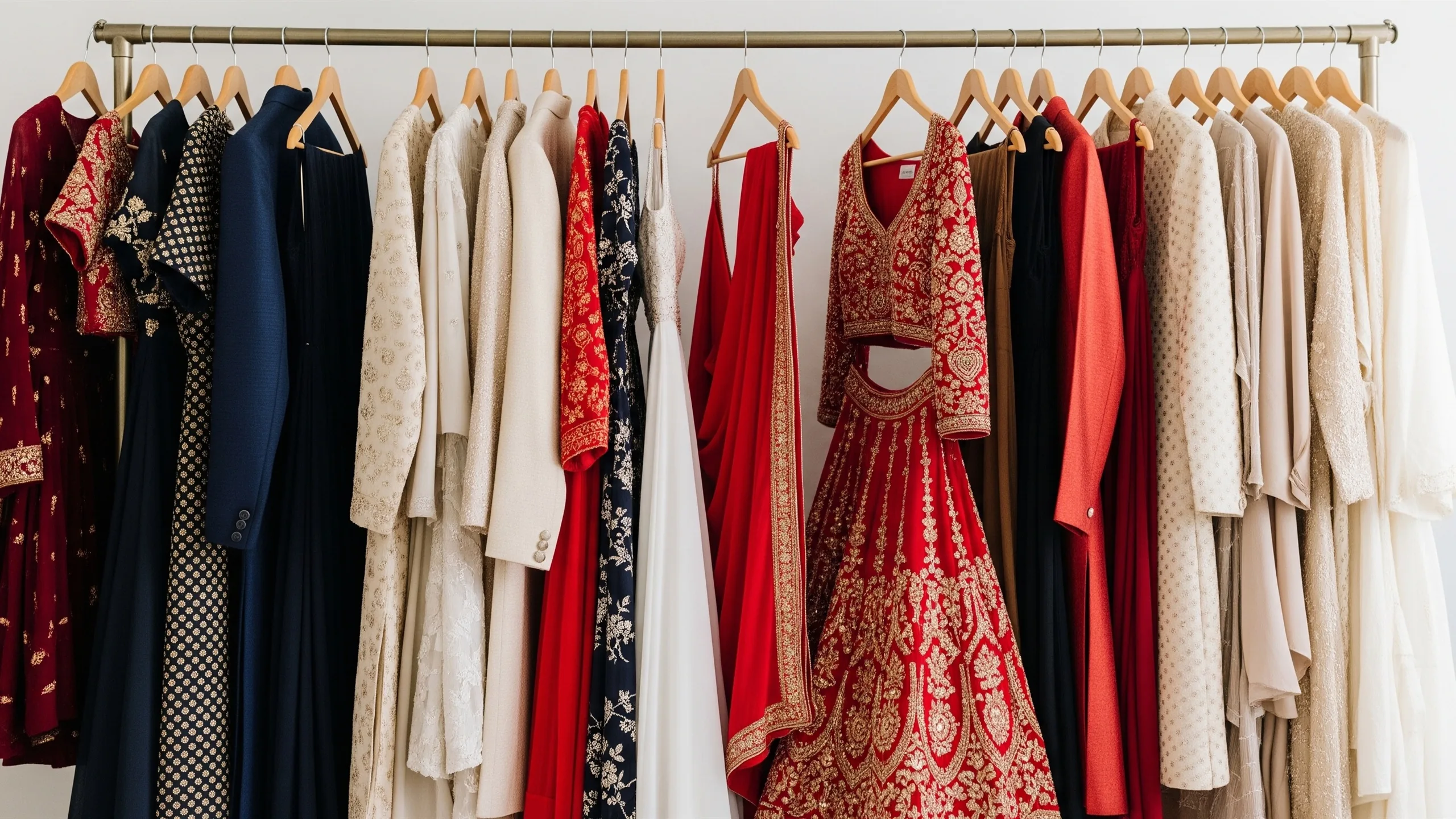
For guests: haldi means yellow and washable; mehndi means bright, comfortable festive wear; sangeet is the glam night (lehengas, shararas, bandhgalas, kurta-pajama with a jacket); the wedding ceremony calls for traditional wear in rich tones — avoiding red if the bride will wear it and avoiding all-white or all-black at Hindu ceremonies; receptions accept everything from sarees to gowns to suits. At gurdwaras and mosques, cover head/shoulders/knees.
The decisions that matter most
- 01
Dress for the event, venue and physical experience—not only the formality label.
- 02
Religious venues may require head, shoulder or knee coverage and shoe removal.
- 03
When in doubt, ask the couple rather than relying on universal color rules.
Use the planning tool, adapt the framework to your family, and verify current prices or policies before committing.
Event-by-event dress explorer
Washable yellow, orange or light festive cotton
Delicate fabric and dry-clean-only shoes
Bright comfortable separates with accessible sleeves
Restrictive fits for floor seating
Glamorous festive wear and danceable footwear
Anything too heavy to move in
Traditional festive clothing suited to the venue
Competing with stated bridal colors
Saree, lehenga, gown, bandhgala or suit
Ignoring the stated level of formality
Event-by-event for guests
| Event | Wear | Avoid |
|---|---|---|
| Haldi | Yellow/orange, washable cotton | Anything you love — turmeric stains |
| Mehndi | Bright festive, comfy for floor seating | Tight sleeves (henna access!) |
| Sangeet | Your glam best — sequins welcome | Stilettos if it's a lawn |
| Hindu ceremony | Traditional, jewel tones | Bridal red, all-white/all-black (mourning associations), upstaging-the-bride sparkle |
| Nikah | Modest festive — shoulders/knees covered; women may want a dupatta | Sheer or revealing cuts |
| Anand Karaj | Modest + head covering (mandatory, all genders) | Shorts, sleeveless; alcohol anywhere near the gurdwara |
| Christian ceremony | Smart formal, shoulders covered in church | Casual wear |
| Reception | Saree/lehenga/gown/suit — widest latitude | Jeans, unless explicitly casual |
Make it effortless for your guests with our what to gift at an Indian wedding, guest list management tips, bridal lehenga colour combinations, and groom wedding outfit guide.
For guests new to Indian weddings
You don't need to own Indian wear — tasteful formal in festive colors is always acceptable, and saying so on the couple's wedding website removes the anxiety. Renting is easy in every metro (a lehenga or sherwani rents for ₹2,000–6,000); many couples link a rental service on their site for international guests.
For couples: how to communicate dress codes
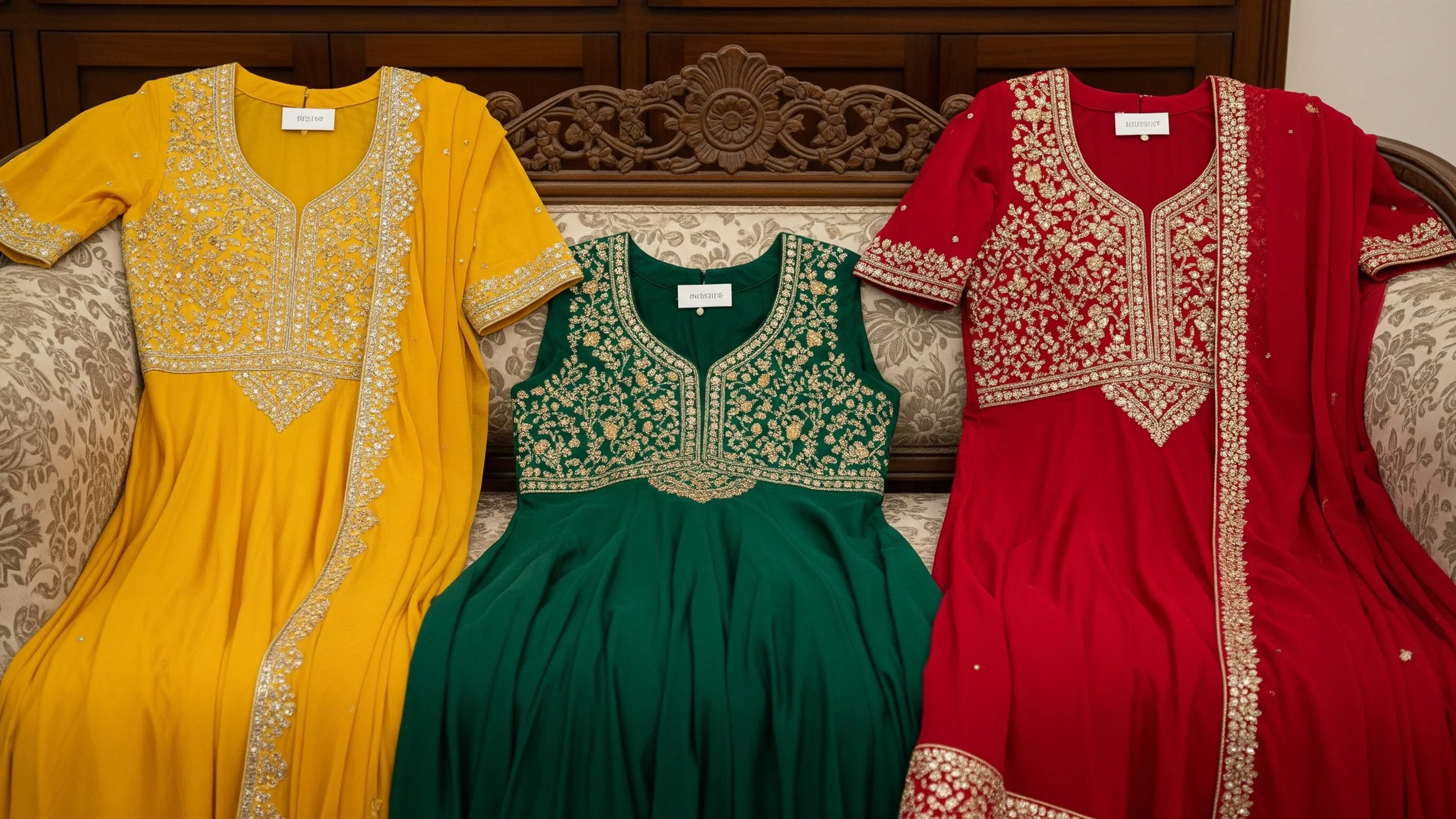
One line per event card on your wedding website, with a color cue and one example: "Sangeet — festive glam; think bright lehengas, bandhgalas, sharara sets." Photos of reference outfits answer more questions than paragraphs. If you have theme colors, say whether they're for decor or for guests to wear.
FAQ
Can guests wear black to an Indian wedding?
At sangeets and receptions, increasingly yes. At Hindu and Sikh ceremonies, traditional families still avoid it — when in doubt, add color.
Can guests wear red?
Accent red is fine; head-to-toe bridal red at a Hindu wedding is the one universal no.
What should men wear if they don't own a sherwani?
Kurta-pajama with a Nehru jacket covers every event respectably, rents everywhere, and photographs well.
Dress for sitting, walking and weather
A gurdwara ceremony may involve floor seating; a farmhouse may require walking on grass; a summer baraat may mean heat and dust. The most respectful outfit is one you can wear without becoming distracted or needing constant assistance.
Carry a light scarf or stole when attending an unfamiliar religious venue. It can solve head, shoulder or temperature needs without changing the entire outfit.
Write dress codes that guests can act on
Festive does not mean the same thing to every guest. Add one visual direction and one practical note: “colorful Indian festive; the ceremony is outdoors on grass” is more useful than “ethnic chic.”
Put the dress code on each event card, not on one general FAQ. Different functions have different physical and cultural requirements.
Scope, assumptions and editorial standard
Dress practices vary by family, region and place of worship. The couple's event-specific instructions always take priority.
Make every detail feel considered.
Invitation, RSVP, gallery and dashboard included. Fully hosted and shareable on WhatsApp.
& Vihaan 12 · 13 · 14 December