
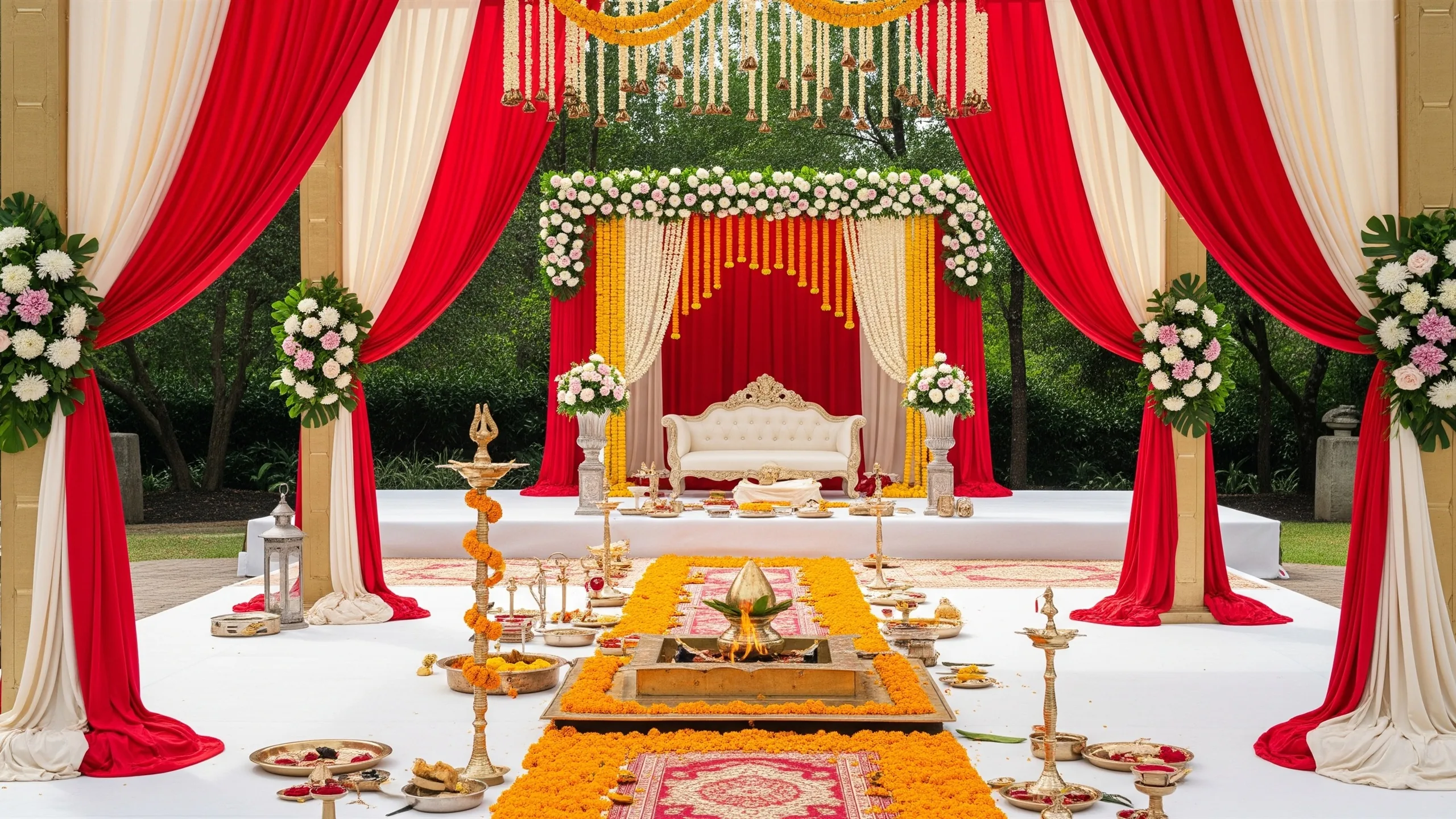
If you're attending your first Indian wedding: the pre-wedding events (haldi, mehndi, sangeet) are informal celebrations you can relax at; the main ceremony — Hindu pheras around a fire, Muslim Nikah contract, Sikh laavan around the Guru Granth Sahib, or Christian church service — is the sacred core where you observe respectfully; and the reception is the party. Indian ceremonies are famously welcoming: arriving, eating, leaving, and chatting during long Hindu ceremonies are all normal.
The decisions that matter most
- 01
The sacred ceremony is only one part of a multi-event Indian wedding.
- 02
Observe the place of worship and the couple's family guidance rather than assuming one universal custom.
- 03
Ritual context helps guests participate with confidence instead of watching from a distance.
Use the planning tool, adapt the framework to your family, and verify current prices or policies before committing.
Ritual explorer
Blessing with turmeric paste
Joyful, informal and often messy
Henna, music and family gathering
Arrive within the stated window
Sacred fire, vows and regional rites
Follow cues around the mandap
Islamic marriage contract
Modest dress and attentive observation
Four laavan before the Guru Granth Sahib
Cover head and remove shoes
Christian marriage liturgy
Respect the church's photography and movement rules
Pre-wedding events (all traditions, broadly)
- Haldi: turmeric paste applied to the couple for blessing and glow. Loud, yellow, joyful. Family-heavy.
- Mehndi: henna for the bride and guests; music and snacks. Come anytime in the window.
- Sangeet: the performance-and-dance night. The most fun you'll have at any wedding of any culture.
Before any of these, many families begin with the roka and engagement ceremony — the first formal step in most Indian weddings.
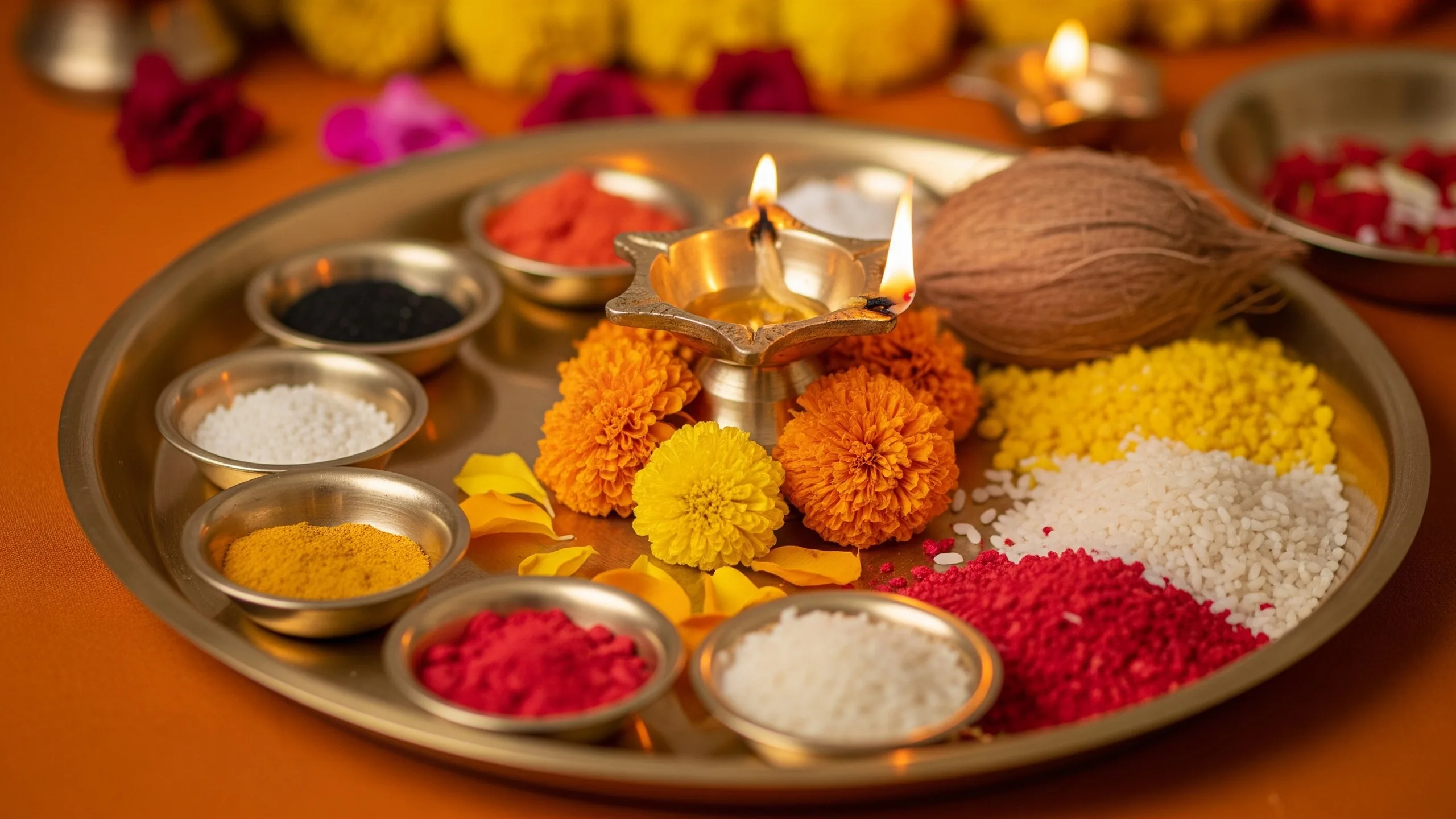
Understand the surrounding ceremonies with our South Indian wedding rituals, haldi ceremony guide, vidaai ceremony guide, and griha pravesh and post-wedding rituals.
The main ceremonies at a glance
| Tradition | Core moment | Length | Your job as a guest |
|---|---|---|---|
| Hindu | Saat phere — 7 circles of the sacred fire | 2–4 hrs | Observe; mingling/eating during is normal |
| Muslim | Nikah — consent ("qubool hai" ×3) + contract signing | 30–60 min | Sit quietly; join the dua if you wish |
| Sikh | Four laavan — circling the Guru Granth Sahib | 1–2 hrs | Head covered, shoes off, sit on floor, silence phones |
| Christian | Vows + rings in church | 45–90 min | Standard church etiquette |
The Hindu ceremony, decoded
the groom's dancing procession arrives; join the dancing, seriously. Milni — families exchange garlands and hugs. Jaimala — the couple exchange flower garlands, often with playful lifting. Kanyadaan — the bride's parents give her hand; the tearjerker. Pheras — seven circuits of the fire, each a vow; after the seventh, they're married. Sindoor & mangalsutra — vermilion and the sacred necklace. Vidaai — the bride's farewell; everyone cries, including you.
Universal guest rules
- Cash in an envelope (amount ending in 1) is the standard gift — see our gifting guide.
- Dress code varies by event — see our dress code guide; when in doubt, festive and modest.
- Long Hindu ceremonies are not sit-in-silence affairs — but the pheras themselves deserve your attention.
- At gurdwaras and mosques: covered head (gurdwara), modest dress, shoes off, no alcohol.
- Eat. Refusing food at an Indian wedding is the only real faux pas.
FAQ
Can I take photos during the ceremony?
Pre-wedding events: freely. Main ceremonies: follow the room — and never block the hired photographer's line to the mandap/altar.
What if I'm invited to only the reception?
Completely normal — Indian weddings tier invitations by event. Reception-only is a full invitation, not a slight.
How do I keep track of what's happening when?
The couple's wedding website — Indian couples increasingly include ritual explainers and per-event schedules exactly for guests like you.
When it is fine to move—and when it is better to pause
Long celebrations often include natural movement, conversation and food service. During the central vows, laavan, Nikah recitation, Eucharistic moments or other sacred portions, minimize movement and follow the family's cues.
If you are unsure whether photography is allowed, keep your phone away. Professional teams may have specific positions that protect the ceremony and the couple's images.
Explain meaning, not every historical detail
Guests need a one- or two-sentence explanation of what is happening, why it matters and what they should do. A dense theological essay is less useful in the moment.
Put explainers next to the relevant event on your wedding website. Context is easier to absorb when it appears beside timing, venue and dress guidance.
Scope, assumptions and editorial standard
This is a cross-tradition overview. Ritual names and sequences differ by region, denomination, community and family; the couple's own explanation is the authoritative guide for their wedding.
Make every detail feel considered.
Invitation, RSVP, gallery and dashboard included. Fully hosted and shareable on WhatsApp.
& Vihaan 12 · 13 · 14 December