
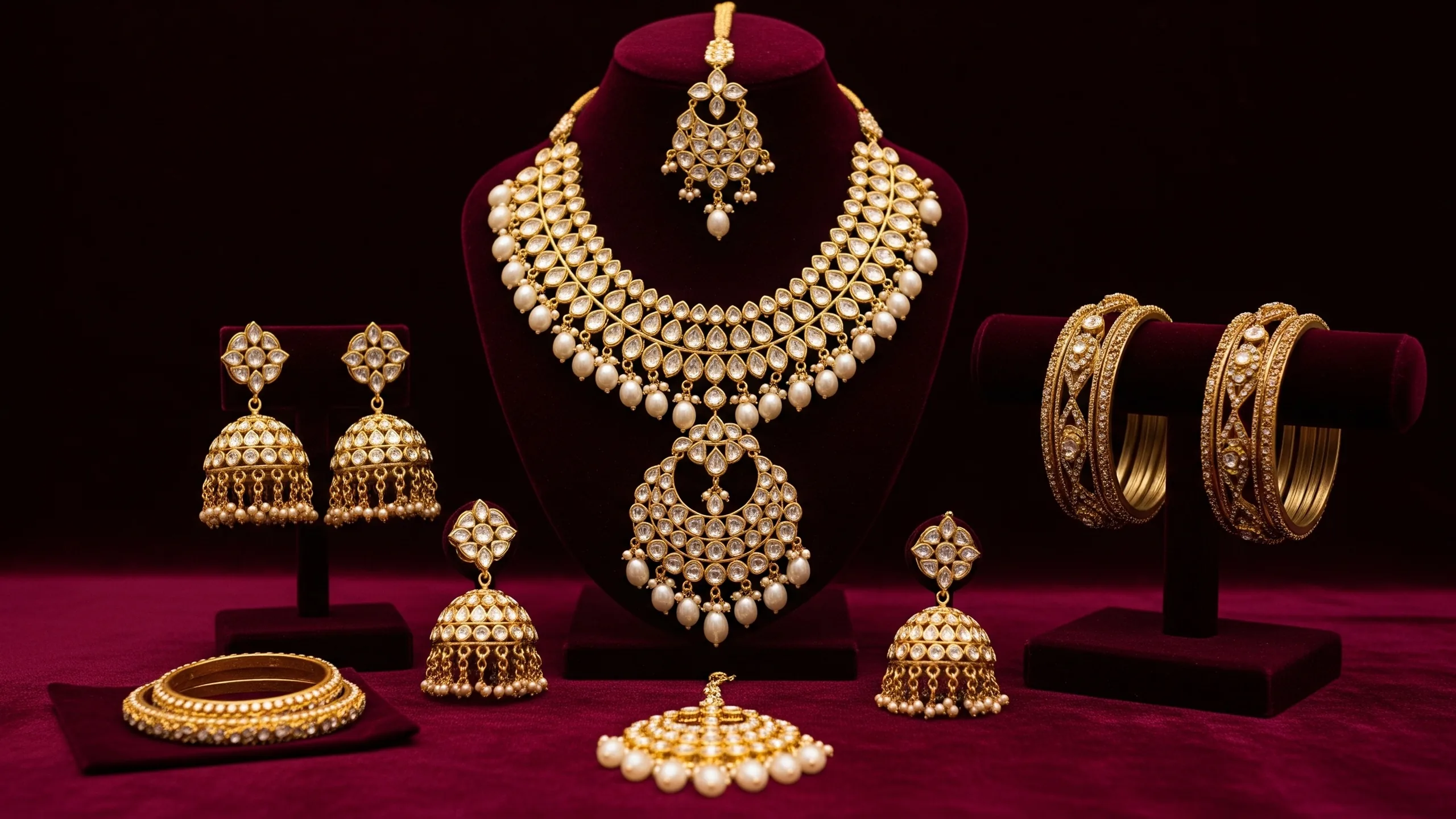
Bridal jewellery splits into a few families: polki (uncut diamonds), kundan (glass-set stones), diamond, temple (South Indian gold), and meenakari (enamel). Buy reusable pieces (diamond studs, a versatile necklace) and rent heavy one-time bridal sets. Always insist on hallmarking and a clear buyback/exchange policy, and match the jewellery's weight and style to each outfit.
The decisions that matter most
- 01
Know the families — polki, kundan, diamond, temple, meenakari — before you shop.
- 02
Buy reusable (diamonds, versatile gold); rent heavy one-time bridal sets.
- 03
Insist on BIS hallmarking and a written buyback/exchange policy.
- 04
Match jewellery weight and style to each outfit and event.
- 05
Insure and store valuable pieces; plan who carries them on the day.
Use the planning tool, adapt the framework to your family, and verify current prices or policies before committing.
Bridal jewellery families explained
What each style is, and when it shines. Tap to compare.
Uncut diamonds set in gold
Regal and heirloom-grade; pairs with heavy lehengas. The priciest traditional choice.
Glass-set stones, Rajasthani craft
Ornate and colourful, lighter on the pocket than polki; beautiful with rich outfits.
Brilliant-cut, certified
The most reusable — engagement, reception, and daily wear. Always ask for certification.
Gold deity motifs, South Indian
Classical and deeply traditional; perfect with silk sarees and Kanjeevarams.
Colourful enamel, often reversible
Versatile and matchable to multiple outfits; great value and colour.
Learn the language before you walk in
Showrooms move fast and prices are opaque. Knowing the jewellery families means you ask the right questions instead of being talked into the most expensive tray.
| Style | What it is | Relative cost |
|---|---|---|
| Polki | Uncut natural diamonds in gold | Highest |
| Kundan | Refined glass/stones set in gold foil | High |
| Diamond | Certified brilliant-cut diamonds | High, reusable |
| Temple | Gold with deity/temple motifs | Varies with gold weight |
| Meenakari | Enamel work, often reversible | Moderate |
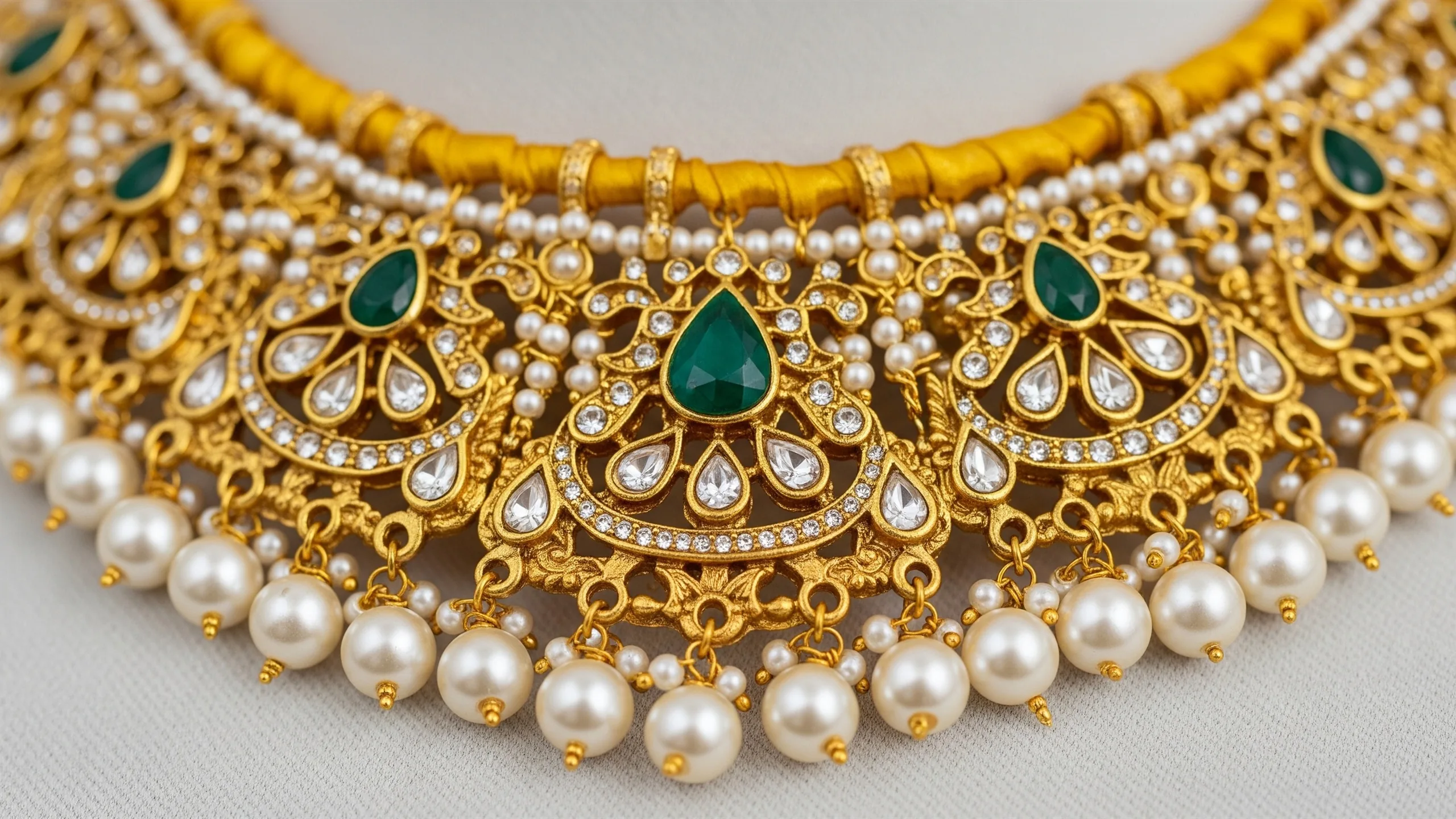
Finish the jewellery edit with our mangalsutra and polki jewellery designs, engagement ring buying guide, and Indian bridal hairstyle ideas.
Buy vs rent: the smartest split
Not every piece deserves to be bought. The luxury move is buying what you will re-wear and renting what you will not.
diamond studs, a versatile necklace, daily-wear gold, anything sentimental or that holds value.
the heavy bridal choker, matha patti, and full polki/kundan sets you will wear once. Rental typically costs 10–20% of retail plus a deposit.
*Tip — Imitation and high-quality CZ jewellery photographs beautifully for sangeet and mehndi. Save real stones for the ceremony and reception.
What to wear for each event
- Haldi/Mehndi: light florals, gota, or fun imitation — nothing precious near turmeric and henna.
- Sangeet: statement but mobile; a bold neckpiece with light earrings.
- Wedding: the heaviest, most traditional set — choker, matha patti, nath, bangles.
- Reception: diamonds or a sleek polki piece; modern and photogenic.
Balance the look: a heavy necklace pairs with smaller earrings; statement earrings pair with a lighter neck.
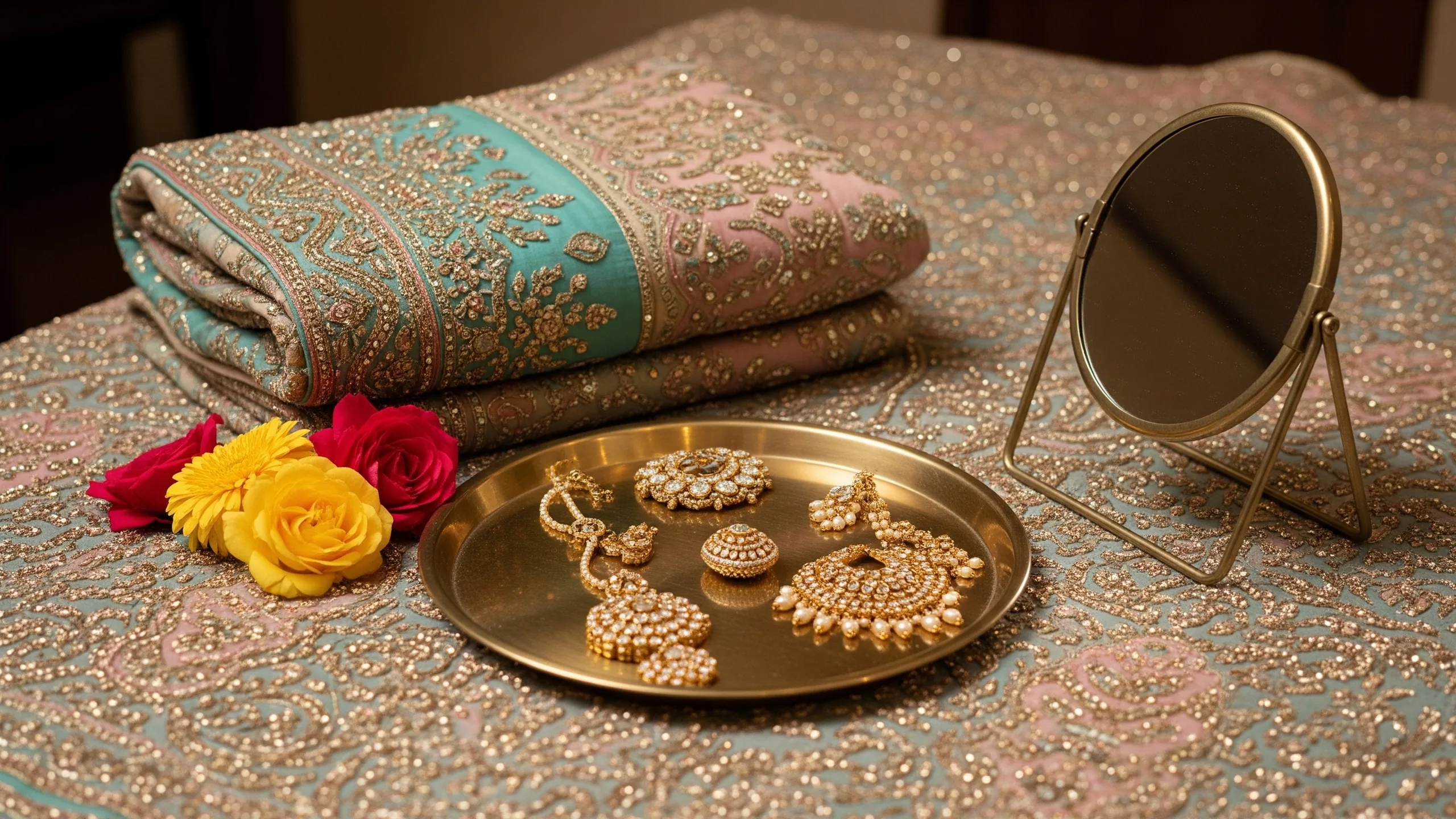
Buying checklist: protect your money
- BIS hallmark on all gold; ask for the HUID number.
- For diamonds, a certificate (IGI/GIA) for solitaires.
- Clear making charges — they vary hugely and are negotiable.
- A written buyback/exchange policy and the deduction percentage.
- A detailed invoice with gold weight, purity, and stone details.
!Making charges and "wastage" are where bills inflate quietly. Ask for them itemised and negotiate before agreeing.
Care, insurance, and the day-of plan
- Insure high-value sets, especially if rented (you are liable).
- Store in a locker or safe; never leave jewellery in hotel rooms.
- Assign one trusted person to carry and guard pieces on the day.
- Keep a photo inventory of every item for security and insurance.
- Return rentals on time to avoid penalties.
FAQ
What is the difference between polki and kundan?
Polki uses uncut natural diamonds set in gold and is the more expensive, heirloom-grade choice. Kundan uses refined glass or stones set in gold foil — ornate and colourful but lighter on the pocket.
Should I buy or rent bridal jewellery?
Buy reusable pieces like diamond studs and a versatile necklace; rent heavy one-time bridal sets, which usually cost 10–20% of retail plus a deposit.
How do I make sure gold jewellery is genuine?
Insist on the BIS hallmark and HUID number, ask for diamond certification (IGI/GIA) on solitaires, and get an itemised invoice with gold weight, purity, and making charges.
What jewellery should the bride wear for the wedding ceremony?
The heaviest traditional set — typically a choker, matha patti, nath, and bangles — coordinated so a heavy necklace is balanced by smaller earrings.
Is imitation jewellery okay for a wedding?
Yes, especially for haldi, mehndi, and sangeet. High-quality imitation and CZ photographs well; save real stones for the ceremony and reception.
Tell one cohesive style story
Jewellery, outfit, decor, and stationery either feel like one story or like separate shopping trips. The couples whose weddings look effortlessly elegant simply kept a single style thread across everything.
Your wedding website is where that thread starts for every guest. A template chosen in your palette, with your pre-wedding images, makes the jewellery and outfits feel like the climax of a story guests have already begun to follow.
- Keep a single palette across jewellery, outfit, decor, and website.
- Photograph your jewellery for both insurance and your gallery.
- Coordinate metals (gold vs silver) with the groom's accessories.
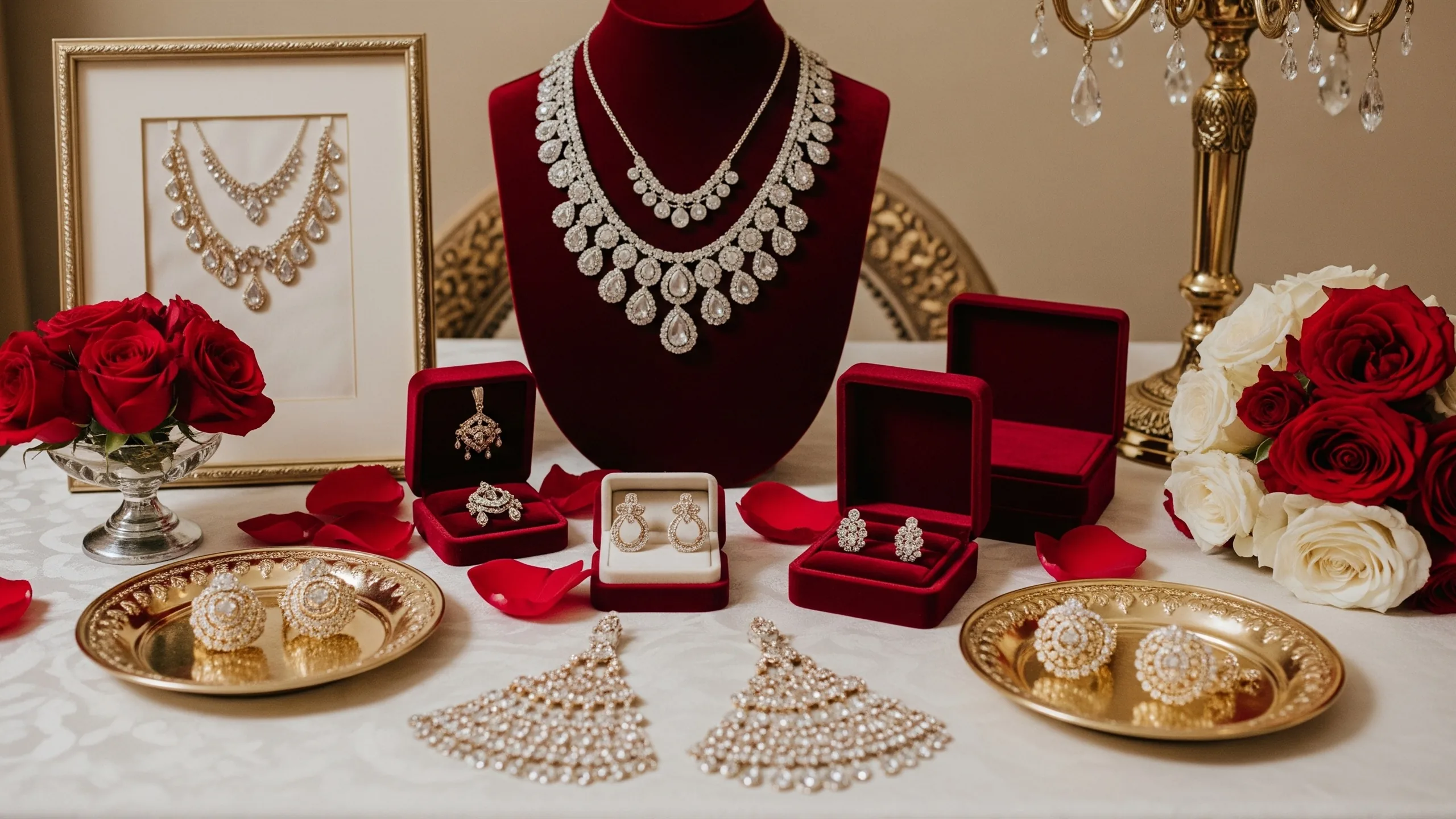
Scope, assumptions and editorial standard
Jewellery descriptions and buy-vs-rent guidance are editorial planning information, not investment or valuation advice. Prices depend on live gold rates, stone quality, and making charges. Always verify hallmarking, certification, making charges, and buyback terms in writing before purchase.
Make every detail feel considered.
Coordinate your jewellery and outfit story across your whole wedding website.
& Vihaan 12 · 13 · 14 December