
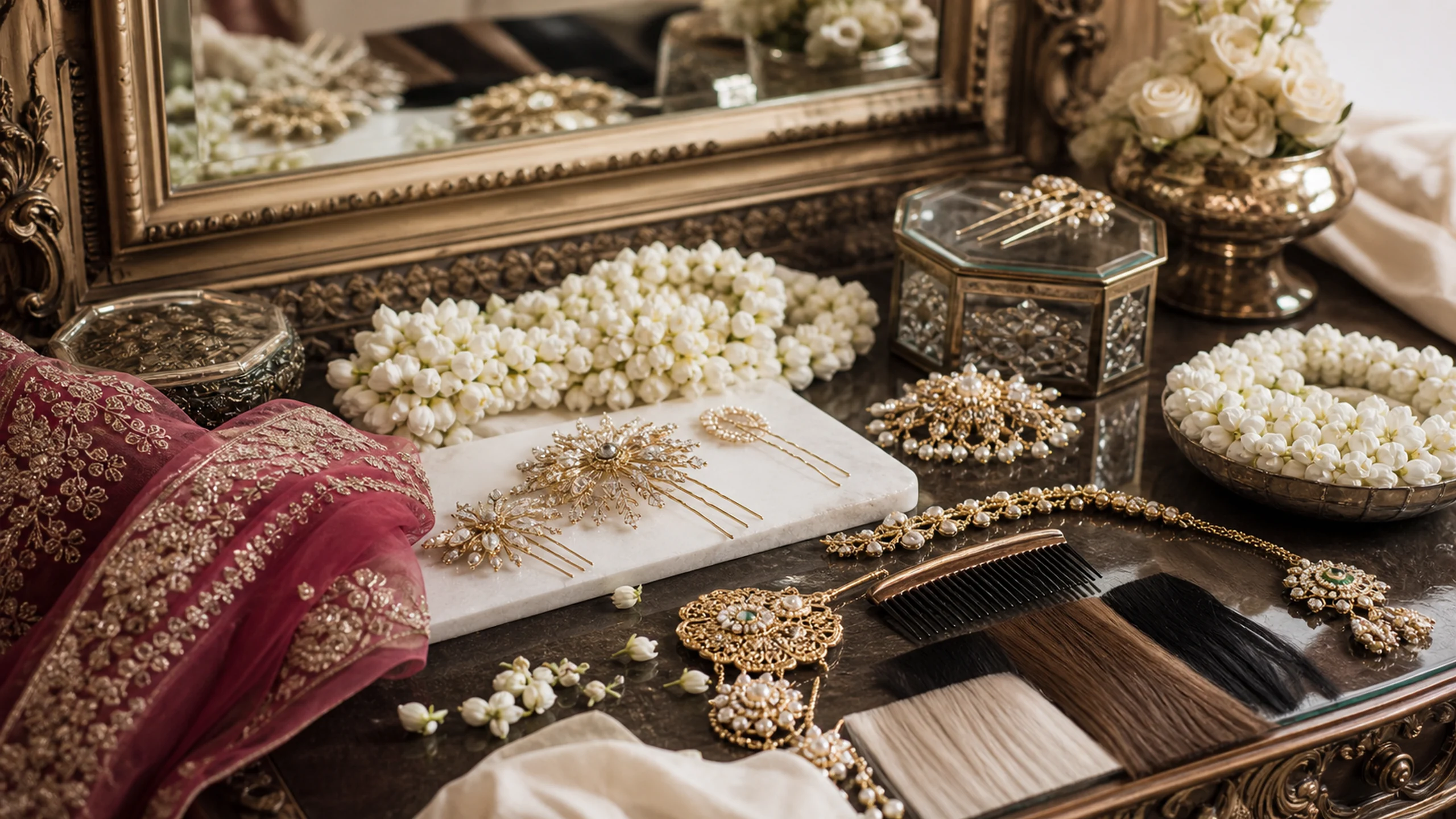
Pick bridal hair by outfit and logistics, not only Pinterest. Heavy dupatta and matha patti usually need a secure bun. South Indian or temple jewellery looks beautiful with a long braid or gajra. Sangeet can handle waves or a half-up style, while the wedding ceremony needs comfort, pins that last, and a hair trial with the actual jewellery.
The decisions that matter most
- 01
Choose the wedding-day hairstyle after finalizing dupatta drape and jewellery.
- 02
Use secure buns for heavy veils, matha patti and long ceremonies.
- 03
Save open hair for sangeet, cocktail or reception unless weather is controlled.
- 04
Carry extra pins, mini hairspray, comb, serum and backup flowers.
- 05
Book a hair trial with the actual extensions, jewellery and dupatta weight.
Use the planning tool, adapt the framework to your family, and verify current prices, legal requirements or vendor policies before committing.
Bridal hairstyle matchmaker
Match the look to the event instead of forcing one style everywhere.
| Situation | Best choice | Why it works |
|---|---|---|
| Haldi | Loose braid, simple bun or floral clip | Easy to clean, low risk, comfortable. |
| Mehndi | Braid, half-up waves or floral bun | Hands are busy; hair should stay out of the face. |
| Sangeet | Soft waves, ponytail or glam half-up | Movement and performance matter. |
| Wedding | Low bun, juda or traditional braid | Supports jewellery, veil and long rituals. |
| Reception | Polished bun, Hollywood waves or sleek ponytail | More glamour, fewer ritual constraints. |
Start with the outfit, not the hairstyle
The same hairstyle can look perfect or completely wrong depending on the blouse neckline, dupatta setting, jewellery weight and event length. A heavy bridal dupatta pinned over the head needs structure. A sangeet outfit needs movement. A South Indian silk saree with temple jewellery asks for a different balance than a reception gown.
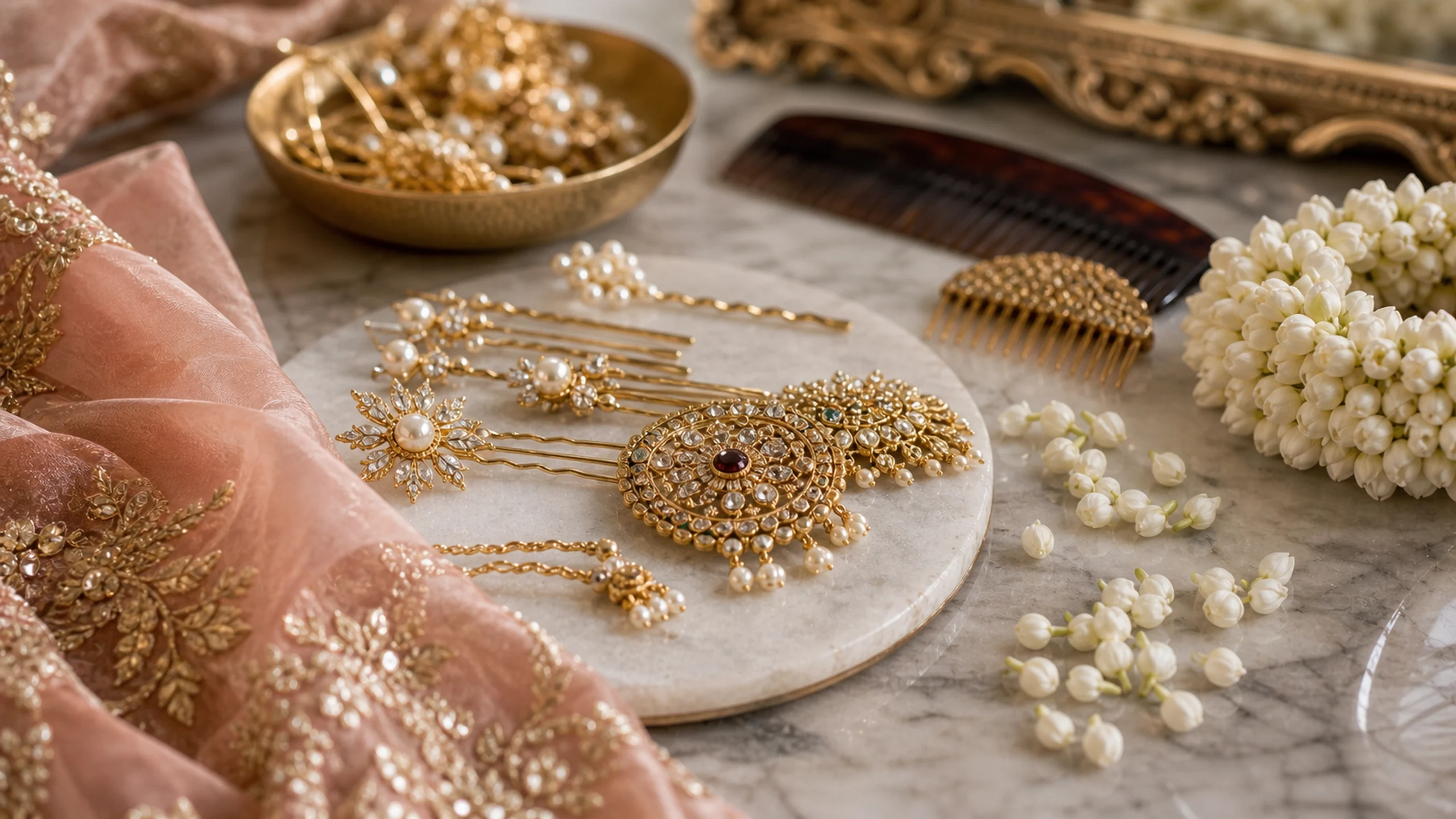
Complete the bridal look with our gajra bridal hairstyles and bridal lehenga shopping guide.
The main bridal hairstyle families
- Low bun or juda: secure, elegant and ideal for veils, matha patti and heavy jewellery.
- Traditional braid: beautiful with silk sarees, temple jewellery, paranda or floral extensions.
- Open waves: glamorous for cocktail, sangeet and reception, but needs weather control.
- Half-up style: softer than a bun while still holding the crown and front pieces.
- Sleek ponytail: modern, polished and strong for reception or after-party looks.
Wedding-day hair must survive the ceremony
The wedding ceremony is not the time for a delicate hairstyle that works only for photographs. You may sit, stand, bend, walk, receive blessings, adjust jewellery and wear a dupatta for hours. Secure pins, weight distribution and comfort matter more than a trendy reference photo.
If the dupatta is heavy, test the pins during the trial. Five minutes in front of a mirror is not enough.
Gajra, flowers and fresh details
Fresh flowers can transform a simple bun or braid. Mogra and jasmine gajra feel classic, roses feel romantic, baby's breath feels light and modern, and orchids can work for reception styling. Ask the artist how the flowers will be attached and whether they will wilt in heat.
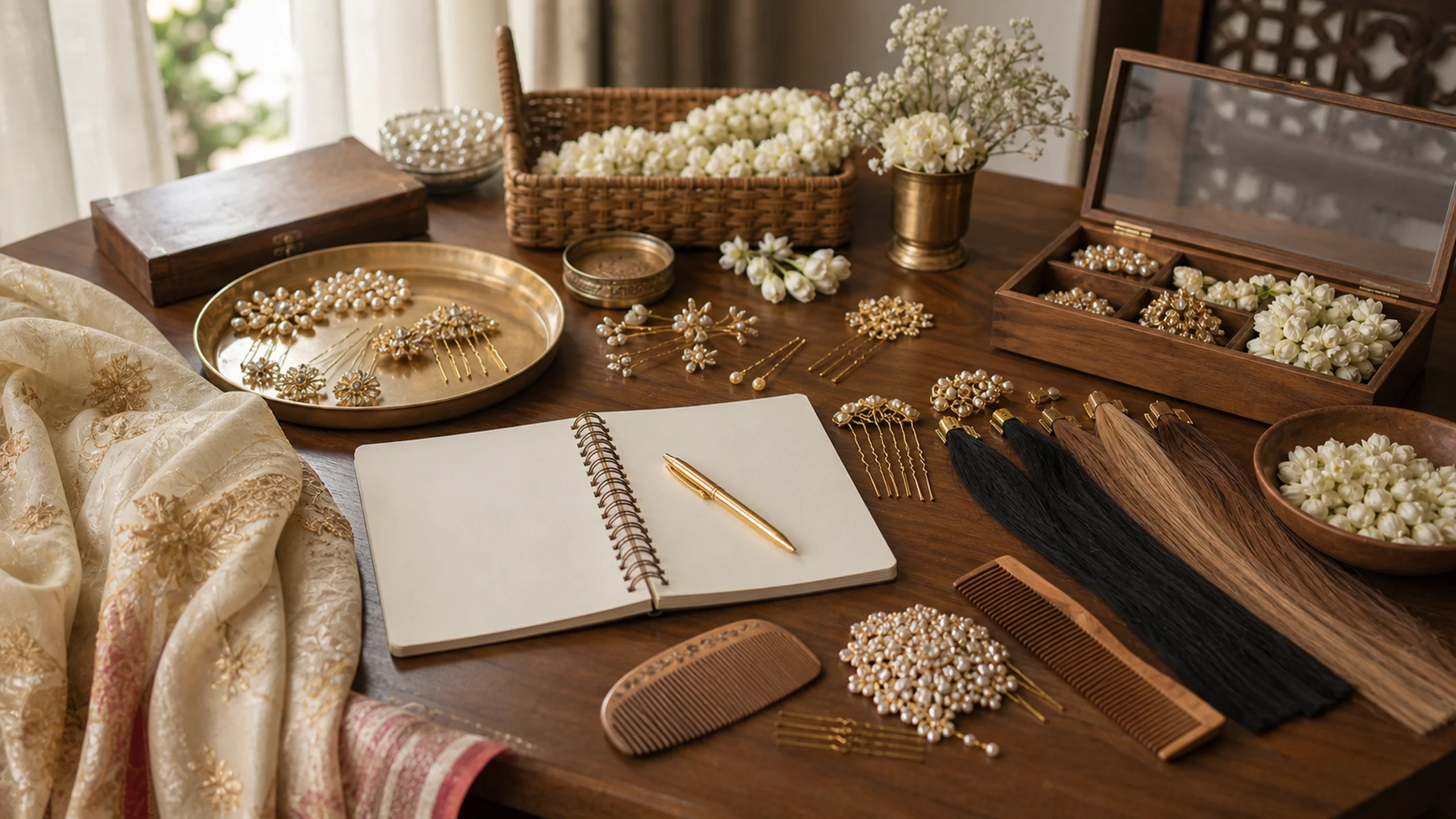
Trial-day checklist
- Bring your actual jewellery, or pieces with the same weight.
- Bring the dupatta or a similar fabric weight.
- Test hair extensions if you plan to use them.
- Photograph the style from front, side, back and seated angles.
- Wear it for at least an hour before deciding.
Hair kit for the wedding week
- Extra bobby pins and U-pins matching hair colour.
- Mini hairspray, serum and a small comb.
- Blotting paper or tissues for the hairline.
- Backup flowers or pins if using fresh gajra.
- A labelled pouch for each event so nothing moves between bags.
What to brief your hairstylist before the day
A hairstylist can only build the right structure if they know the full look. Share outfit photos, blouse neckline, dupatta drape, jewellery weight, event timing, venue weather and whether you will dance or sit through a long ceremony. This is especially important when the same artist is handling multiple functions quickly.
- Send reference images, but mark which part you like: volume, parting, bun height or flowers.
- Confirm whether extensions are included or charged separately.
- Ask how long the style takes, including prep and pinning the dupatta.
- Nominate one bridesmaid or sibling who knows how the dupatta should sit in photos.
FAQ
Which hairstyle is best for an Indian bride?
A low bun or juda is the safest wedding-day choice because it supports jewellery and dupatta weight. The best style still depends on outfit, face shape and event length.
Can Indian brides keep hair open?
Yes, especially for sangeet, cocktail or reception. For the main ceremony, open hair needs weather control and careful planning around dupatta and jewellery.
Should I use hair extensions?
Use them if you need volume or length for a braid, bun or waves, but test them during the trial so the weight and colour match are right.
When should I do my bridal hair trial?
Ideally 4-8 weeks before the wedding, once the outfit, jewellery and dupatta style are mostly final.
Scope, assumptions and editorial standard
This guide is written for Indian couples and families planning multi-event weddings. It combines practical planning patterns, cultural nuance and current product use cases. Legal and ritual guidance is general; verify exact requirements with the relevant authority, priest, family elders or vendors.
Make every detail feel considered.
Give guests one polished place for the invitation, RSVP, schedule, maps and updates.
& Vihaan 12 · 13 · 14 December