
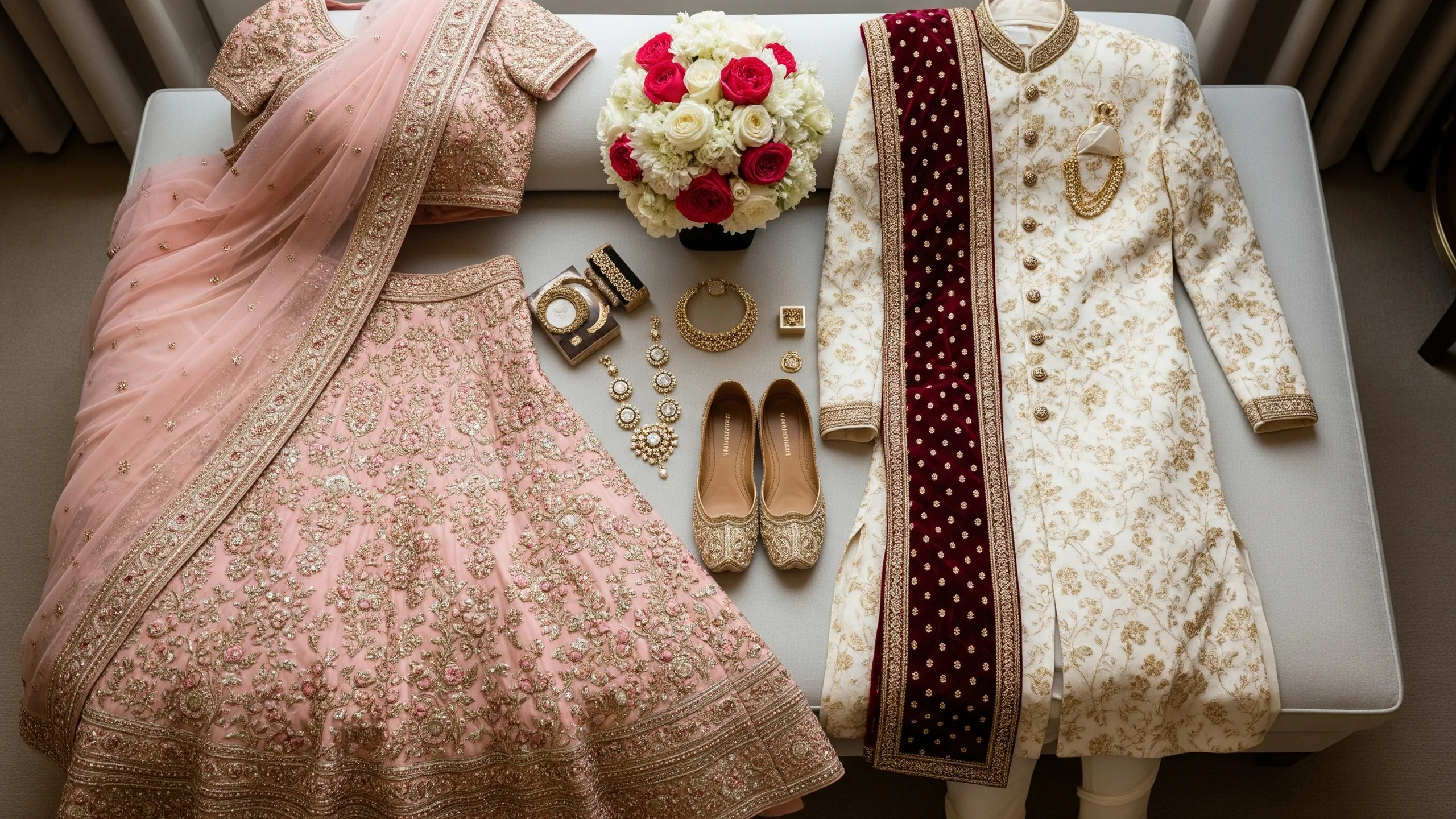
Build your wedding day timeline backwards from the ceremony's fixed muhurat time, and pad everything with buffers — hair and makeup almost always run long. Allow 3–4 hours for bridal hair and makeup, protect a window for portraits before the ceremony, and never schedule back-to-back with no slack. Share a simple guest-facing version publicly, and keep the detailed minute-by-minute run-sheet for your coordinator and vendors.
The decisions that matter most
- 01
Work backwards from the fixed muhurat/ceremony time — that anchor sets everything.
- 02
Allow 3–4 hours for bridal hair and makeup — it is the most underestimated block.
- 03
Pad every segment with buffer — back-to-back timelines collapse on the day.
- 04
Protect a portrait window before the ceremony so photos aren't rushed.
- 05
Keep a detailed run-sheet for vendors and a simple version for guests.
Use the planning tool, adapt the framework to your family, and verify current prices or policies before committing.
A sample wedding-day run-sheet
A typical shape for an evening ceremony. Shift the clock to your muhurat and add buffers.
Hair & makeup begins for the bride (allow 3–4 hours) · groom gets ready in parallel
Light lunch · bride into outfit and jewellery · detail shots of attire
First look or couple portraits · family groupings while everyone is fresh
Buffer + travel to venue · final touch-ups · breathe
Baraat / guest arrival · the ceremony at the muhurat time
Post-ceremony rituals · reception entry · dinner and dancing
Last dances · vidaai · send-off
Start from the one fixed point
Every wedding day timeline has one immovable anchor: the ceremony time, often set by the muhurat. Build everything else backwards from it. If the pheras are at 8pm, work back through travel, portraits, dressing and makeup to find when hair and makeup must actually begin — and you will usually be surprised how early that is.
*Tip — Write the fixed points first (ceremony, any other muhurat-bound rituals), then fill the gaps backwards. Planning forwards from the morning is how couples run late.

Keep the planning on track with our 12-month wedding planning timeline, wedding photography shot list, and bride and groom entry ideas.
The blocks that always run long
A few segments are chronically underestimated. Pad these generously.
| Block | Realistic time | Why it overruns |
|---|---|---|
| Bridal hair & makeup | 3–4 hours | Detail, draping, touch-ups, photos |
| Getting into the outfit | 30–45 min | Jewellery, draping, pinning |
| Family groupings | 30–45 min | Gathering relatives takes longer than shooting |
| Travel between venues | Add 50% | Traffic, parking, late starts |
Build in buffers — the golden rule
A timeline with no slack is a timeline that fails. The first delay cascades through everything after it.
- Add 15–30 minutes of buffer after every major block.
- Never schedule back-to-back — one late vendor should not derail the day.
- Build a real break for the couple to eat and breathe before the ceremony.
- Assume the day starts a little late and plan so it still works.
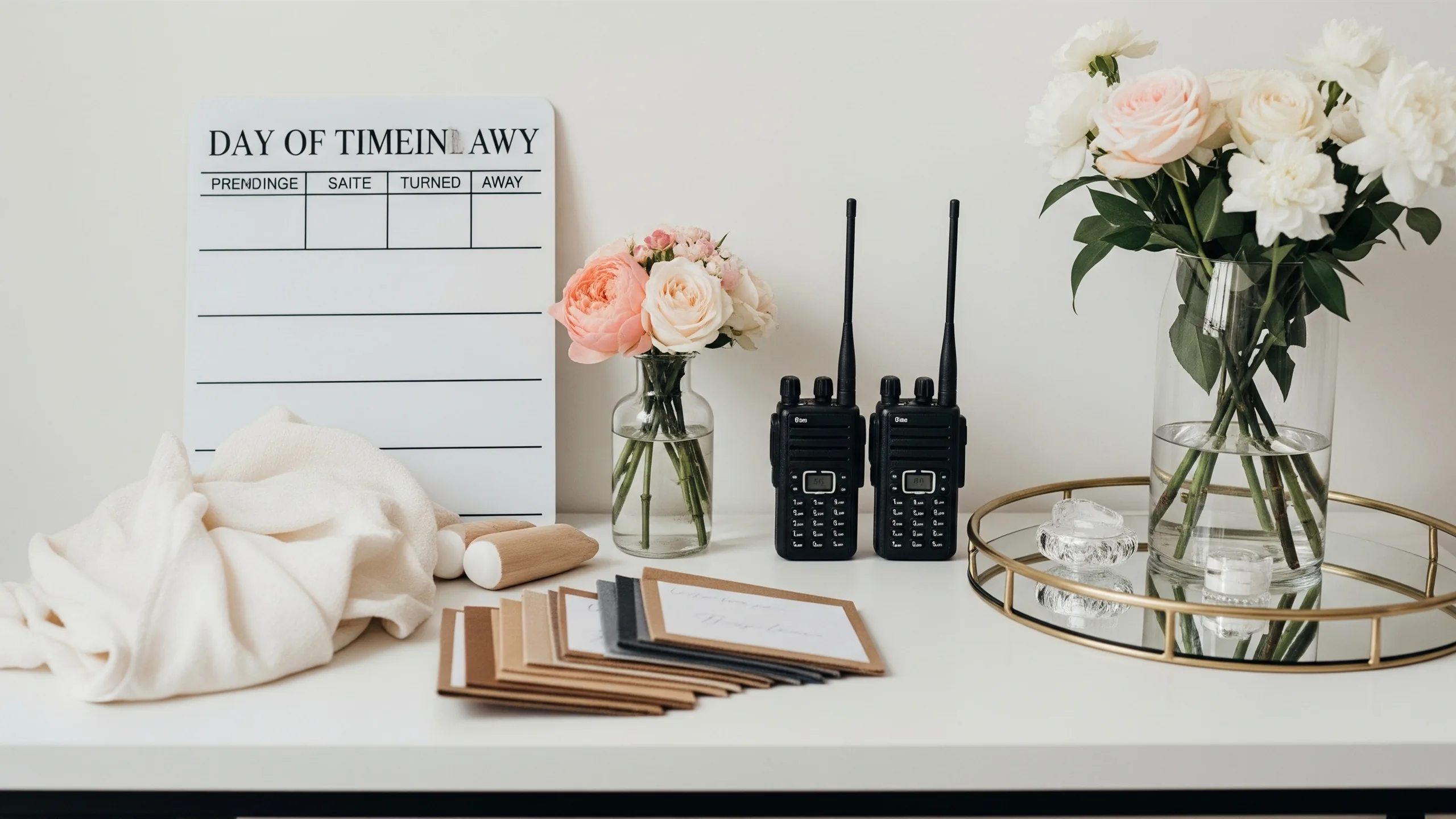
Protect the portrait window
Couple portraits and family groupings are the first things sacrificed when the day runs late — and the first thing couples regret losing.
- Block a dedicated window for portraits, ideally before the ceremony when you are fresh.
- Consider a first look — a private moment before the ceremony that also frees up portrait time.
- Do family groupings in one planned slot while everyone is present and tidy.
- Tell your photographer the plan so they are set up and ready, not improvising.
Two timelines, two audiences
You need two versions of the day, and confusing them causes chaos.
- The detailed run-sheet — minute-by-minute, for your coordinator, vendors and wedding party. Includes hair-and-makeup call times, vendor arrivals, who does what.
- The guest-facing schedule — simple, just the functions, times and venues guests need. This is what goes on your wedding website.
Keep the operational detail away from guests, and keep the guest version effortless to read.
Sample day, annotated
The artifact above shows a typical evening-ceremony shape. The key moves:
- Hair and makeup start early — earlier than feels necessary.
- Portraits and family shots happen before the ceremony, while everyone is fresh.
- A genuine buffer sits before the ceremony, absorbing the morning's inevitable slippage.
- The evening flows from ceremony to reception without a hard stop.
FAQ
How do I make a wedding day timeline?
Start from the fixed ceremony or muhurat time and build backwards through travel, portraits, dressing, and hair and makeup. Add a 15–30 minute buffer after every major block, protect a window for couple and family portraits, and create separate versions — a detailed run-sheet for vendors and a simple schedule for guests.
How long does bridal hair and makeup take?
Allow three to four hours for bridal hair and makeup. It is the most underestimated block of the day, between the detail of the look, draping, jewellery and touch-ups. Starting it earlier than feels necessary is the single best way to keep the whole day on schedule.
Why do wedding day timelines run late?
Almost always because there is no buffer. The first delay — usually hair and makeup or gathering family for photos — cascades through every following segment. Padding each block with slack and never scheduling back-to-back keeps one small delay from derailing the entire day.
Should guests get the detailed timeline?
No. Guests need a simple schedule — the functions, times and venues — which belongs on your wedding website. The detailed, minute-by-minute run-sheet with vendor call times and operational notes is for your coordinator, vendors and wedding party only.
Keep the guest schedule and your run-sheet separate
The most common day-of confusion comes from one timeline trying to serve two audiences. Vendors need call times and operational detail; guests just need to know when and where to show up. Mixed together, both get lost.
A wedding website holds the clean, guest-facing schedule — functions, times, venues and maps — while you run the detailed minute-by-minute sheet behind the scenes with your coordinator. Guests stay effortlessly informed; your operation stays private.
- Publish only the guest-facing schedule on the link.
- Keep the operational run-sheet for vendors and coordinator.
- Update the public schedule once if timings shift.
Scope, assumptions and editorial standard
Timings and run-sheet blocks here are editorial planning estimates that vary by wedding size, number of functions, vendors and region. Confirm actual durations with your hair and makeup artist, photographer and coordinator, and build your timeline around your own fixed ceremony time.
Make every detail feel considered.
Share the guest-facing schedule on one link while you run the detailed timeline.
& Vihaan 12 · 13 · 14 December