
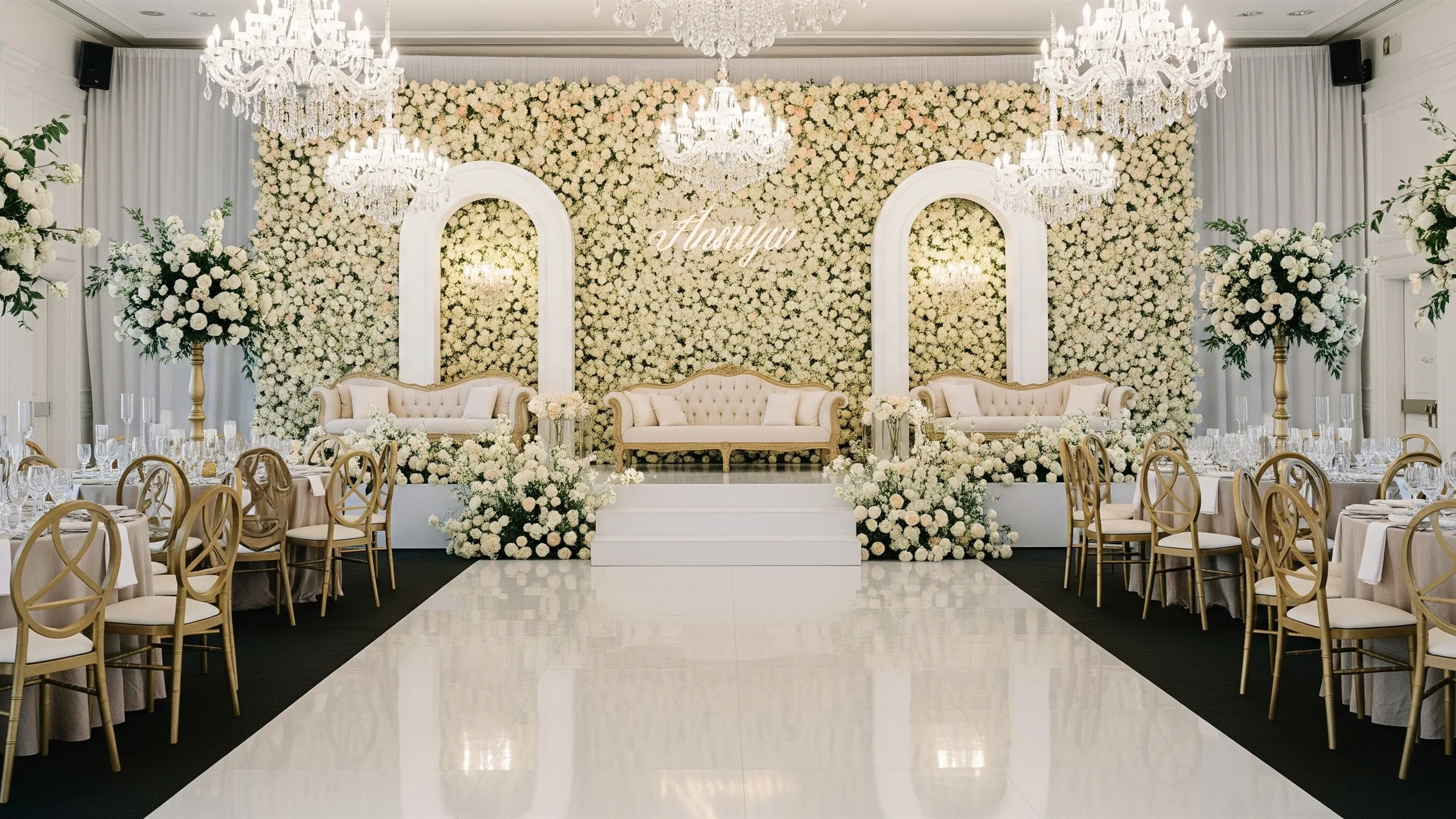
A great reception runs on a tight timeline, not improvisation. Plan a 4–5 hour evening: guest arrival and cocktails, a strong couple entry, a short welcome, dinner service, two or three meaningful moments (first dance, speeches, cake), and an energetic close. Keep formal segments under 45 minutes total so the party never stalls, and give every guest the timing, dress code and venue in advance.
The decisions that matter most
- 01
Build the evening on a written run-sheet with clock times — share it with the MC and venue.
- 02
Make the couple entry the emotional peak, then move quickly into the celebration.
- 03
Keep speeches short and few — two or three, two minutes each, beats an open mic.
- 04
Open dinner within 90 minutes of arrival; hungry guests drift and energy dies.
- 05
Lighting and sound do more for the mood than extra decor — budget for them first.
Use the planning tool, adapt the framework to your family, and verify current prices or policies before committing.
A reception run-sheet that flows
A proven evening shape. Shift the clock times to your start, but keep the order and the pace.
Doors open · welcome drinks · soft music · guests mingle and find seats
Lights cue · the couple's grand entry · upbeat track · first walk to the stage
Short welcome from the MC or family · the couple greets the room
Dinner service opens · couple available for greetings and photos
First dance · then two to three short speeches or toasts
Cake cutting · group photos · open dance floor with the DJ
Last song · warm send-off · couple's exit
Decide what kind of reception you actually want
Before any decor, name the feeling. A formal seated dinner, a high-energy dance party, and a relaxed cocktail evening need different timelines, layouts and budgets. Most Indian receptions blend a stage-and-greeting tradition with a party finish — so plan for both halves deliberately instead of letting one swallow the other.
*Tip — Write one sentence describing the night: "An elegant dinner that turns into a dance floor by 9pm." Every decision gets easier when it serves that sentence.
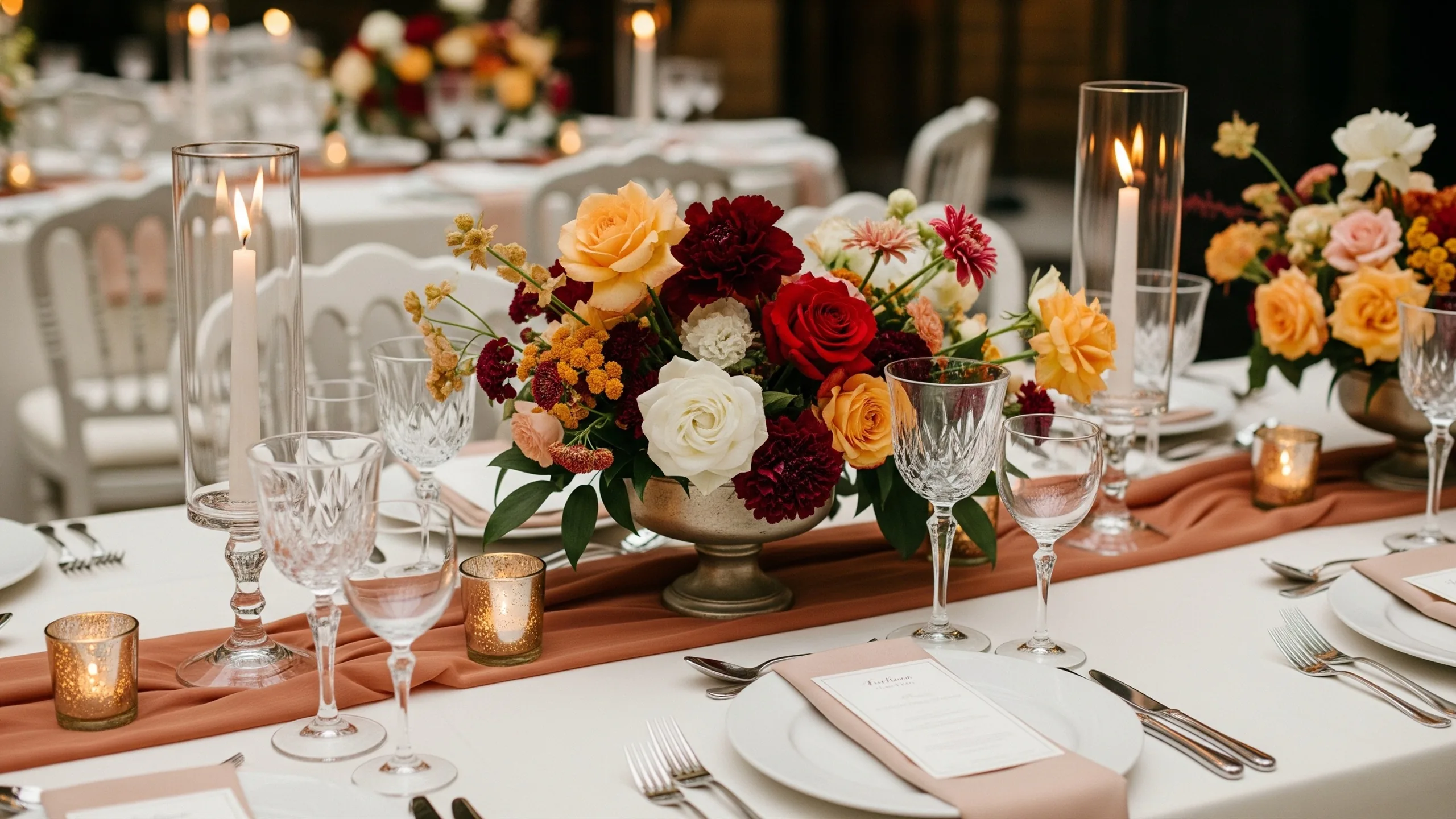
Style the celebration with our wedding catering and menu guide and how to choose a wedding venue.
Prefer to plan hands-on? Try our free free wedding menu builder tool.
The evening timeline, segment by segment
The single biggest difference between a reception people rave about and one they quietly leave early is pacing. Use the run-sheet above as your spine, and protect these rules:
- Guests need 30–45 minutes to arrive and settle before the entry — start formal moments too early and the room is half-empty.
- The couple entry is the peak — get the lighting, music and walk right, because the whole room is watching.
- Greeting lines eat time — if you are doing stage greetings with photos, run dinner in parallel so nobody waits hungry.
- Cluster the formal moments, then hand the night to the DJ. Energy only ever goes up after the last speech.
Stage, entry and the first impression
The stage and your entrance carry the reception's drama. You do not need the most expensive set — you need a clean focal point, good light on your faces, and an entry that feels intentional.
| Element | Budget move | Premium move |
|---|---|---|
| Stage backdrop | Floral panel + warm fairy lights | Layered florals, drapes and a custom monogram |
| Couple entry | Spotlight walk to a chosen song | Smoke, sparklers, choreographed reveal |
| Seating | Sweetheart sofa on stage | Raised platform with family seating |
| Focal lighting | Two warm spots on the couple | Programmed wash + pin-spots on decor |
!Whatever the budget, light the couple properly. Beautiful decor in dim light photographs flat — and your reception photos are forever.
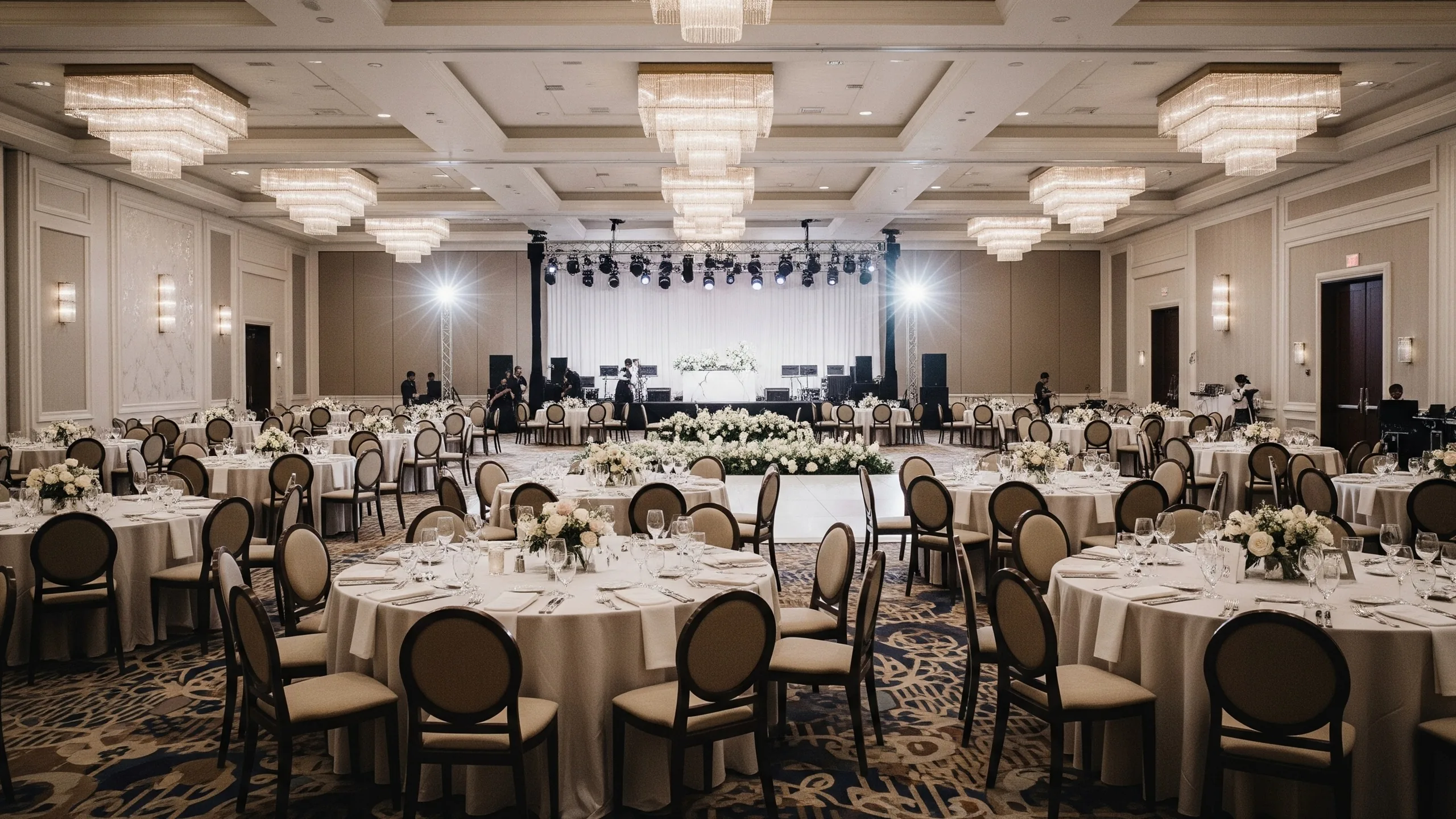
The program order that keeps energy up
A reception "program" should feel like a few sharp beats, not a school assembly.
- Grand entry — the emotional high.
- One short welcome — by the MC or a family elder, under two minutes.
- Dinner opens — the longest, most social stretch.
- First dance — your moment; keep it to one song.
- Two or three speeches — best friend, sibling, a parent. Two minutes each, no open mic.
- Cake cutting — a clear visual cue that the party is starting.
- Open floor — DJ takes over, lights drop, everyone dances.
Decor, lighting and sound — spend in the right order
Couples often overspend on flowers and underspend on the two things guests feel most: light and sound.
- Sound first. A muddy PA ruins speeches and music. Hire a system sized to the room.
- Lighting second. Warm, layered lighting flatters every guest and every photo; harsh white banquet light does the opposite.
- Decor third. A few strong focal points (stage, entrance, centre tables) read better than thin decoration spread everywhere.
- A clear dance floor with light over it tells people where the party lives.
Catering and bar flow
Food logistics quietly decide whether guests stay relaxed or restless.
- Open dinner within 90 minutes of guest arrival; long waits drain the room.
- Spread live counters around the space to break queues and keep people moving.
- Keep one light dessert or chaat counter open late for the dance-floor crowd.
- Brief the catering captain on your run-sheet so service never clashes with the first dance or speeches.
Mistakes that make a reception drag
The fastest way to lose a room is to make it wait — for food, for the entry, or through one speech too many.
- Starting formalities before guests have arrived.
- Too many speeches, or an unscripted open mic.
- A greeting line with no parallel dinner service.
- Dim, unflattering light on the stage.
- No clear hand-off to the dance floor, so the night fizzles instead of peaking.
FAQ
How long should a wedding reception last?
Most Indian receptions run four to five hours from guest arrival to send-off. That is enough time for a relaxed dinner, the key formal moments and a real dance floor, without the evening dragging. Keep formal segments under 45 minutes total so the energy keeps climbing.
What is the right order of events at a reception?
A reliable order is: guest arrival and drinks, the couple's grand entry, a short welcome, dinner service, first dance, two or three short speeches, cake cutting, then an open dance floor. Cluster the formal moments early-to-middle and let the party close the night.
When should the couple make their entry?
About 45 to 60 minutes after doors open, once most guests have arrived and found their seats. Entering too early means a half-empty room; too late and guests get restless waiting for dinner.
How can we stop the reception from dragging?
Open dinner within 90 minutes, keep speeches short and few, run any stage-greeting line in parallel with dinner, and give the DJ a clear hand-off after cake cutting. A written run-sheet shared with your MC and venue is the single best fix.
Give guests the evening before they arrive
Half the questions on reception day — what time, where exactly, what to wear, is there parking — are avoidable. The reception is also the function most likely to have out-of-town and one-day guests who were not at the earlier ceremonies, so they have the least context.
A wedding website answers all of it before anyone calls. Put the reception card front and centre with timing, dress code, venue map and an RSVP, and your evening starts with calm, on-time guests instead of a flurry of WhatsApp messages.
- Show the reception time, venue and a one-tap map on its own event card.
- State the dress code so guests arrive looking the part.
- Collect RSVPs so catering numbers are accurate.
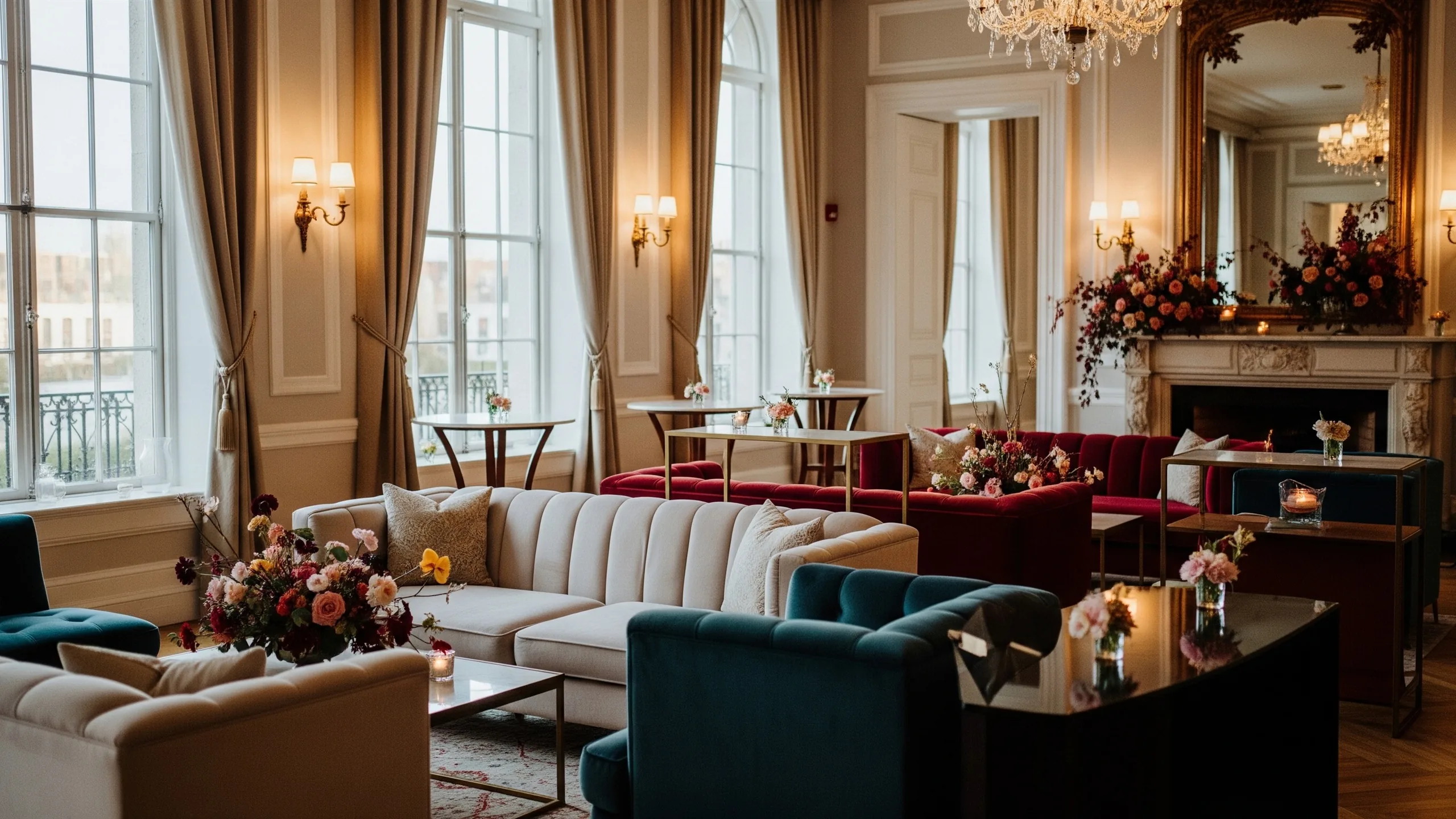
Scope, assumptions and editorial standard
Timeline lengths, segment durations and budget tiers here are editorial planning estimates that vary widely by city, venue, guest count and style. Confirm exact run-of-show, service timings and AV capacity with your venue, caterer and DJ, and adapt the order to your family's traditions before finalising.
Make every detail feel considered.
Publish your reception timing, dress code and venue map in one elegant link.
& Vihaan 12 · 13 · 14 December