
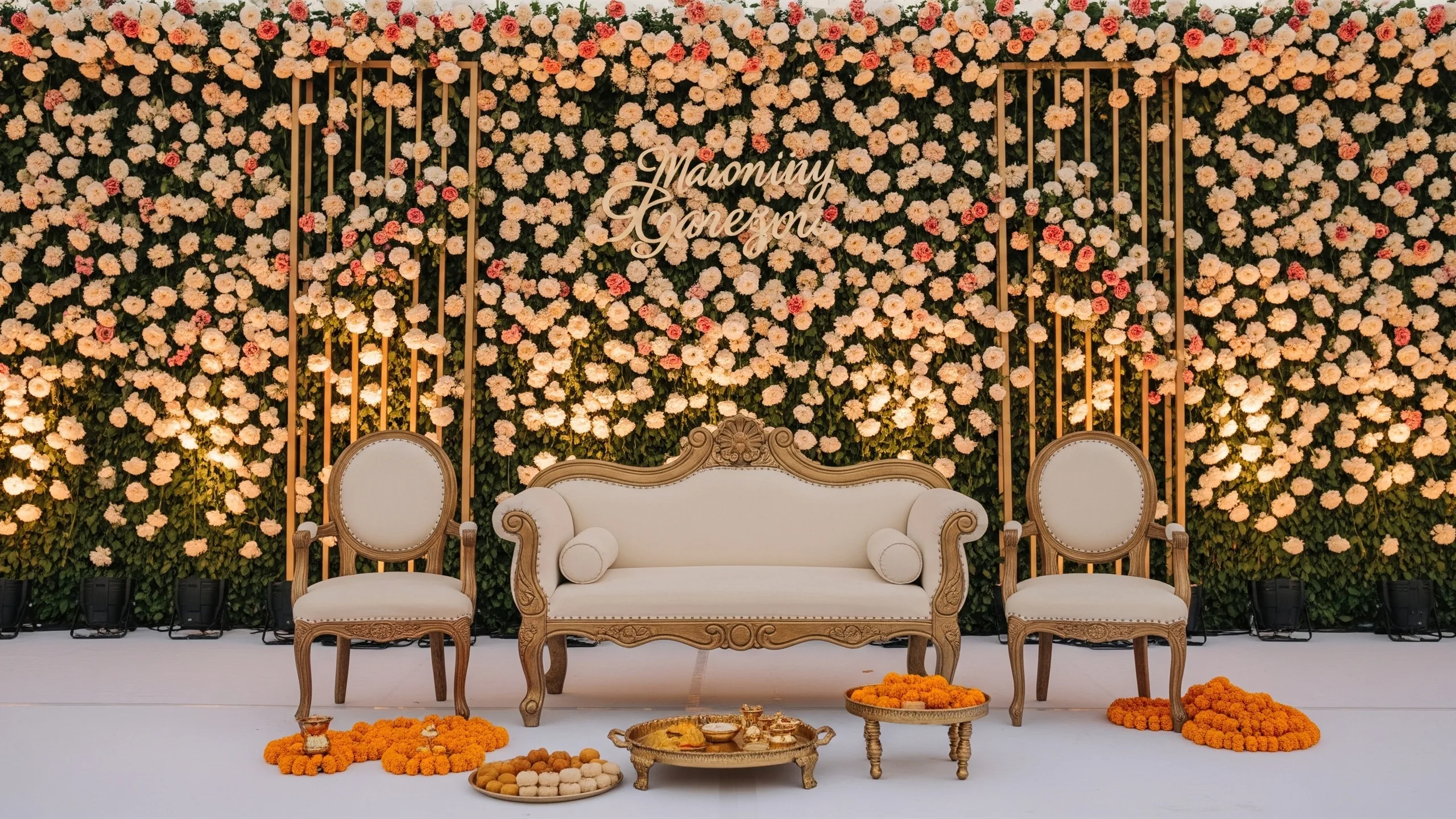
The roka is the first official ceremony of an Indian wedding journey — an intimate gathering (20–60 people) where both families formally "stop the search" (roka literally means "stopped") and bless the match, typically with shagun exchange, sweets, and a meal. The engagement (sagai/ring ceremony) follows weeks or months later as a bigger event with ring exchange. Roka budgets run ₹50,000–3 lakh; engagements ₹2–10 lakh depending on scale.
The decisions that matter most
- 01
Confirm family terminology and ritual order before booking the event.
- 02
Decide whether the roka is a private family milestone or a full hosted function.
- 03
Use the announcement to set expectations for the wedding journey ahead.
Use the planning tool, adapt the framework to your family, and verify current prices or policies before committing.
Roka planning canvas
Immediate family or extended circle?
Shagun, tilak, sweets, rings or family-specific rites?
Home, restaurant, banquet or temple?
Private first, then website and WhatsApp?
Roka vs engagement vs sagan — untangled
| Ceremony | What happens | Scale | When |
|---|---|---|---|
| Roka | Families bless the match; shagun, sweets, tilak for the groom in many traditions | Intimate (20–60) | First — often 6–18 months before the wedding |
| Sagai / Engagement | Ring exchange, often with a party | Medium (50–200) | Between roka and wedding |
| Sagan / Tilak | Formal blessing of the groom by the bride's family (North Indian) | Varies | Sometimes merged with roka or held near the wedding |
Many modern families merge roka + engagement into one event — completely acceptable, and kinder to everyone's calendar and budget.
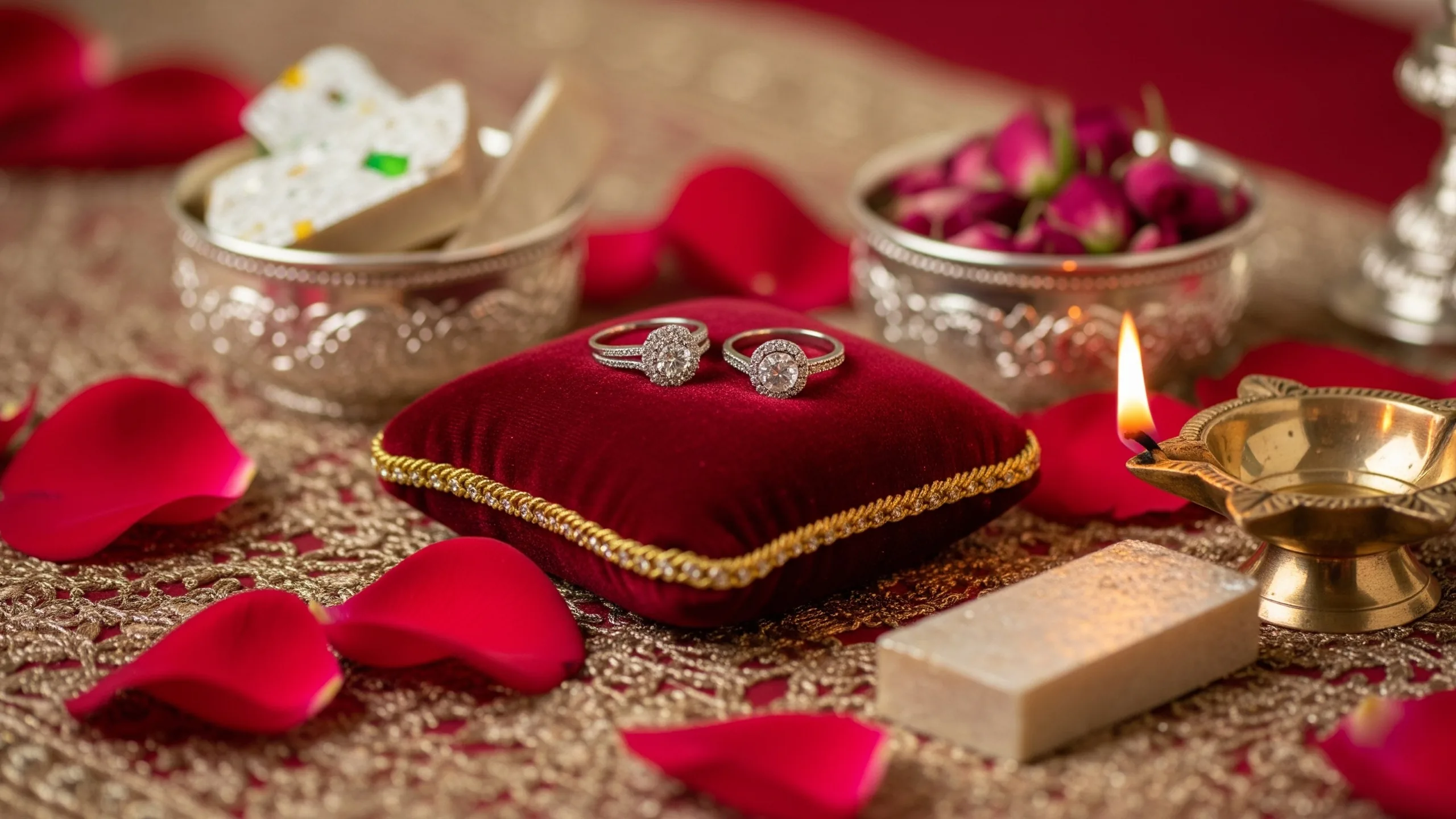
Plan the early celebrations with our engagement party planning guide, engagement ring buying guide, Indian wedding rituals explained, and 12-month wedding planning timeline.
What happens at a roka
- Families gather, usually at the bride's home or a small venue.
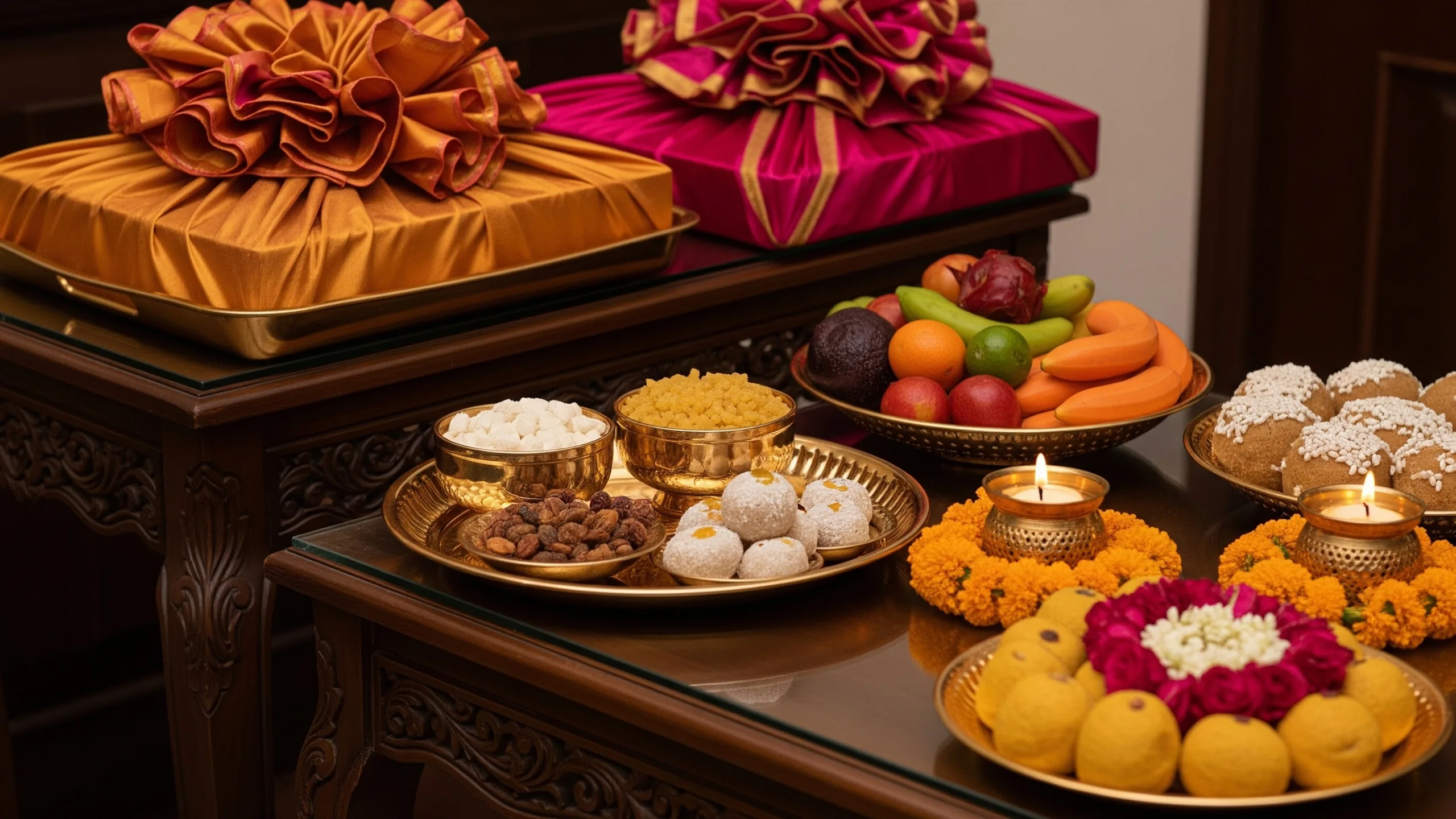
- Elders exchange shagun: cash envelopes, sweets, dry fruits, and gifts for the couple.
- The groom may receive a tilak; the couple exchange garlands or gifts in some families.
- A priest may set/confirm the wedding date (or this happens separately with the panchang).
- Everyone eats. The match is now officially "fixed" — and Instagram-official, if you choose.
Planning notes
- Keep it intimate. The roka's charm is that it's the small one — resist the scope creep that turns it into wedding #0.
- Dress code: festive but not bridal — pastels and light lehengas/kurtas are the norm.
- Photography: a 2–3 hour candid package (₹15,000–40,000) is enough; this is where your couple-announcement photos come from.
- The announcement: many couples launch their wedding website right after the roka — it's the perfect moment to share the news, the date, and "details coming soon" with the wider circle in one link.
FAQ
How much time between roka and wedding?
Anywhere from 3 months to 2 years; 6–12 months is most common, driven by auspicious dates and venue availability.
Who hosts and pays?
Traditionally the bride's family hosts the roka and the groom's side the tilak — but modern families split or alternate freely. Decide explicitly; assumptions cause friction.
Do guests bring gifts to a roka?
Close family typically brings shagun; general guests aren't expected to — it's not the wedding.
Decide what this ceremony is not
If the roka is meant to be intimate, do not add a stage, elaborate entries and a large performance program simply because vendors offer them. A clear scope protects both meaning and budget.
If rings will be exchanged, tell the photographer and family in advance. Guests use roka, sagan and engagement interchangeably, but the run of show depends on what your families actually plan.
Use the milestone to launch your guest information
After the families are ready to announce, a wedding website can become the stable link that grows with the plan. Start with names and date, then add events, travel and RSVP as decisions are made.
This avoids sending a new document every time the schedule changes and gives outstation guests early confidence.
Scope, assumptions and editorial standard
Roka, sagan and engagement practices differ significantly across North Indian families and communities. Use this as a planning framework, then document your own sequence.
Make every detail feel considered.
Invitation, RSVP, gallery and dashboard included. Fully hosted and shareable on WhatsApp.
& Vihaan 12 · 13 · 14 December