
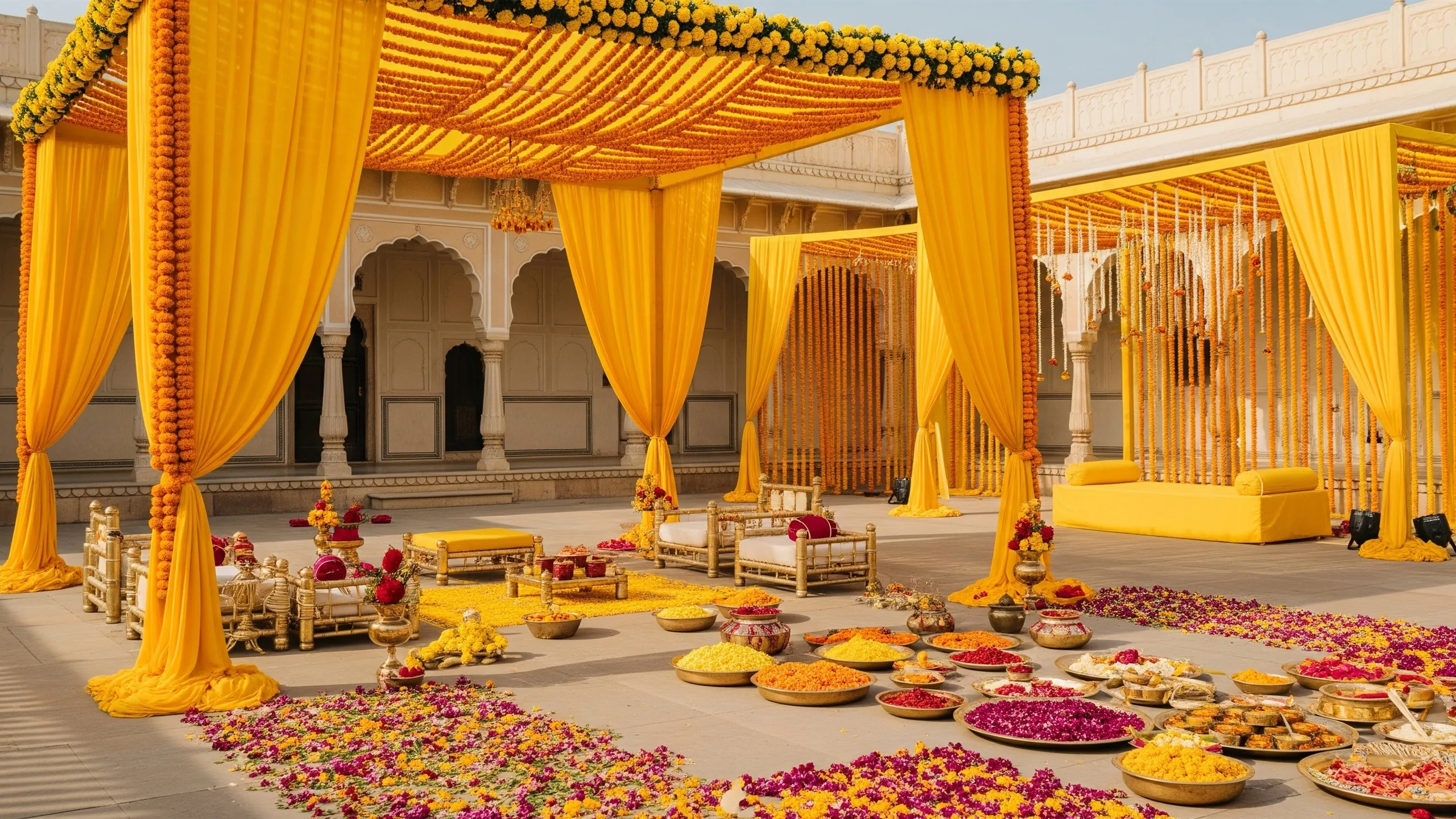
The haldi is the turmeric ceremony held 1–2 days before a Hindu wedding: family members apply a paste of haldi, oil, and (traditionally) curd or rosewater to the bride's and groom's face, arms, and feet as a blessing for glow, purification, and protection from the evil eye. It's a morning event, runs 2–3 hours, everyone wears yellow, and everything within splashing distance gets stained — plan the venue, outfits, and photography accordingly.
The decisions that matter most
- 01
Plan for stains, water and slippery surfaces before planning decor.
- 02
Brief the photographer on any splash or bath finale.
- 03
Keep the event short enough that the couple can rest before the next function.
Use the planning tool, adapt the framework to your family, and verify current prices or policies before committing.
Haldi setup planner
What happens, step by step
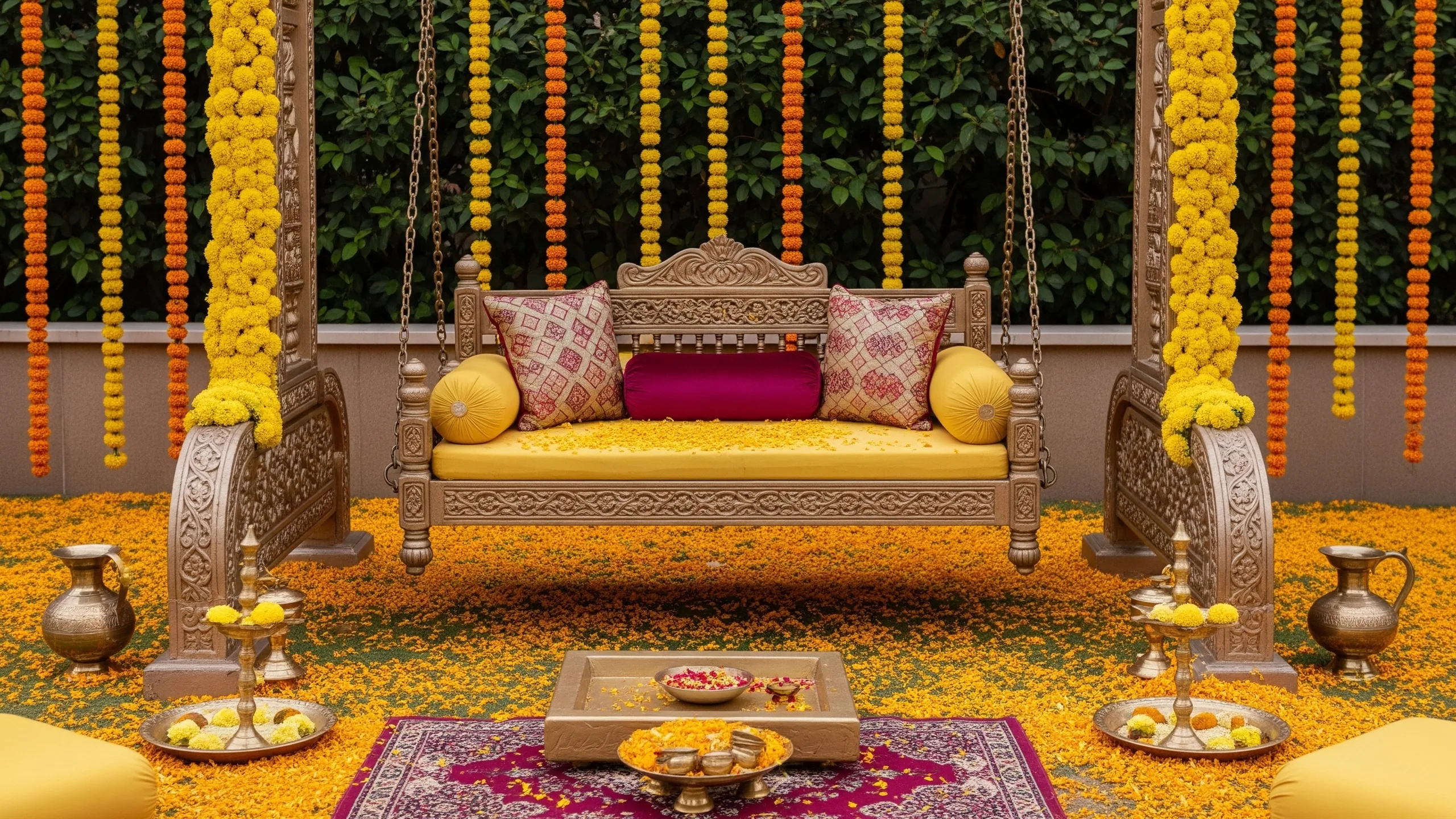
- The couple (separately at their family homes, or together in modern combined haldis) sits on a low stool, often under a small canopy.
- Married women of the family traditionally begin, applying paste with mango leaves or fingers — feet, knees, arms, face.
- Songs, dhol, teasing, and inevitably someone smearing haldi on every unmarried cousin "so you're next."
- Some families follow with a ceremonial bath or bucket-splash finale (warn the photographer; it's the shot of the day).
- Leftover haldi touched to unmarried siblings/friends as a blessing.
Regional variants: it's pithi in Gujarati weddings, ubtan in Punjabi/North Indian homes, tel baan in some communities, gaye holud in Bengali tradition (a grand event of its own).
Understand the surrounding ceremonies with our haldi outfit ideas for the bride, Indian wedding rituals explained, and vidaai ceremony guide.
The checklist
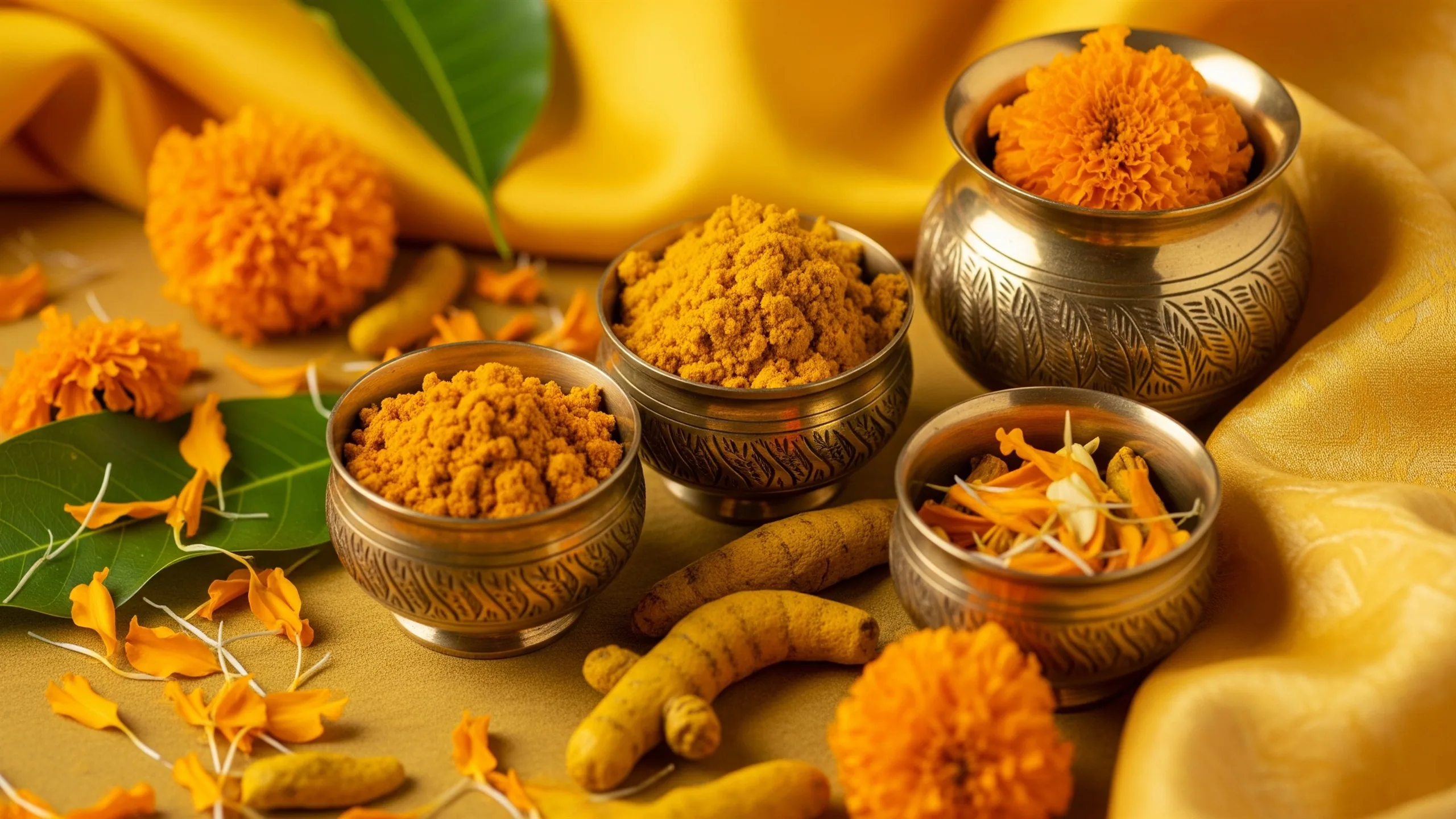
- Haldi paste: turmeric + sandalwood + rosewater/milk (make extra; it goes fast)
- Mango leaves or flowers for applying
- Old towels, wipes, and a tarp/sheet under the seating area
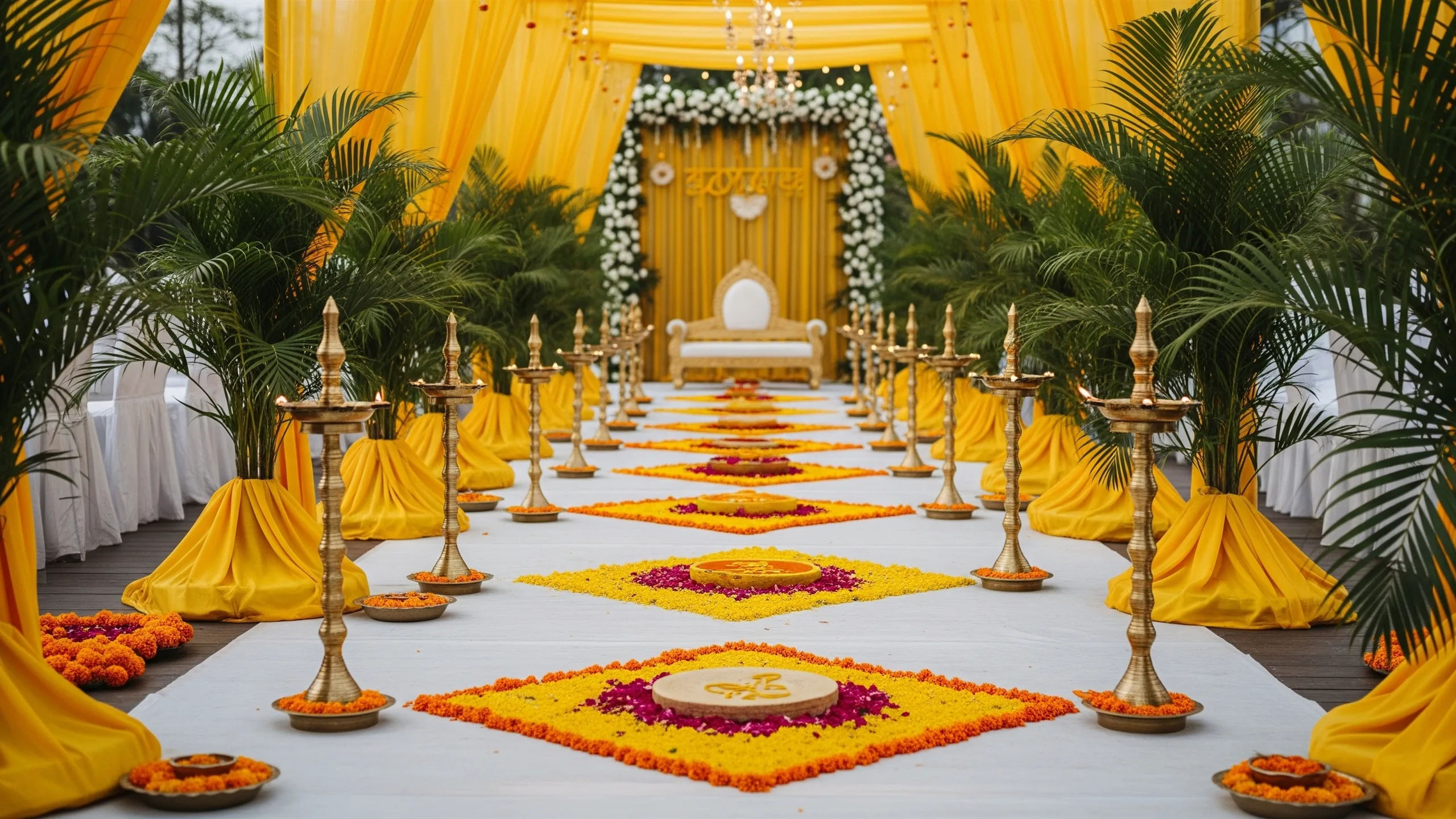
- Marigold decor — the one event where marigolds alone carry the look
- Yellow dress code communicated (website event card: "wear yellow, expect stains")
- Waterproof phone pouches if there's a splash finale
- Brunch menu — haldi is a daytime, homely-food event
- Photographer briefed: candids > posed here
Outfit notes
The couple: simple yellow/white cottons they'll never wear again. Guests: yellow-family festive cotton — nothing dry-clean-only. Flowers-as-jewellery (genda phool sets) photograph beautifully and cost nothing to ruin.
FAQ
Why turmeric?
Antiseptic and brightening in tradition and in fact — plus the auspicious yellow of new beginnings and its evil-eye-warding role.
Combined or separate haldis?
Separate is traditional; combined is the rising norm where both families are in one city — one venue, double the chaos, better photos.
Does haldi stain permanently?
On fabric, mostly yes. On skin, it fades in a day — schedule it 1–2 days pre-wedding so the bride's makeup base is clean.
Separate the ritual from the free-for-all
Begin with the people who have a traditional role, complete formal blessings and portraits, then clearly open the playful section. This protects important moments before faces, clothes and the floor become completely covered.
If the couple is uncomfortable with aggressive smearing or bucket splashes, state the boundary to the emcee and closest cousins before the event.
Design for cleanup and camera angles
Use a seating platform that drains or wipes easily, leave enough space for family to approach and keep harsh overhead shade from creating uneven photographs.
Assign towels, drinking water and a private changing area. The most beautiful setup still fails if the couple has to walk through the venue dripping haldi.
Regional haldi variations across India
The turmeric ritual travels under many names, and knowing your family's version helps you brief vendors and guests correctly.
- North India — Haldi / Ubtan: a turmeric, sandalwood and rosewater paste applied by married women, often followed by playful smearing once the formal round is done.
- Gujarat — Pithi: a chickpea-flour and turmeric paste, usually a bright, music-filled daytime function.
- South India — Mangala Snanam: a ceremonial turmeric bath on the wedding morning, closer to a purification ritual than a party.
- Maharashtra — Halad Chadavne: haldi is applied to the groom first, then carried to the bride, linking the two homes.
- Bengal — Gaye Holud: turmeric from the groom's ceremony is sent to the bride, tying the two events together.
Confirm your own family's sequence and ingredients with elders, since even neighbouring communities differ.
Scope, assumptions and editorial standard
Haldi customs differ widely by region and family. Confirm paste ingredients, who applies it and any post-ritual bathing tradition with elders.
Make every detail feel considered.
Invitation, RSVP, gallery and dashboard included. Fully hosted and shareable on WhatsApp.
& Vihaan 12 · 13 · 14 December