
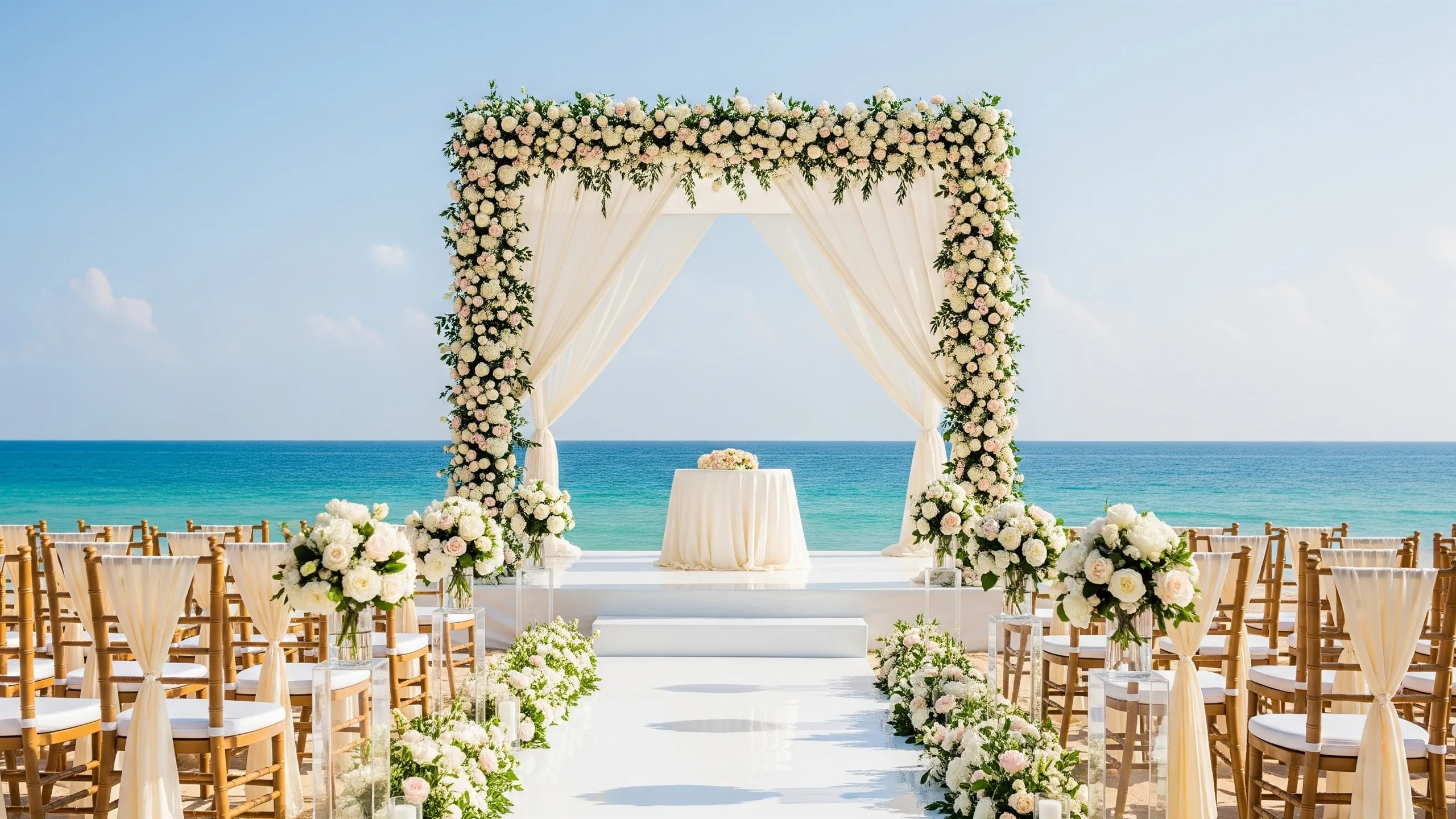
A destination wedding website has one extra job that home-city weddings don't: logistics. Beyond the event schedule, it must cover how to get there (nearest airport, transfer time), where to stay (room blocks, booking deadlines, costs), what's covered by the hosts vs paid by guests, weather and packing guidance, and a firm RSVP deadline — because every headcount change costs real money at a destination. build it on ShaadiPath's destination templates in about 10 minutes.
The decisions that matter most
- 01
State what hosts cover and what guests pay for.
- 02
Collect arrival and departure data in structured fields.
- 03
Treat travel updates as core content, not an FAQ afterthought.
Use the planning tool, adapt the framework to your family, and verify current prices or policies before committing.
Destination guest-information audit
The sections a destination wedding website must have
1. Getting there. Nearest airport, distance/transfer time to the venue, whether you're arranging pickups, and train/road alternatives. Be specific: "Fly into Dabolim (GOI) or Mopa (GOX); the resort is 45 min from Dabolim. Shuttle pickups run 2–6 PM on Friday — drop your flight details in the RSVP form."
2. Where to stay — and who pays. The most-asked, least-answered question at every destination wedding. State it plainly: "Rooms at the venue are blocked and hosted for all guests for Fri–Sun" or "We've negotiated ₹6,500/night at the venue — book with code SHARMA2026 by 15 September." Ambiguity here generates fifty identical WhatsApp messages to your mother.
3. The schedule, with travel buffers. Destination schedules are tighter than home weddings — guests are captive but jet-lagged. Show arrival day clearly ("Friday: arrivals + welcome dinner, 8 PM, come as you are").
4. Packing & weather. "Udaipur in November: 12–28°C — carry a shawl for the lakeside sangeet." "Goa in January: light fabrics, sunscreen, one warm layer for the beach pheras at sunrise." Include dress codes per event with the weather in mind.
5. RSVP with a hard deadline. Headcounts drive rooms, transfers, and plated meals. State the date and mean it.
6. Things to do. Arriving guests often add a day or two — recommend 4–5 local experiences. It makes the wedding feel like the holiday it is.

Build a wedding website guests will love with our NRI wedding website guide and guest accommodation and travel guide.
Destination-specific notes to include
| Destination | Airport | What guests should know |
|---|---|---|
| Goa | Dabolim (GOI) / Mopa (GOX) | North vs South Goa matters — name your belt; book flights early for Dec–Jan peak |
| Udaipur | Maharana Pratap (UDR), limited flights | Many guests route via Delhi/Mumbai; lakeside venues get cool after sunset Oct–Feb |
| Jaipur | Jaipur Intl (JAI) | Well connected; palace venues often have long walks — note footwear |
| Kerala (Kochi/Kumarakom) | Kochi (COK) | Backwater venues can be 1.5–2 hrs from the airport — transfer details are essential; humid year-round |
Not decided on a location yet? Compare the country's top options in our guide to the best destination wedding places in India, or see exactly where the money goes in the Alibaug beach wedding cost guide.
Money clarity prevents resentment
The politest section you'll ever write: a short "What's covered" block. "We're delighted to host your stay and all meals from Friday dinner through Sunday brunch. Travel to Goa and any extra nights are at your own arrangement." Guests budget happily when they know; they grumble when they guess.

For NRI guests attending your destination wedding
Add a sub-section: visa-on-arrival/e-visa note for foreign-passport guests, currency basics, SIM/eSIM advice, and a local contact number ("Rohan, the groom's cousin, is your fixer: +91-XXXXX"). See our full NRI guest guide for the complete checklist.
FAQ
How far in advance should a destination wedding website go live?
4–6 months before. Guests need to book flights and leave; this is far earlier than a home-city wedding.
Should we collect flight details on the website?
Yes — add a flight-details field to your RSVP so transfers can be scheduled. It's the difference between smooth pickups and chaos.
How do we handle guests who can't afford to come?
A warm line helps: "We know travel is a big ask — if you can't make it to Goa, celebrate with us at the Mumbai reception on [date]." Many couples host a home-city reception for exactly this reason; put both on the same website.
Do we need a wedding planner AND a website?
They do different jobs — the planner manages vendors; the website manages guests. Every destination planner will tell you the website saves them a hundred calls.
What's the ideal RSVP deadline?
6–8 weeks before the wedding — late enough for guests to decide, early enough to finalize rooms and catering.
Answer the money question before guests have to ask
State whether rooms, airport transfers, meals outside events and local transport are hosted. If guests book their own rooms, show the rate, taxes, deadline, cancellation policy and booking method.
Clear information does not feel ungracious. It allows guests to make an informed decision and prevents resentment created by assumptions.
Make the website the single source of truth
Pin a last-updated date beside shuttle windows and emergency contacts. When a flight schedule or venue entrance changes, update one page and send a short link reminder instead of rewriting every detail.
Give guests a downloadable or screenshot-friendly arrival summary for moments when mobile data is unreliable.
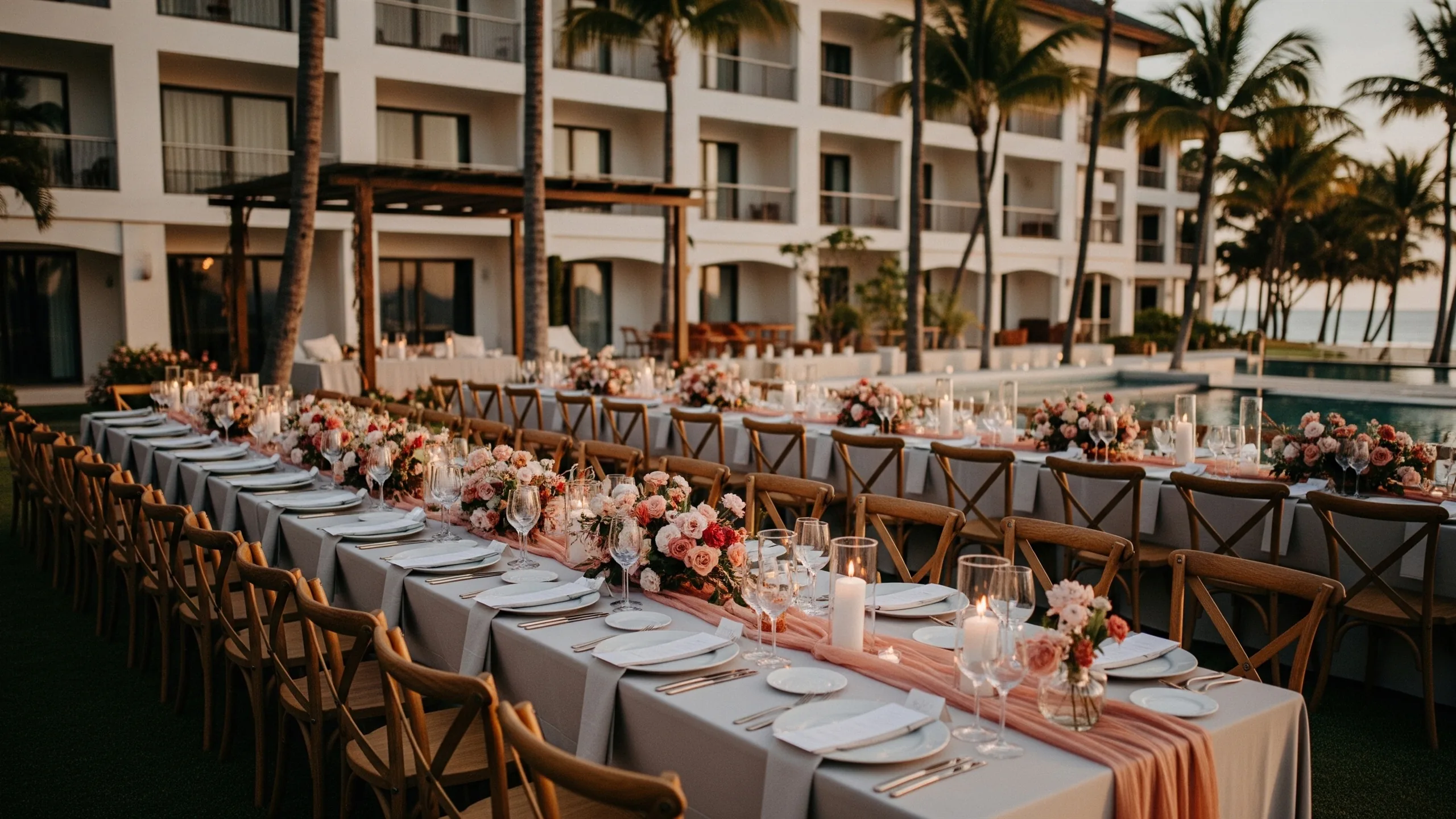
Scope, assumptions and editorial standard
Travel times, weather and hotel policies change. Link to current official or venue information and display the date each logistics section was checked.
Make every detail feel considered.
Invitation, RSVP, gallery and dashboard included. Fully hosted and shareable on WhatsApp.
& Vihaan 12 · 13 · 14 December