
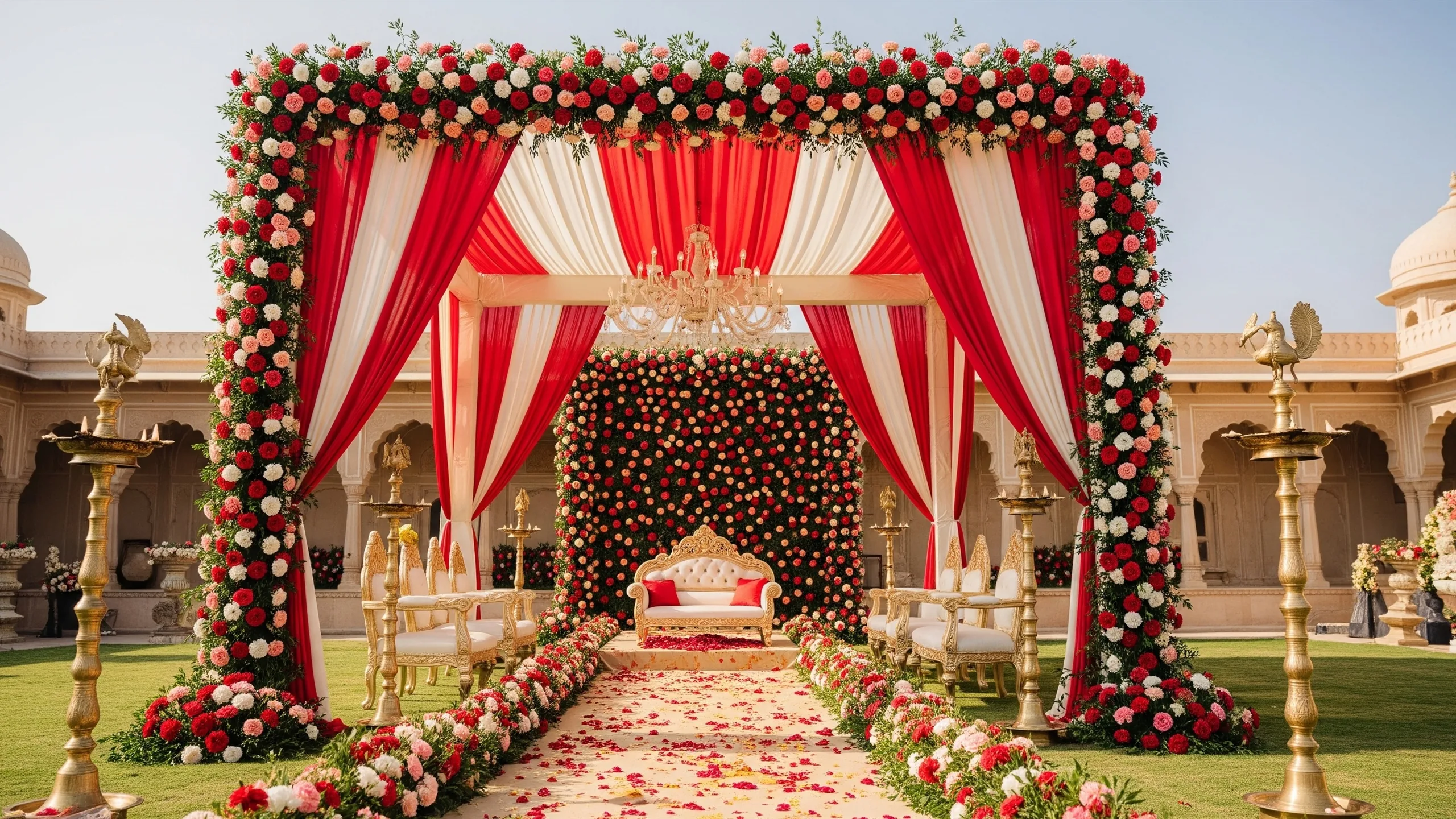
A Hindu wedding website should have a separate event card for each function (haldi, mehndi, sangeet, wedding ceremony, reception) with its own date, venue, and dress code — plus short ritual explainers so guests who didn't grow up with these traditions understand what's happening and when to show up. You can build one on ShaadiPath in about 10 minutes using a Hindu ceremony template.
The decisions that matter most
- 01
Give every function its own event card and RSVP choice.
- 02
Explain rituals in one or two useful sentences beside the ceremony details.
- 03
State muhurat, baraat and guest-arrival times separately when needed.
Use the planning tool, adapt the framework to your family, and verify current prices or policies before committing.
Hindu wedding website section planner
Haldi
Timing · venue · map · dress code · RSVP · short explainer
Mehndi
Timing · venue · map · dress code · RSVP · short explainer
Sangeet
Timing · venue · map · dress code · RSVP · short explainer
Wedding ceremony
Timing · venue · map · dress code · RSVP · short explainer
Reception
Timing · venue · map · dress code · RSVP · short explainer
Why a Hindu wedding needs a different kind of website
A typical Hindu wedding spans 3–5 events over 2–4 days, often at different venues, with different dress codes for each. A single-page Western-style wedding site ("Ceremony: 4 PM, Reception: 6 PM") simply can't hold it. Your website needs to function as a guest handbook: who comes to what, where, wearing what, and what each ritual means.
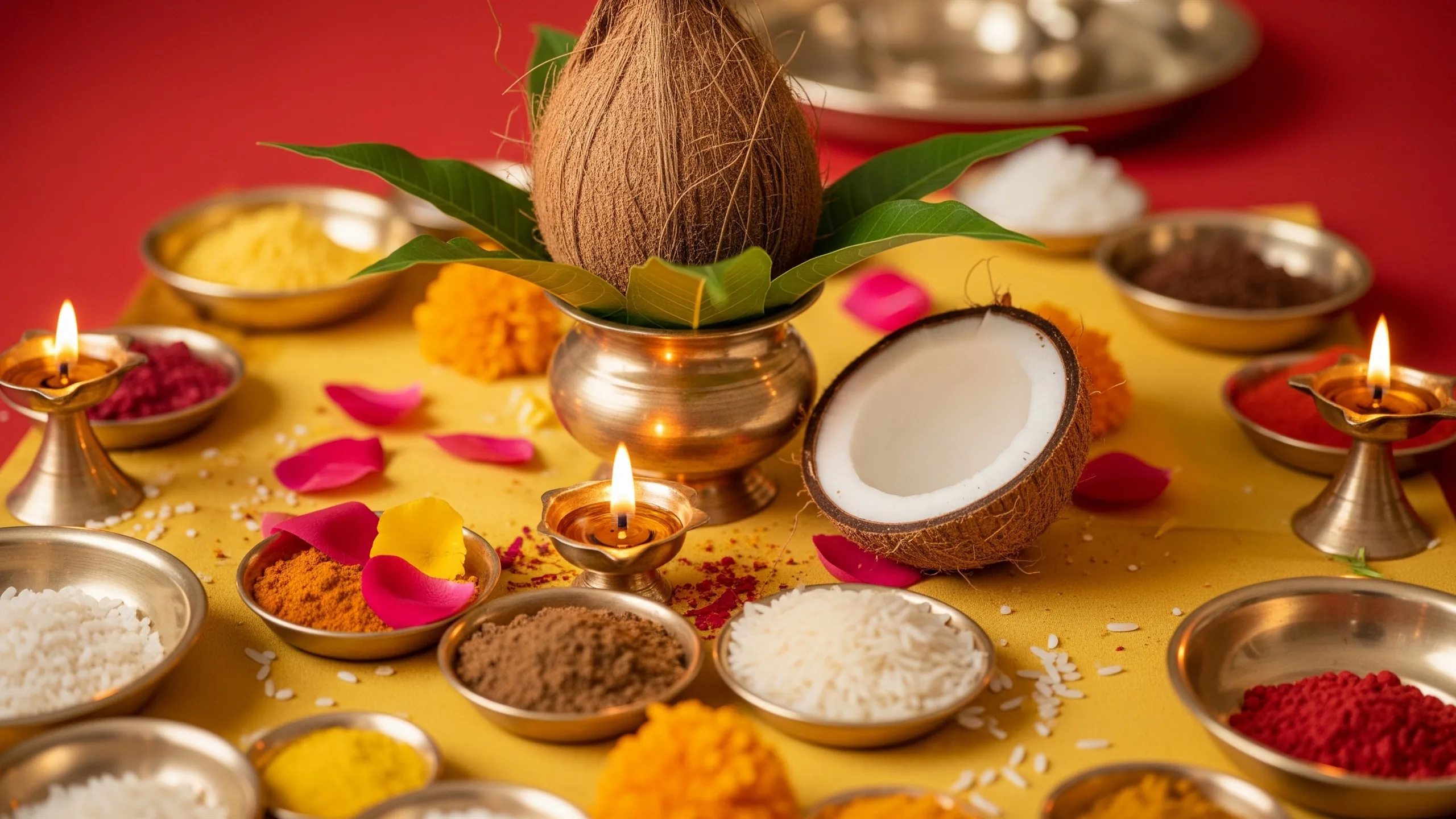
Build a wedding website guests will love with our Indian wedding rituals explained, South Indian wedding rituals, and wedding muhurat dates for 2026-2027.
Prefer to plan hands-on? Try our free ritual explainers tool.
The events to include (and what guests need to know about each)
| Event | What it is | What guests should know |
|---|---|---|
| Haldi | Turmeric paste applied to the couple for blessings and glow | Usually family + close friends only; wear yellow; clothes may get stained |
| Mehndi | Henna applied to the bride (and guests); music, snacks | Casual-festive; arrive any time during the window; guests can get mehndi too |
| Sangeet | Music and dance night with family performances | The party night — bright festive wear; expect choreographed performances |
| Wedding ceremony | The main rituals: baraat, jaimala, kanyadaan, pheras, sindoor | The sacred core; ceremonies can run 2–4 hours; traditional wear |
| Reception | Formal celebration, dinner, photos with the couple | Evening formal/festive; the event most colleagues and acquaintances attend |
Ritual explainers your website should include
Write 2–3 sentences per ritual in plain language. Examples you can adapt:
- Baraat: "The groom arrives in a joyful procession with his family — dancing, dhol drums, sometimes a horse. Guests on the bride's side welcome the procession at the venue gate. Feel free to join the dancing!"
- Jaimala / Varmala: "The couple exchange flower garlands, signifying their acceptance of one another. Expect playful moments — friends often lift the bride or groom to make the exchange harder."
- Kanyadaan: "The bride's parents formally give their daughter's hand to the groom — one of the most emotional moments of the ceremony."
- Pheras (Saat Phere): "The couple walk around the sacred fire seven times (in some traditions, four), each circle representing a vow — duty, prosperity, love, respect, family, health, and lifelong friendship. After the pheras, they are married."
- Sindoor & Mangalsutra: "The groom applies vermilion to the bride's hair parting and ties the mangalsutra necklace — the visible symbols of marriage in Hindu tradition."
Note regional variation on your site: South Indian weddings (muhurtham, often morning ceremonies, the mangalyam moment), Bengali weddings (subho drishti, sindoor daan), Marathi weddings (antarpat), Gujarati weddings (four pheras, mangal pheras order). If your wedding follows a specific tradition, say so — guests appreciate it and it makes your site more useful.
What else to put on a Hindu wedding website
- Full schedule with venue maps for each event (Google Maps links)
- Dress code per event, with examples ("Sangeet: lehengas, sharara sets, kurta-pajama — think bright")
- Travel & stay for outstation guests: nearest airport, recommended hotels, shuttle details
- RSVP per event — not everyone attends everything; let guests pick
- Our Story and family introductions
- Gifting note if you want one ("Your blessings are the only gift we need" or registry/UPI details — see our gifting etiquette guide)
How to build it
- Pick a Hindu ceremony template on ShaadiPath
- Add each event with date, time, venue, dress code
- Paste in ritual explainers (adapt the ones above)
- Publish and share the link on WhatsApp — most couples finish in 10–15 minutes
FAQ
Should I make separate websites for different events?
No — one website with separate event sections is easier for guests and easier to update. Share the same link for everything.
How do I invite some guests to only certain events?
Mention attendance expectations on each event card ("Haldi: immediate family"), or share event-specific details directly with those guest groups on WhatsApp.
When should the website go live?
6–10 weeks before the wedding, ideally alongside or before your formal invites, so outstation guests can book travel.
Do older relatives actually use wedding websites?
Increasingly yes — because the link opens directly in WhatsApp on their phone. No app, no login. Many couples still print a small batch of cards for elders as a gesture.
Can guests RSVP for each event separately?
On builders designed for Indian weddings (like ShaadiPath), yes. This is exactly the feature that single-event Western builders lack.
Design the website around guest decisions
For each function, answer five questions in the same order: am I invited, when should I arrive, where exactly is it, what should I wear and what happens there. Consistency helps guests scan a multi-day schedule quickly.
Place the ceremony's sacred meaning near the practical details, but keep operational instructions visible. A beautiful ritual description cannot replace the correct gate pin.
Separate invitation time from ritual time
If the baraat starts at 5 PM, guest welcome is 6 PM and pheras begin later, publish those moments clearly. One vague ceremony time creates early arrivals, missed entries and repeated phone calls.
For late-night or early-morning pheras, explain meal service, seating and whether guests are expected to stay for the complete ceremony.
Scope, assumptions and editorial standard
This guide focuses on guest-information architecture, not religious authority. Confirm ceremony language, etiquette and ritual order with your officiant and families before publishing.
Make every detail feel considered.
Invitation, RSVP, gallery and dashboard included. Fully hosted and shareable on WhatsApp.
& Vihaan 12 · 13 · 14 December