
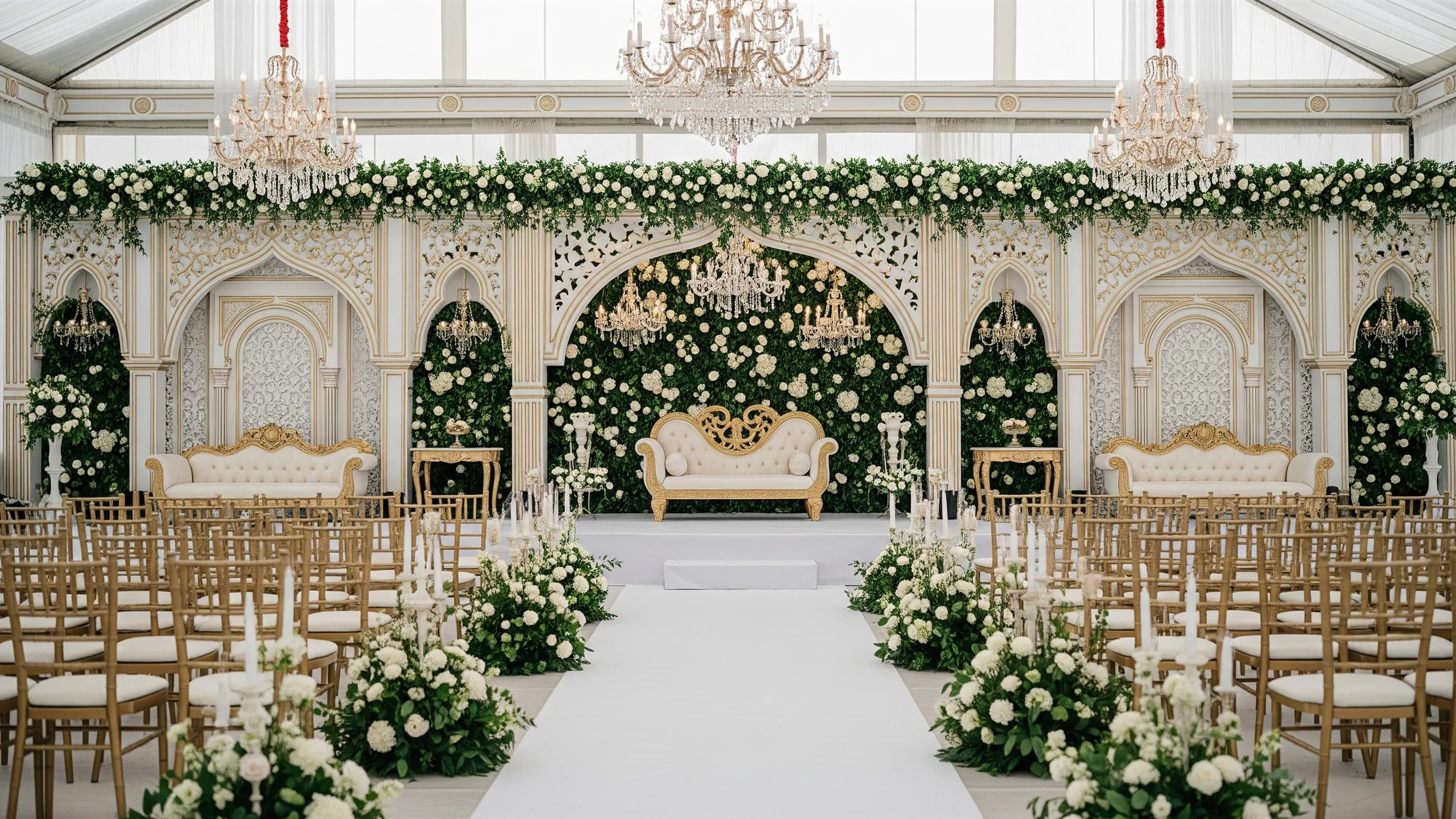
A Nikah wedding website should cover your full sequence of events — typically the mehndi/manjha, the Nikah ceremony, and the Walima reception — with separate timings, venues, and dress guidance for each, plus short explainers so guests from other communities understand the ceremony. ShaadiPath offers Muslim wedding templates with elegant Islamic design motifs, and you can publish in about 10 minutes.
The decisions that matter most
- 01
State the event sequence and hosts clearly.
- 02
Explain mosque or venue etiquette without assuming prior knowledge.
- 03
Clarify seating, photography and dress expectations where relevant.
Use the planning tool, adapt the framework to your family, and verify current prices or policies before committing.
Nikah website section planner
Mehndi or Manjha
Timing · venue · map · dress code · RSVP · short explainer
Nikah
Timing · venue · map · dress code · RSVP · short explainer
Rukhsati
Timing · venue · map · dress code · RSVP · short explainer
Walima
Timing · venue · map · dress code · RSVP · short explainer
The events to include on a Muslim wedding website
| Event | What it is | What guests should know |
|---|---|---|
| Mehndi / Manjha | Henna and haldi-style celebration before the wedding | Festive, often segregated or family-only depending on the household; bright colors |
| Nikah | The Islamic marriage contract ceremony | The sacred core — often at a mosque or home; modest dress; may have separate seating for men and women |
| Rukhsati | The bride's farewell from her family home | An emotional family moment, usually right after the Nikah |
| Walima | The reception hosted by the groom's family | The big celebratory dinner most guests attend; formal/festive wear |
Traditions vary widely by region and family — some celebrate dholki nights in the week before, some hold a combined Nikah + Walima. Your website should reflect your schedule, which is exactly why a flexible multi-event builder matters.
Build a wedding website guests will love with our Christian wedding website guide and fusion and interfaith wedding website guide.
Ritual explainers to include (adapt freely)
- Nikah: "The Nikah is the Islamic marriage contract. In the presence of witnesses, the bride and groom each give their consent — 'Qubool hai' (I accept), said three times — and the marriage contract (nikahnama) is signed. An officiant (qazi/imam) leads the ceremony with a short sermon (khutbah) and prayers."
- Mahr: "The mahr is a mandatory gift from the groom to the bride, agreed in the marriage contract — a sign of respect and her financial right."
- Dua: "After the contract is signed, the gathering raises hands in prayer for the couple's happiness. Guests of all faiths are welcome to share the moment quietly."
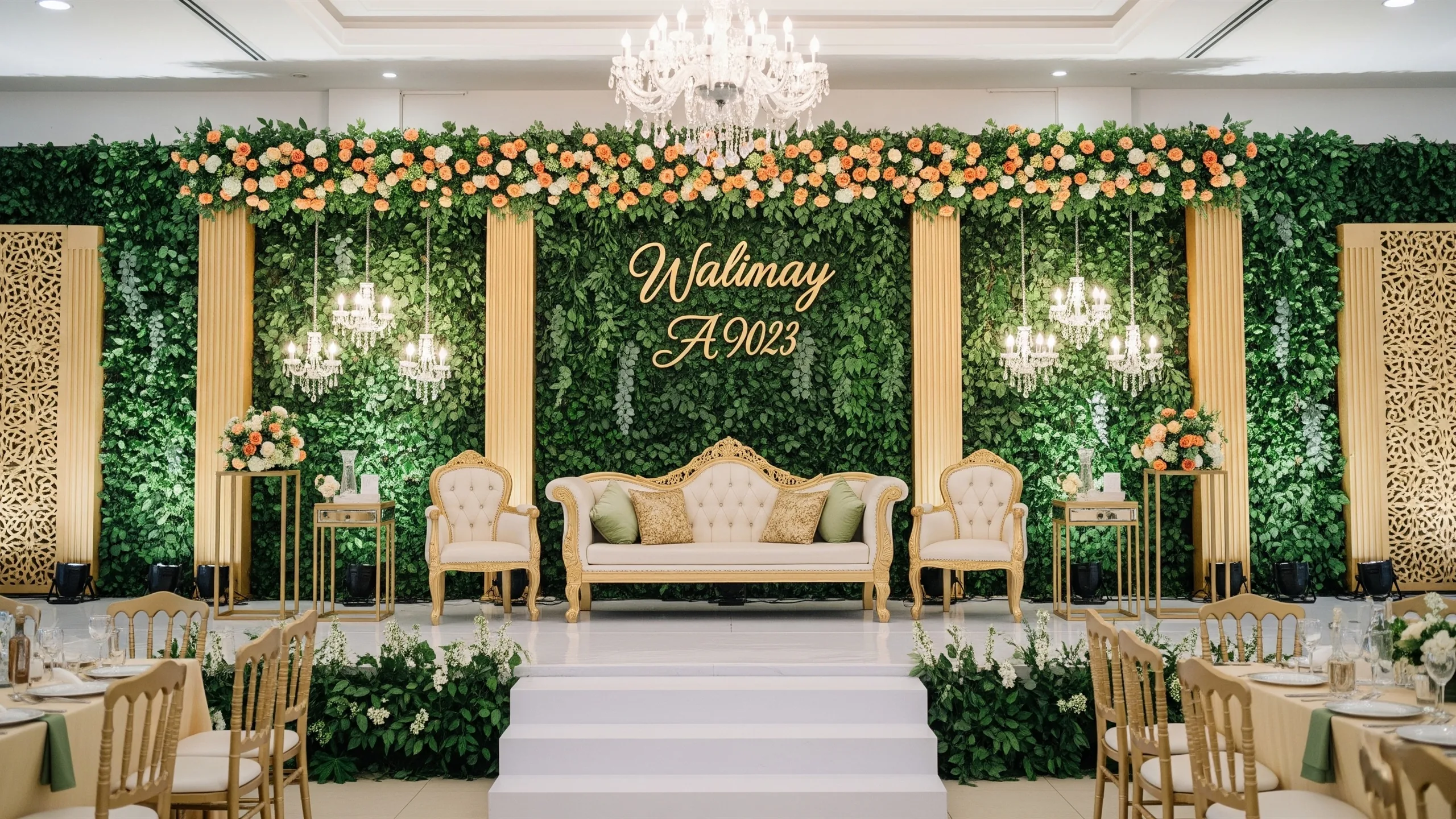
- Walima: "The Walima is the celebratory feast announcing the marriage, traditionally hosted by the groom's family. It's the most social event of the wedding — come hungry."
Dress guidance for guests (worth stating clearly)
For the Nikah, modest dress is appreciated: covered shoulders and knees for everyone; women may want to carry a dupatta or scarf if the ceremony is at a mosque. State on your site whether seating is mixed or separate so nobody is caught off guard. For the Walima, festive formal is the norm.
What else your Nikah website should include
- Schedule with maps and parking notes per venue
- Whether each event is mixed or has separate men's/women's sections
- Halal catering note (guests with dietary needs relax when they see it)
- Prayer timings/space if events overlap with namaz times — thoughtful hosts mention where guests can pray
- Travel and hotel blocks for outstation guests
- RSVP per event
- A gifting note if desired
How to build it
- Choose a Muslim/Nikah template on ShaadiPath
- Add your events — mehndi, Nikah, Walima — each with its own card
- Paste in explainers, dress guidance, and venue maps
- publish and share the link on WhatsApp
One ShaadiPath couple put it well after their Delhi Nikah: their non-Muslim guests finally understood every moment of the ceremony because of the ritual explainer section.
FAQ
Is it appropriate to have a wedding website for a Nikah?
Yes — a website is simply a better-organized invitation. Many couples include Quranic verses or Bismillah in the header, just as printed Muslim wedding cards traditionally do.
Can I include Islamic calligraphy or verses on the site?
Yes. Common choices include "Bismillah ir-Rahman ir-Raheem" at the top and verse 30:21 ("And among His signs is that He created for you spouses...") — the verse most associated with marriage.
How do I handle separate men's and women's events on the website?
Note it on each event card ("Ladies' mehndi — women and children only"). Clear is kind.
Should the Walima have its own invite?
Same website, separate event section works best — guests invited only to the Walima still see everything they need.
When should I share the link?
6–8 weeks before the Nikah for local guests; earlier if relatives are flying in.
Explain what guests need to know about the Nikah
A concise note can explain that the Nikah is the Islamic marriage contract and sacred core of the celebration. Add any family-specific seating, modesty, head-covering or phone guidance beside it.
If the legal signing, khutbah, dua or meal happen in different spaces, show the sequence instead of presenting the ceremony as one undifferentiated time block.
Clarify which family hosts each celebration
Guests unfamiliar with the tradition may not understand the relationship between the Nikah and Walima. A simple event description prevents confusion and helps them choose the appropriate timing and attire.
Use exact map pins and entrance notes for mosques, homes and banquet venues, especially when men and women may enter through different doors.
Scope, assumptions and editorial standard
This guide focuses on guest-information architecture, not religious authority. Confirm ceremony language, etiquette and ritual order with your officiant and families before publishing.
Make every detail feel considered.
Invitation, RSVP, gallery and dashboard included. Fully hosted and shareable on WhatsApp.
& Vihaan 12 · 13 · 14 December