

The Vidaai (or bidaai) is the emotional farewell at the end of a Hindu wedding, when the bride leaves her parents' home to begin life with her husband's family. The signature ritual is the bride throwing handfuls of rice and coins backwards over her head — a gesture of gratitude and prosperity for the home she grew up in. It happens right after the pheras and reception conclude, and modern families increasingly soften the goodbye rather than dramatise the tears.
The decisions that matter most
- 01
The Vidaai marks the bride leaving her parental home — the emotional close of the wedding.
- 02
The rice-and-coin throw is a thank-you to her childhood home and a wish for its prosperity.
- 03
It happens right after the pheras, often as the final function of the day.
- 04
Regions vary — the doli, the car send-off, brothers pushing the car — keep what is meaningful to you.
- 05
Modern etiquette favours a warm, dignified goodbye over performing grief for the camera.
Use the planning tool, adapt the framework to your family, and verify current prices or policies before committing.
Inside the Vidaai, step by step
The moments that make up the farewell. Adapt the order to your family and region.
Family circles the bride
After the ceremony, close family and friends gather to see the bride off; the mood turns tender.
Gratitude over the shoulder
The bride throws rice and coins backwards over her head — repaying her parents' care and wishing the home continued prosperity.
Embraces and blessings
She embraces her parents, siblings and elders; the family offers blessings for her new chapter.
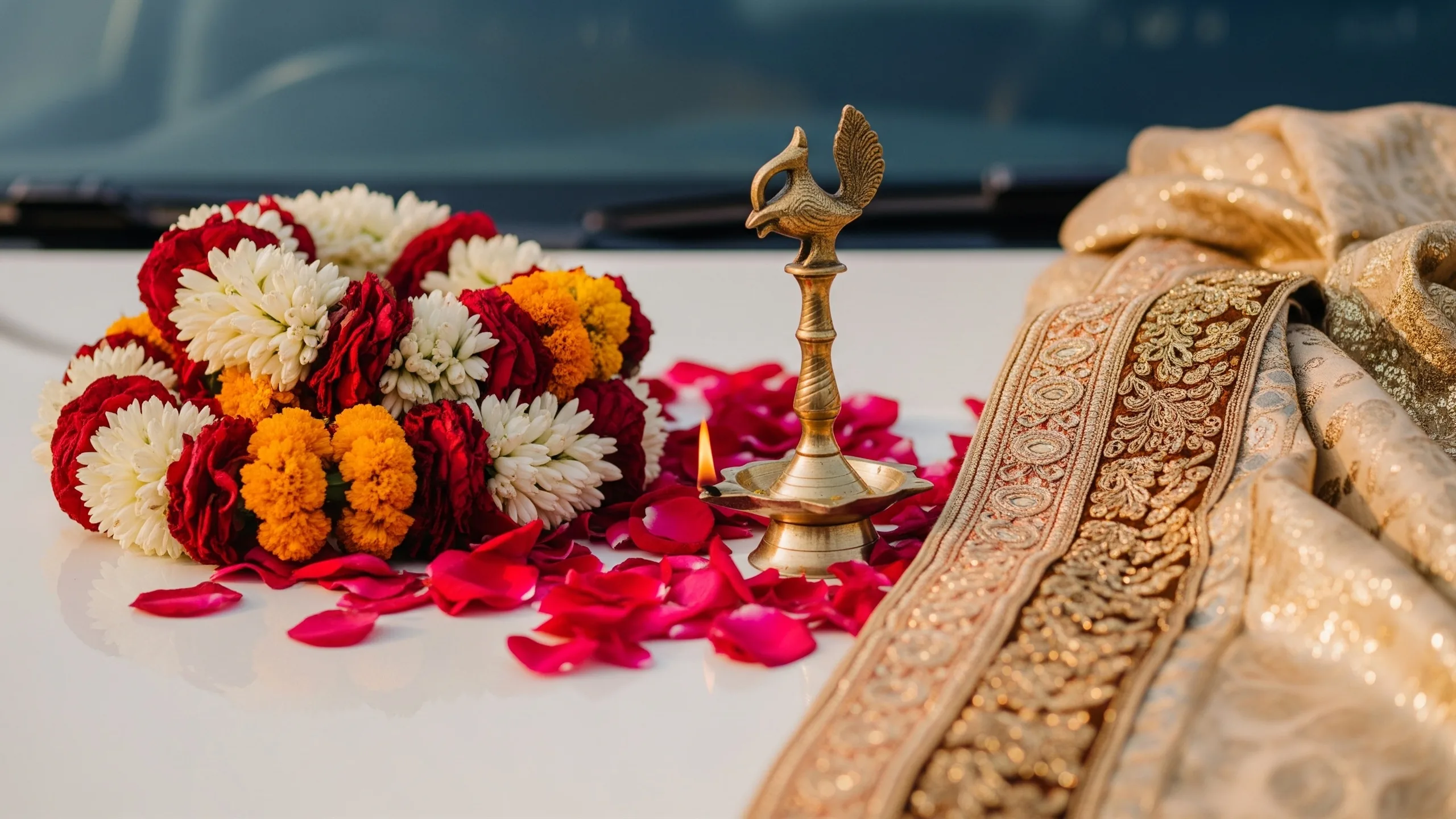
Doli or decorated car
Traditionally a doli; today a decorated car. Brothers often push it forward a few steps as a symbolic act.
What the Vidaai means
Vidaai (also written bidaai or vida) is the farewell ceremony that closes a Hindu wedding. After the vows are complete, the bride leaves her parents' home to join her husband's family. It is the most emotional moment of the day — a daughter the family has raised steps into a new life, and the household feels the weight of the goodbye.
*Tip — The emotion is real, but the ceremony is also about gratitude and blessing, not only sorrow. Framing it that way helps everyone hold the moment with grace.
Understand the surrounding ceremonies with our griha pravesh and post-wedding rituals and South Indian wedding rituals.
The rice-throwing ritual, explained
The image most associated with the Vidaai is the bride throwing handfuls of rice — often mixed with coins — backwards over her head, into her parents' hands or towards the home.
- It is a thank-you. The rice symbolises repaying her parents for everything they gave her growing up.
- It is a blessing. By scattering grain and coins, she wishes that her parental home always remains full and prosperous.
- She does not look back as she throws — a gesture of stepping forward into her new life while honouring the old one.
When the Vidaai happens
The Vidaai is the closing function. It follows the pheras (the seven rounds), and in many weddings comes after the reception, late in the night or early the next morning when the celebrations end. Because it is the final moment, families often underestimate it — but a rushed, chaotic Vidaai is a sad way to end an otherwise beautiful day.
| Stage of the day | The Vidaai's place |
|---|---|
| Pheras complete | The marriage is solemnised |
| Reception | Celebration and greetings |
| Vidaai | The farewell — the true close of the wedding |
| Griha pravesh | Arrival at the groom's home |
Regional variations to honour
The Vidaai looks different across India, and the version that matters is your family's.
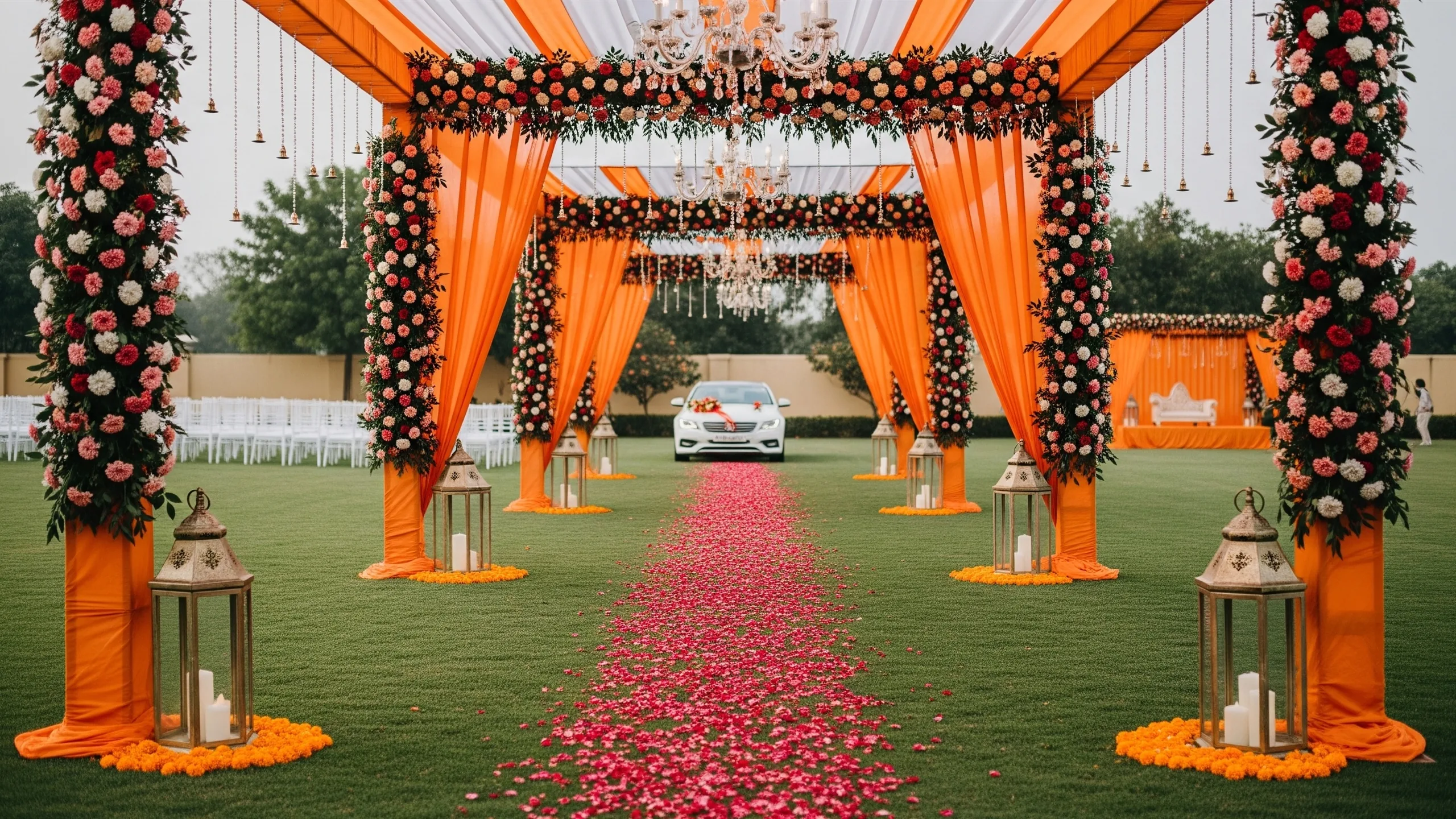
- The doli — historically the bride left in a palanquin carried by her brothers; today a decorated car usually stands in.
- Brothers pushing the car — a symbolic send-off where her brothers gently push the vehicle forward a few steps.
- Kheer or sweets — some families feed the couple something sweet before they leave, for an auspicious start.
- South Indian customs differ markedly and may not include the same rice-throwing; follow your community's practice.
Modern Vidaai etiquette
Families increasingly want the Vidaai to feel loving rather than heart-wrenching for show.
- Let emotion be genuine, not performed. There is no need to escalate tears for the camera.
- Keep it intimate. A tight circle of close family often feels more meaningful than a crowd.
- Reassure, don't dramatise. Especially with shorter distances and constant phone contact, the goodbye is a beginning, not a loss.
- Brief your photographer to capture it sensitively — candidly and without intruding.
- Mind the timing. If it falls very late, a small, calm send-off beats a chaotic one.
!A Vidaai does not have to be tearful to be moving. Many couples now choose a warm, hopeful farewell — and guests remember the dignity of it.
Helping guests understand the moment
Not every guest — especially friends from other communities, or international guests at an NRI wedding — knows what the Vidaai is or how to behave during it. A one-line explainer turns confused onlookers into respectful participants who give the family space.
FAQ
What is the Vidaai ceremony?
The Vidaai (or bidaai) is the farewell ritual at the end of a Hindu wedding, when the bride leaves her parents' home to begin married life with her husband's family. Its signature moment is the bride throwing rice and coins backwards over her head as a gesture of gratitude and a blessing of prosperity for her childhood home.
Why does the bride throw rice during the Vidaai?
The backward rice-and-coin throw symbolises repaying her parents for raising her and wishing that their home always stays prosperous and full. She traditionally does not look back as she throws, representing her step forward into a new life.
When does the Vidaai take place?
It is the closing function of the wedding, after the pheras and usually after the reception — often late at night or early the next morning when the celebrations conclude. The bride then travels to the groom's home for the griha pravesh.
Does every Indian wedding have a Vidaai?
No. It is most associated with North Indian Hindu weddings. South Indian and other communities have their own farewell customs that may differ, and interfaith or modern couples adapt or simplify the ritual. Follow your own family's tradition.
A gentle explainer beside every ritual
The Vidaai is one of the rituals guests are least likely to understand and most likely to interrupt — crowding the bride, filming intrusively, or simply not knowing to step back. A short, kind explanation changes how the whole room behaves.
On a wedding website you can place a two-line note beside the Vidaai on your schedule, so guests arrive already understanding the meaning and the etiquette. It turns a private family moment into one the whole room treats with care.
- Add a short explainer to the Vidaai event card.
- Set gentle expectations for photos and space.
- Help non-Hindu and international guests follow along respectfully.

Scope, assumptions and editorial standard
Ritual descriptions, regional variations and timings here are general editorial guidance; Hindu wedding customs differ significantly by region, community and family. This guide is not a religious authority — confirm the exact practices and order with your family elders and pandit.
Make every detail feel considered.
Help every guest understand the Vidaai with a short explainer on your wedding website.
& Vihaan 12 · 13 · 14 December