
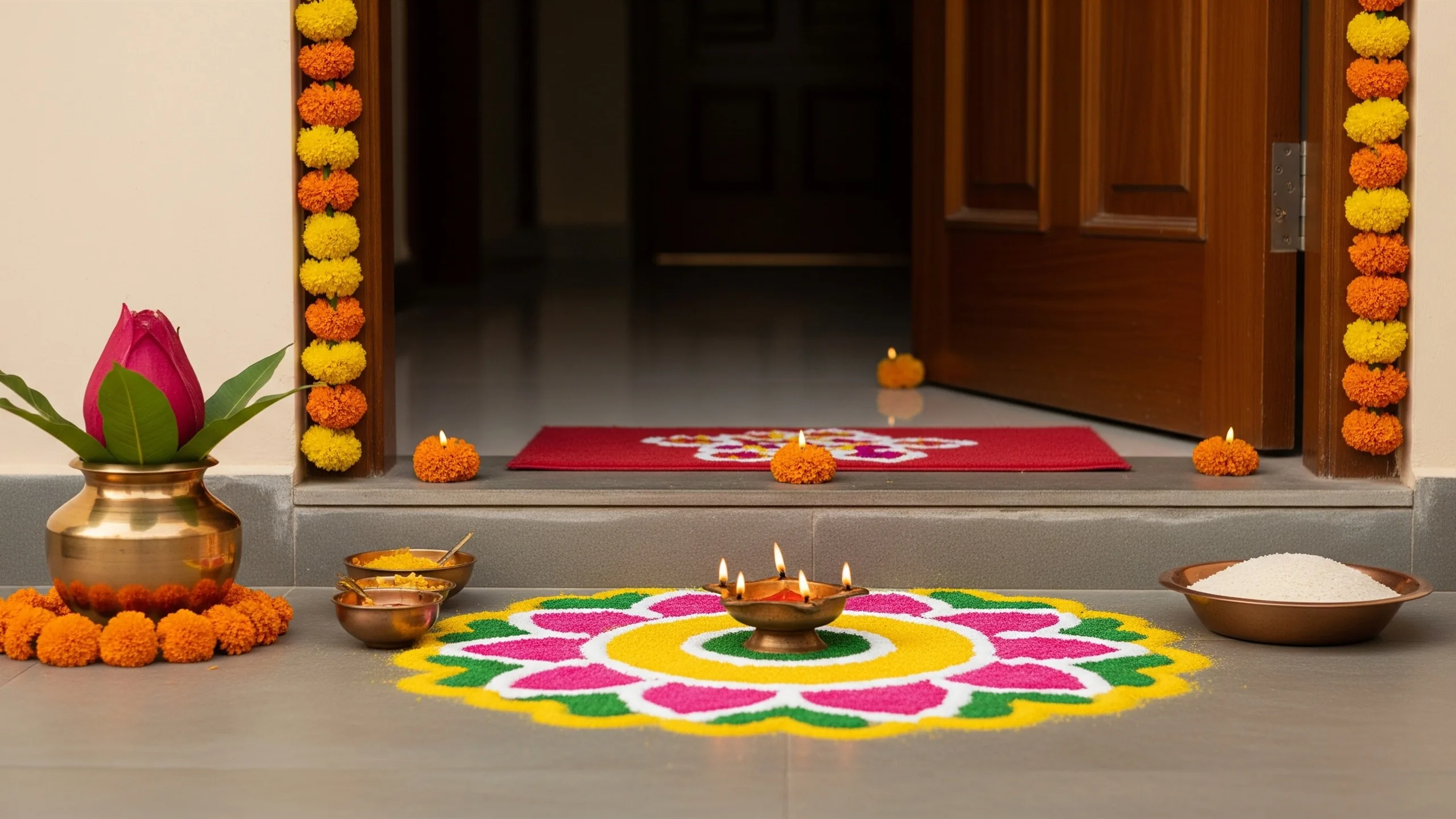
After the wedding and vidaai, the bride arrives at her new home for the griha pravesh — her ceremonial first entry, traditionally stepping in with her right foot and gently knocking over a small pot of rice as a sign of incoming prosperity. The days that follow include welcoming rituals like mooh dikhai (the family meeting the new bride), the reception, and a first visit back to her parents' home. Modern families keep what is meaningful and let go of what is not.
The decisions that matter most
- 01
Griha pravesh is the bride's ceremonial first entry into her new home after the wedding.
- 02
The rice-pot custom — knocking over a small kalash of rice with her right foot — symbolises incoming prosperity.
- 03
Mooh dikhai is the warm ritual of the new family meeting and blessing the bride.
- 04
The reception and a first visit home (pag phera) follow in the days after.
- 05
Modern families adapt these rituals — keep the meaningful ones, simplify the rest.
Use the planning tool, adapt the framework to your family, and verify current prices or policies before committing.
The post-wedding rituals, in order
What typically follows the wedding day. Customs vary by region and family.
The first entry
The bride enters her new home, traditionally right foot first, gently toppling a small pot of rice to invite prosperity in with her.
Blessings at the door
The new family welcomes her with an aarti and blessings as she crosses the threshold.
Meeting the bride
Relatives meet the new bride, often offering gifts or blessings — a warm introduction to the extended family.
Visit back home
The bride visits her parents' home shortly after the wedding, a gentle reassurance that the bond remains.
When the wedding ends, the welcome begins
The wedding day closes with the vidaai — the bride's farewell from her parents. But the rituals are not over. She then arrives at her new home, where a different set of traditions welcomes her into her married life. These post-wedding customs are gentler and more intimate than the big functions, and they carry real emotional weight.
*Tip — These rituals are about welcome and reassurance. Framed that way, even the traditional ones feel warm and relevant rather than dated.
Understand the surrounding ceremonies with our South Indian wedding rituals and honeymoon planning guide.
Griha pravesh — the first entry
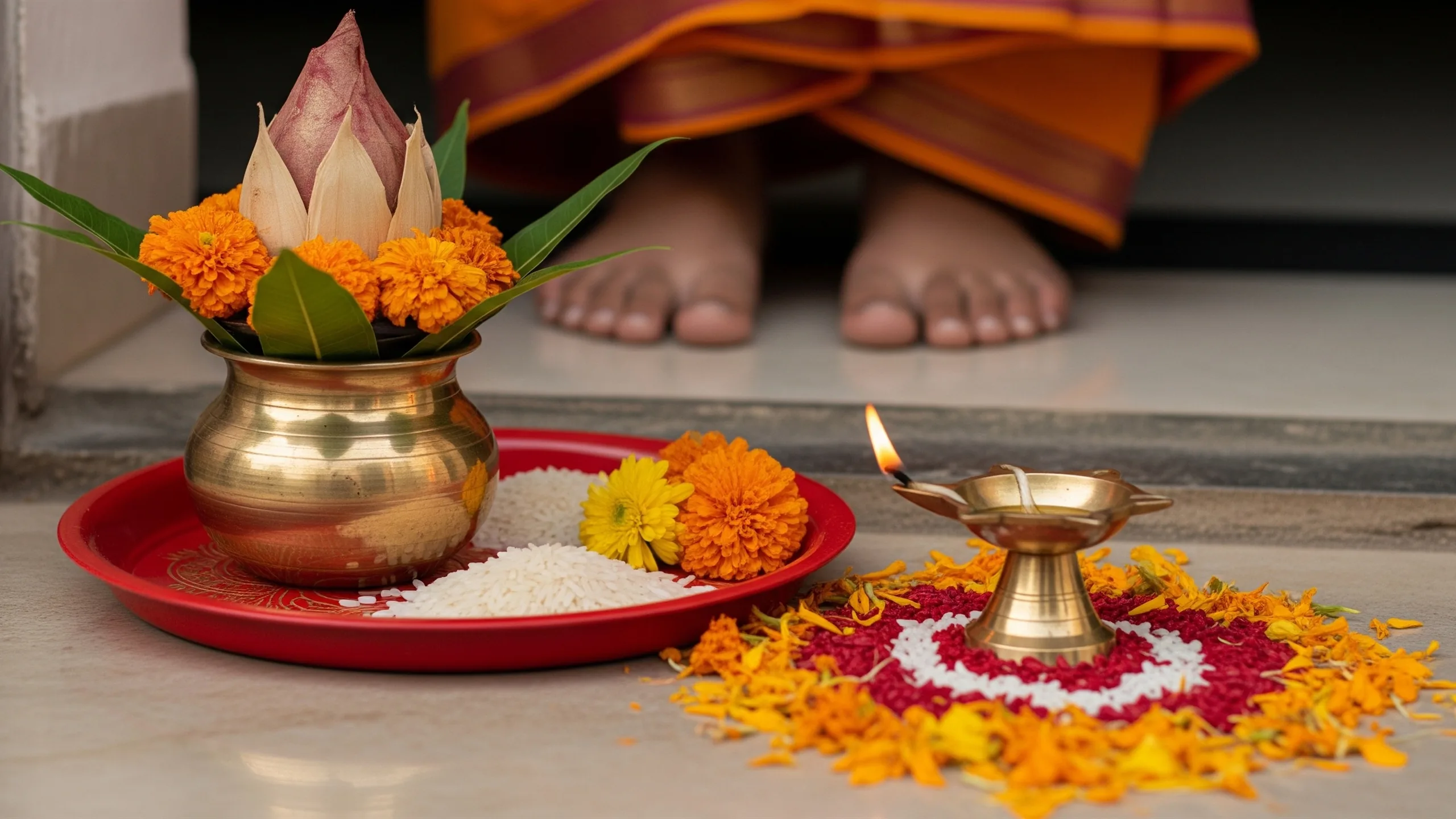
Griha pravesh is the bride's ceremonial first step into her new home. The best-known custom: she enters with her right foot first and gently knocks over a small kalash (pot) filled with rice placed at the threshold. The spilling rice symbolises Lakshmi — prosperity and abundance — entering the home along with her.
- The right foot is considered auspicious for the first step.
- The rice pot invites wealth and plenty into the household.
- An aarti and blessings often greet her at the door.
- Some families have her leave handprints or footprints in a paste, marking her arrival.
Aarti, blessings and the threshold
As the bride crosses into her new home, the family welcomes her with an aarti and blessings. It is a tender moment — she is stepping into an unfamiliar household, and the warmth of this welcome sets the tone for the relationships ahead.
Mooh dikhai — meeting the new bride
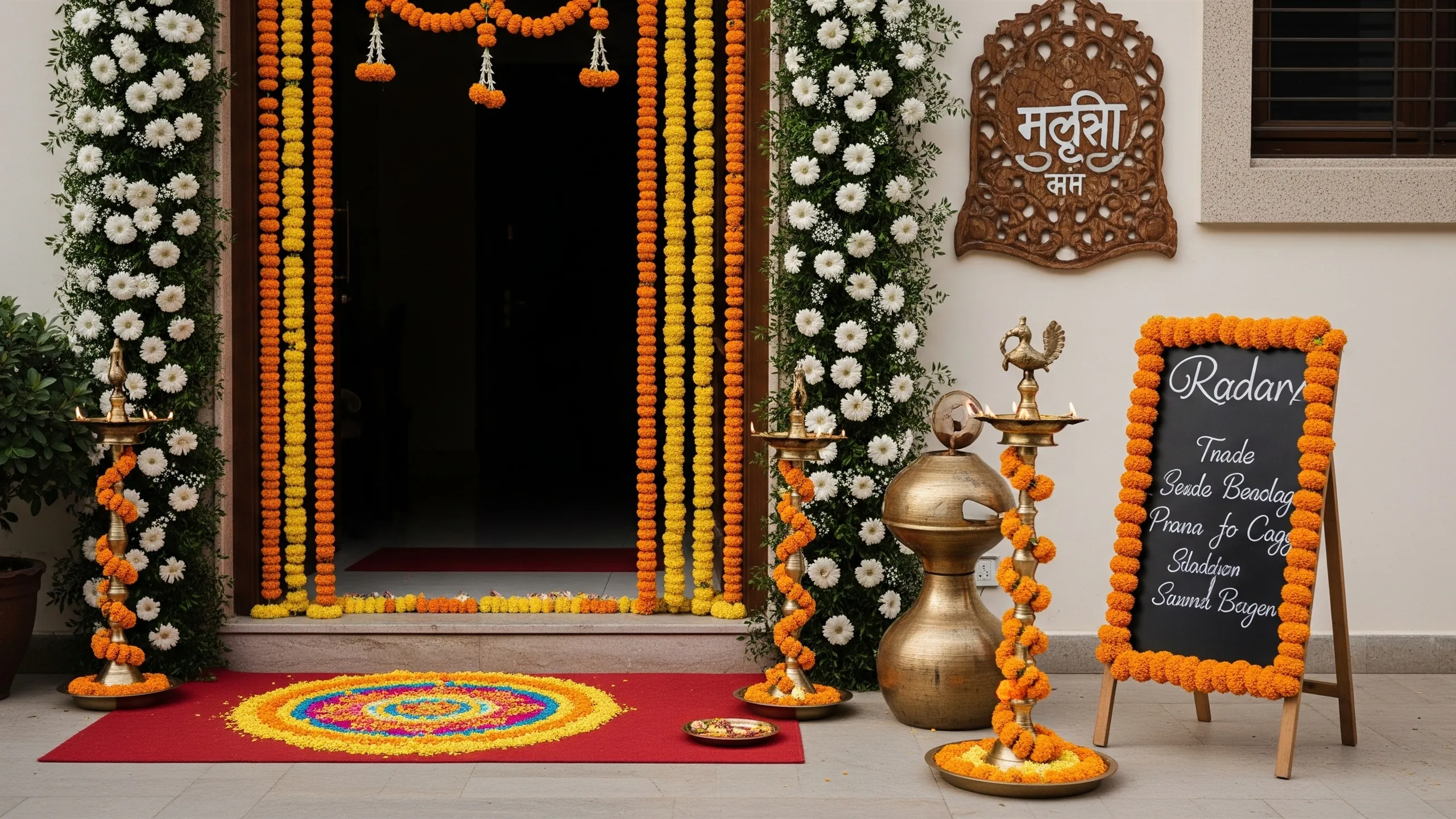
In the days after, the extended family and community come to meet the new bride in a ritual called mooh dikhai ("showing the face"). Relatives are introduced, often bringing small gifts or blessings, and the bride is welcomed into the wider family. It is a gentle, social ritual that helps her find her place.
| Ritual | Meaning |
|---|---|
| Griha pravesh | The bride's first entry into her new home |
| Mooh dikhai | The family meets and blesses the new bride |
| Reception | The couple is celebrated by the wider circle |
| Pag phera | The bride's first visit back to her parents |
The reception and pag phera
- The reception typically follows soon after, presenting the couple to the wider community.
- Pag phera is the bride's first visit back to her parents' home after the wedding — a reassurance that the bond with her family continues, and a moment of relief and joy after an emotional few days.
Modern takes on post-wedding rituals
Families increasingly adapt these customs to fit their values and circumstances.
- Keep the rituals that carry meaning for you and let go of those that do not.
- Make the welcome genuinely warm — the spirit matters more than the exact steps.
- Be sensitive to the bride's experience — she is adjusting to a new home; a kind welcome is the whole point.
- Blend traditions thoughtfully in interfaith or intercultural marriages.
The rituals that endure are the ones about welcome and reassurance. Hold onto those, and the rest can flex to your family.
FAQ
What is griha pravesh in a wedding?
Griha pravesh is the bride's ceremonial first entry into her new marital home after the wedding and vidaai. She traditionally steps in with her right foot and gently knocks over a small pot of rice at the threshold, symbolising prosperity and the goddess Lakshmi entering the home with her.
Why does the bride knock over rice during griha pravesh?
The small pot (kalash) of rice at the doorway represents Lakshmi, the goddess of wealth and prosperity. By gently toppling it with her right foot as she enters, the bride symbolically invites abundance and good fortune into her new home.
What is mooh dikhai?
Mooh dikhai, meaning "showing the face," is the ritual in which the new bride is introduced to and meets the extended family and community after the wedding. Relatives greet her, often with small gifts or blessings, welcoming her into the wider family circle.
What is pag phera?
Pag phera is the bride's first visit back to her parents' home shortly after the wedding. It reassures her that the bond with her family continues after marriage, and is usually a happy, relieving moment after the emotional vidaai and the adjustment to a new home.
Let your website live on after the wedding
Most couples think of a wedding website as something for before the day. But the post-wedding period — when the photos arrive and far-flung guests want to relive the celebration — is when it becomes a keepsake.
Keep your ShaadiPath site live after the rituals end. Add the gallery, a thank-you note to everyone who came, and it becomes a lasting record of the whole journey — from the engagement to the griha pravesh — on the same link guests already have.
- Turn the site into a post-wedding gallery and thank-you.
- Guests revisit the same link for photos and memories.
- One link tells the whole story, start to finish.
Scope, assumptions and editorial standard
Ritual descriptions and sequences here are general editorial guidance; post-wedding customs differ significantly by region, community and family. This guide is not a religious authority. Confirm the exact practices with your family elders and pandit.
Make every detail feel considered.
Keep your wedding website live as a gallery and thank-you after the celebrations.
& Vihaan 12 · 13 · 14 December