
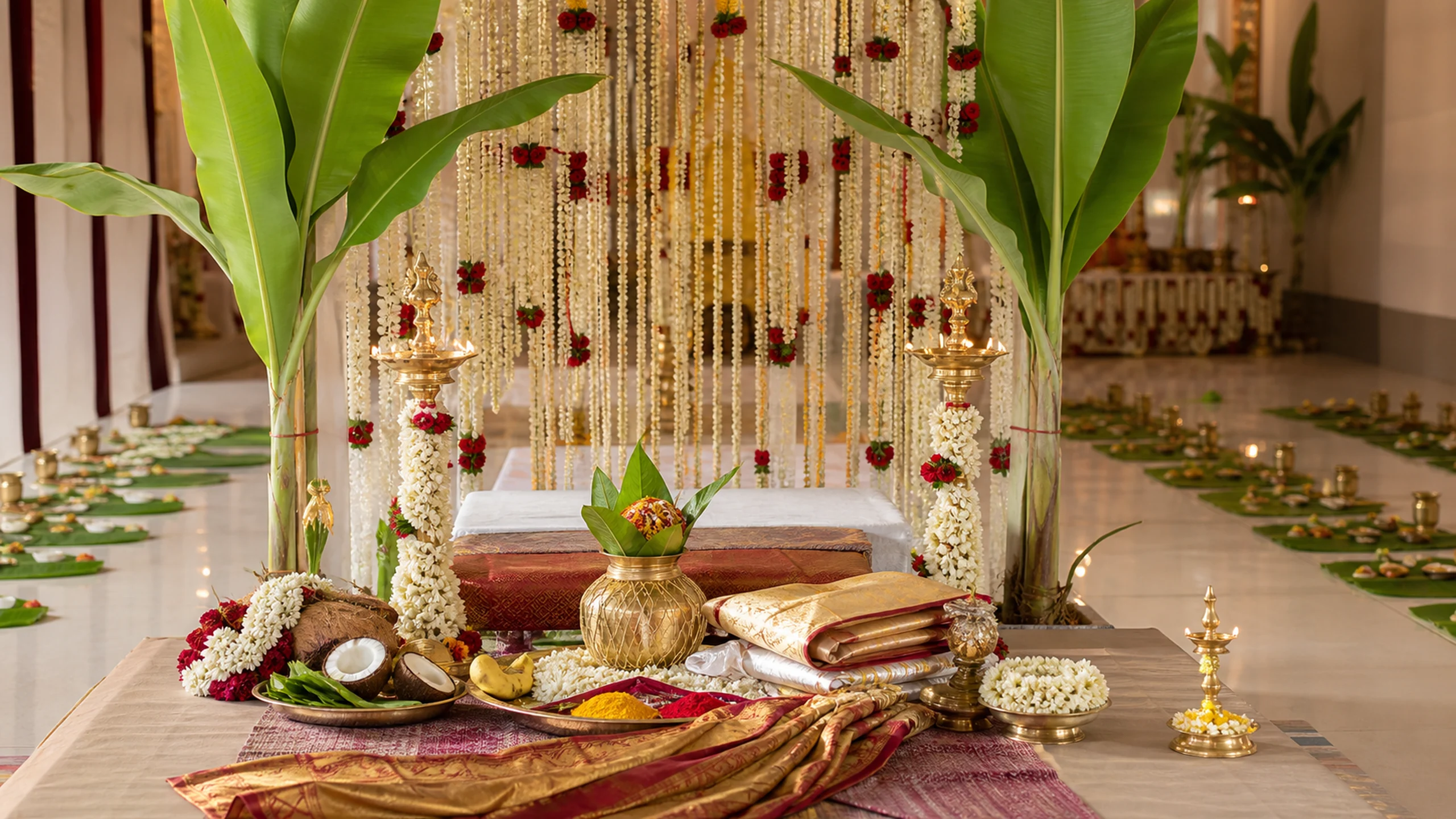
South Indian weddings are not one single format. Tamil, Telugu, Kannada and Malayali families share some Hindu ceremony ideas, but the names, sequence, music, clothing and family customs vary widely. Explain the major moments to guests: arrival and blessings, pre-ceremony family rituals, the tying of the thali or mangalsutra, sacred fire or saptapadi where followed, meal traditions and post-wedding welcomes.
The decisions that matter most
- 01
Do not describe all South Indian weddings as the same ceremony.
- 02
Ask elders or the priest for your exact sequence before publishing explainers.
- 03
Explain the thali, kanyadaan equivalents, saptapadi and meal traditions in plain language.
- 04
Tell guests when footwear, seating or photography rules matter.
- 05
Use your wedding website to make regional customs feel welcoming, not confusing.
Use the planning tool, adapt the framework to your family, and verify current prices, legal requirements or vendor policies before committing.
Regional ritual explainer map
Use this to decide what to explain to guests before the wedding day.
| Situation | Best choice | Why it works |
|---|---|---|
| Tamil wedding | Oonjal, kashi yatra, thali, saptapadi where followed | Explain the playful and sacred parts separately. |
| Telugu wedding | Jeelakarra bellam, madhuparkam, mangalsutra, saptapadi | Give guests a short meaning for each visual moment. |
| Kannada wedding | Nandi, kashi yatre, dhare herdu, saptapadi | Note regional and family variations. |
| Malayali wedding | Thalikettu, garland exchange, sadya meal | Keep the ceremony timeline clear because it can be concise. |
There is no single South Indian wedding
South Indian wedding is a convenient phrase, but it hides real diversity. A Tamil Brahmin wedding, a Telugu wedding, a Kannada wedding and a Malayali Hindu wedding can look very different in timing, music, clothing and ritual order. Even within the same language group, caste, region and family tradition change the ceremony.
The goal of a guest guide is not to flatten those differences. It is to help guests understand what they are about to witness.
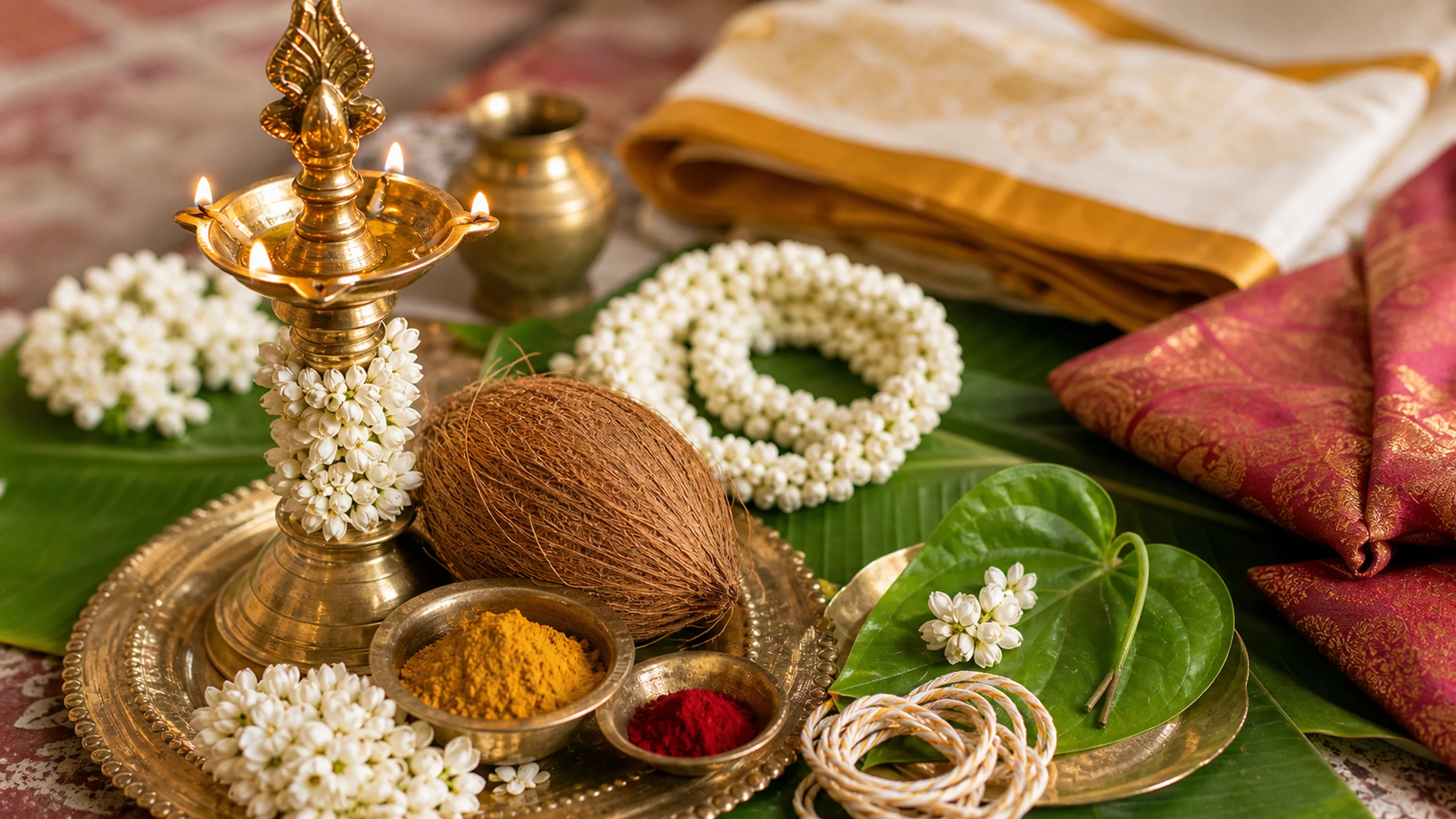
Understand the surrounding ceremonies with our griha pravesh and post-wedding rituals and vidaai ceremony guide.
Prefer to plan hands-on? Try our free ritual explainers tool.
Moments guests usually need explained
- The welcome: how the groom, bride and families are received.
- Playful pre-ceremony rituals: such as swing ceremonies or symbolic journeys, where followed.
- The sacred union moment: often the tying of the thali or mangalsutra.
- The steps or vows: saptapadi or equivalent promise-making moments where part of the tradition.
- The meal: banana leaf service, sadya or community-specific hospitality customs.
Tamil wedding notes
Tamil weddings may include rituals such as oonjal, where the couple sits on a swing and receives blessings, and kashi yatra, a symbolic playful moment involving the groom. The tying of the thali is one of the most important emotional points. Some ceremonies include saptapadi and other Vedic rituals around the sacred fire.
Telugu wedding notes
Telugu weddings are rich in visual symbolism. Jeelakarra bellam, where the couple places cumin and jaggery paste on each other's heads, represents inseparable union. Madhuparkam attire, the mangalsutra ceremony and saptapadi are among the moments guests often photograph and ask about.
Kannada and Malayali notes
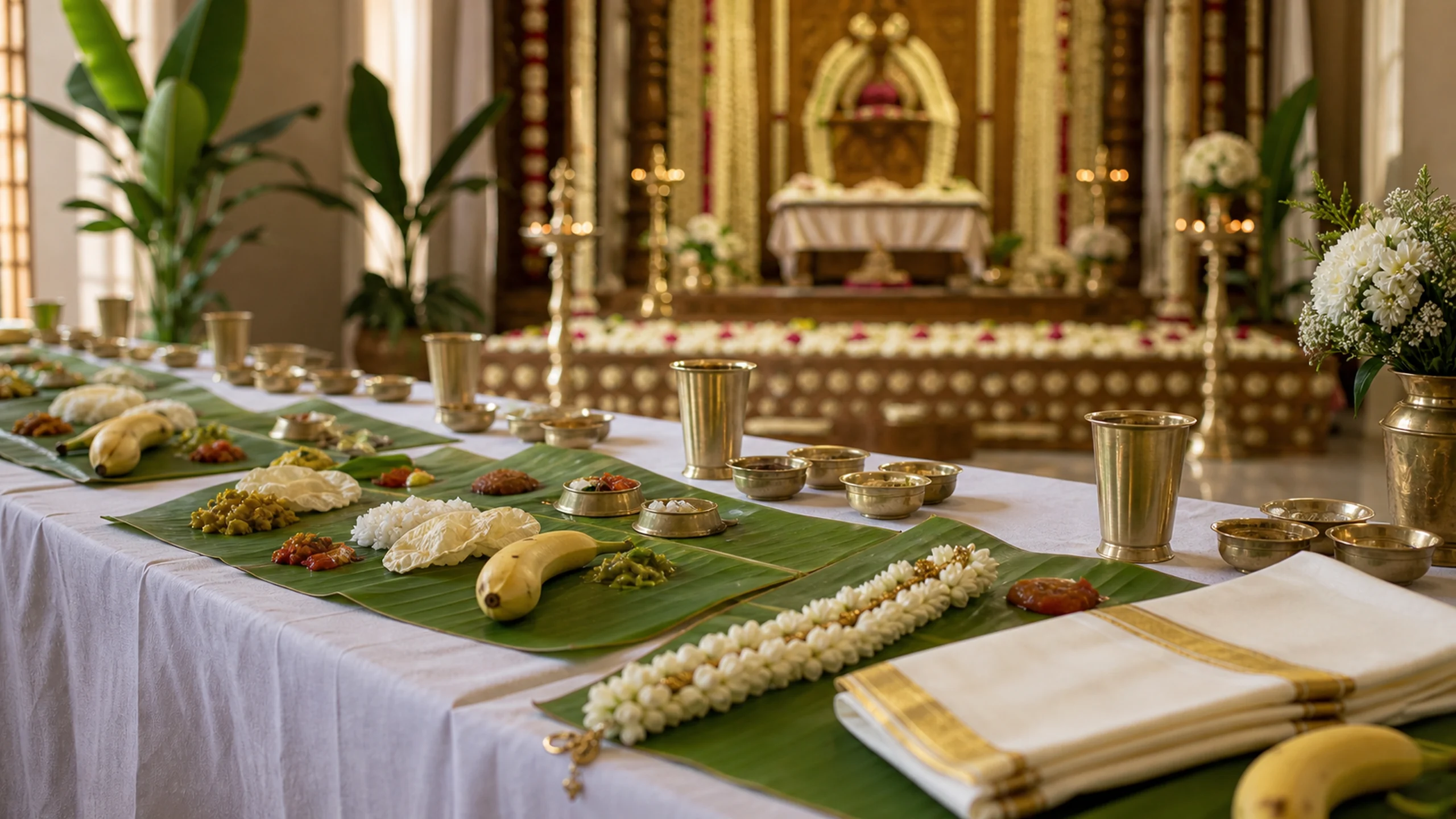
Kannada weddings may include Nandi, kashi yatre, dhare herdu and saptapadi, with regional variation. Malayali Hindu weddings are often more concise in ceremony length, with the thalikettu, garland exchange and the wedding sadya meal carrying deep cultural weight.
Because the timing and names vary, confirm your family's exact sequence before creating a printed or website explainer.
Guest etiquette to publish
- Dress modestly and festively, especially if the venue is a temple or traditional hall.
- Arrive before the muhurat or key tying ceremony, not casually after.
- Follow footwear and photography instructions if the venue has restrictions.
- Eat respectfully if served on a banana leaf: wait for cues, and do not rush the service team.
How to write ritual explainers without overexplaining
Guests do not need a textbook. They need one or two lines that help them recognize the moment when it happens. Write explainers in warm, plain language: what guests will see, what it means, and whether they should stand, stay quiet, take photos or simply watch.
For mixed-family weddings, ask both sides to review the wording before publishing. Ritual language can be sensitive, and a small correction from an elder is easier before the website goes live than after guests have read it.
FAQ
Are all South Indian weddings the same?
No. Tamil, Telugu, Kannada and Malayali weddings have distinct rituals and many family-specific variations.
What is the thali ceremony?
The thali or mangalsutra tying is a central wedding moment in many South Indian Hindu weddings, symbolizing the marital bond.
What should guests wear?
Festive Indian wear is safest. Sarees, lehengas, salwar suits, kurta sets and traditional menswear work well, with modest choices for temple settings.
Should we explain rituals on the wedding website?
Yes. Short, respectful explainers help guests from other communities follow the ceremony without interrupting elders or the priest.
Scope, assumptions and editorial standard
This guide is written for Indian couples and families planning multi-event weddings. It combines practical planning patterns, cultural nuance and current product use cases. Legal and ritual guidance is general; verify exact requirements with the relevant authority, priest, family elders or vendors.
Make every detail feel considered.
Give guests one polished place for the invitation, RSVP, schedule, maps and updates.
& Vihaan 12 · 13 · 14 December