
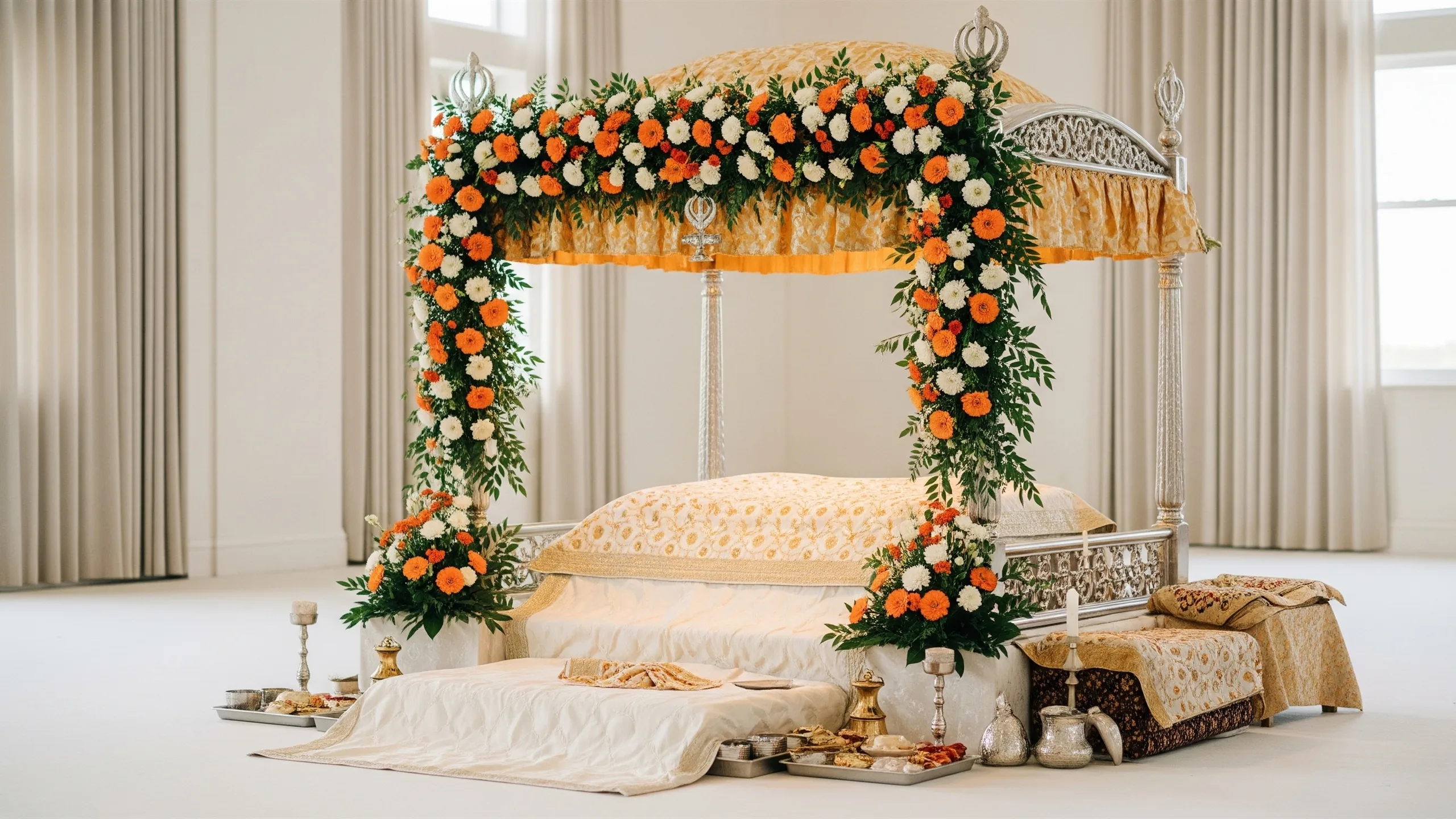
An Anand Karaj wedding website should explain gurdwara etiquette to guests (head covering, no shoes, sitting on the floor, no alcohol on premises), lay out the full event schedule — typically mehndi, jaago/sangeet, the Anand Karaj ceremony, and reception — and include short explainers of the laavan and other rituals. ShaadiPath has Sikh wedding templates, and your site can be live in about 10 minutes.
The decisions that matter most
- 01
Put gurdwara etiquette before decorative content.
- 02
Explain the four laavan briefly and respectfully.
- 03
Separate the gurdwara ceremony from reception logistics.
Use the planning tool, adapt the framework to your family, and verify current prices or policies before committing.
Anand Karaj website section planner
Mehndi
Timing · venue · map · dress code · RSVP · short explainer
Jaago or Sangeet
Timing · venue · map · dress code · RSVP · short explainer
Milni
Timing · venue · map · dress code · RSVP · short explainer
Anand Karaj
Timing · venue · map · dress code · RSVP · short explainer
Langar
Timing · venue · map · dress code · RSVP · short explainer
Reception
Timing · venue · map · dress code · RSVP · short explainer
Why gurdwara etiquette belongs front and center
The Anand Karaj ("ceremony of bliss") takes place in a gurdwara before the Guru Granth Sahib, and many of your guests — colleagues, friends from other communities, even some family — may never have attended one. Two minutes of reading on your website prevents awkward moments at the door:
- Head covering required for everyone — men and women. Scarves are usually available at the entrance, but mentioning it lets guests bring their own.
- Shoes off before entering the prayer hall; socks are fine.
- Seating is on the floor, traditionally men on one side and women on the other; elderly guests can usually sit on chairs at the back — say so if your gurdwara provides them.
- No alcohol, tobacco, or intoxicants anywhere on gurdwara premises.
- Modest dress — shoulders and knees covered.
- The ceremony is usually in the morning and lasts 1–2 hours, followed by langar (a free community meal everyone shares, seated together).
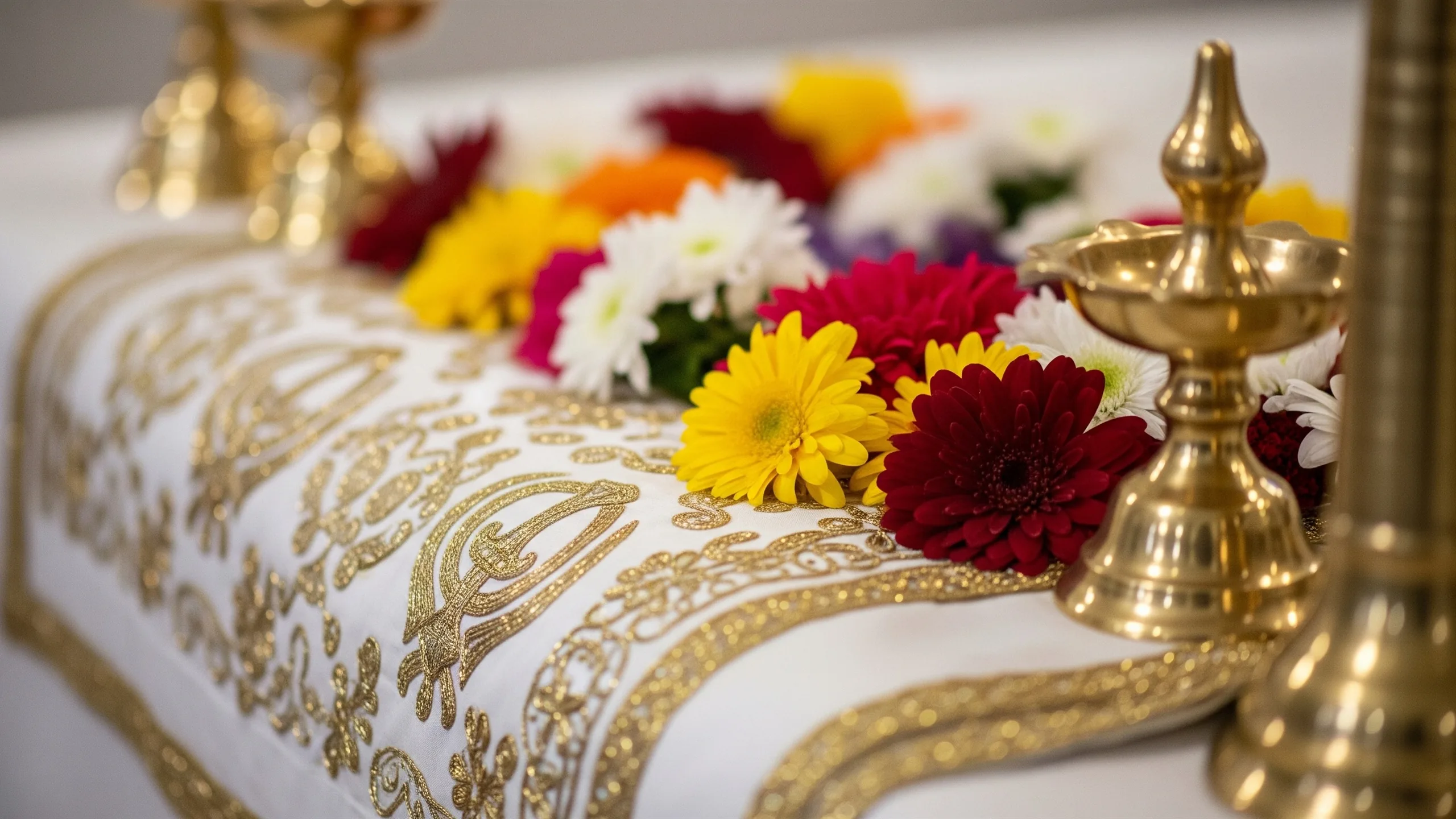
Build a wedding website guests will love with our fusion and interfaith wedding website guide and Indian wedding rituals explained.
Events to include
| Event | What it is | Guest notes |
|---|---|---|
| Mehndi | Henna celebration | Festive, often combined with ladies' sangeet |
| Jaago / Sangeet | Night of song and dance; the jaago pot is carried and lit | The big party night — bhangra, gidda, boliyan |
| Choora ceremony | The bride's maternal uncle gifts her the red-and-white bangles | Usually intimate/family |
| Anand Karaj | The wedding ceremony at the gurdwara | Morning; etiquette above applies |
| Langar | Community meal after the ceremony | All guests eat together, seated in rows — a beautiful equalizer |
| Reception | Evening celebration | Festive formal; this is where the party (and the drinks, if any) happens — off gurdwara premises |
Ritual explainers to include (adapt freely)
- Milni: "Before the ceremony, the two families formally meet and exchange garlands and hugs — matched pairs of relatives (father with father, uncle with uncle) greet one another."
- Ardas & Kirtan: "The ceremony opens with prayer and hymns sung by raagis. Guests sit and listen; joining the responses is welcome but not expected."
- Palla: "The bride's father places the palla (a sash) from the groom's shoulder into the bride's hands — symbolizing her entrusted journey alongside him."
- The Four Laavan: "The heart of the Anand Karaj. Four hymns composed by Guru Ram Das are sung, and after each, the couple walk slowly around the Guru Granth Sahib. Each laav represents a stage of love and union — duty, selfless love, detachment from ego, and harmony of the soul. After the fourth laav, the couple are married."
- Karah Prasad: "A sweet blessed offering distributed to everyone at the end — receive it in cupped hands."
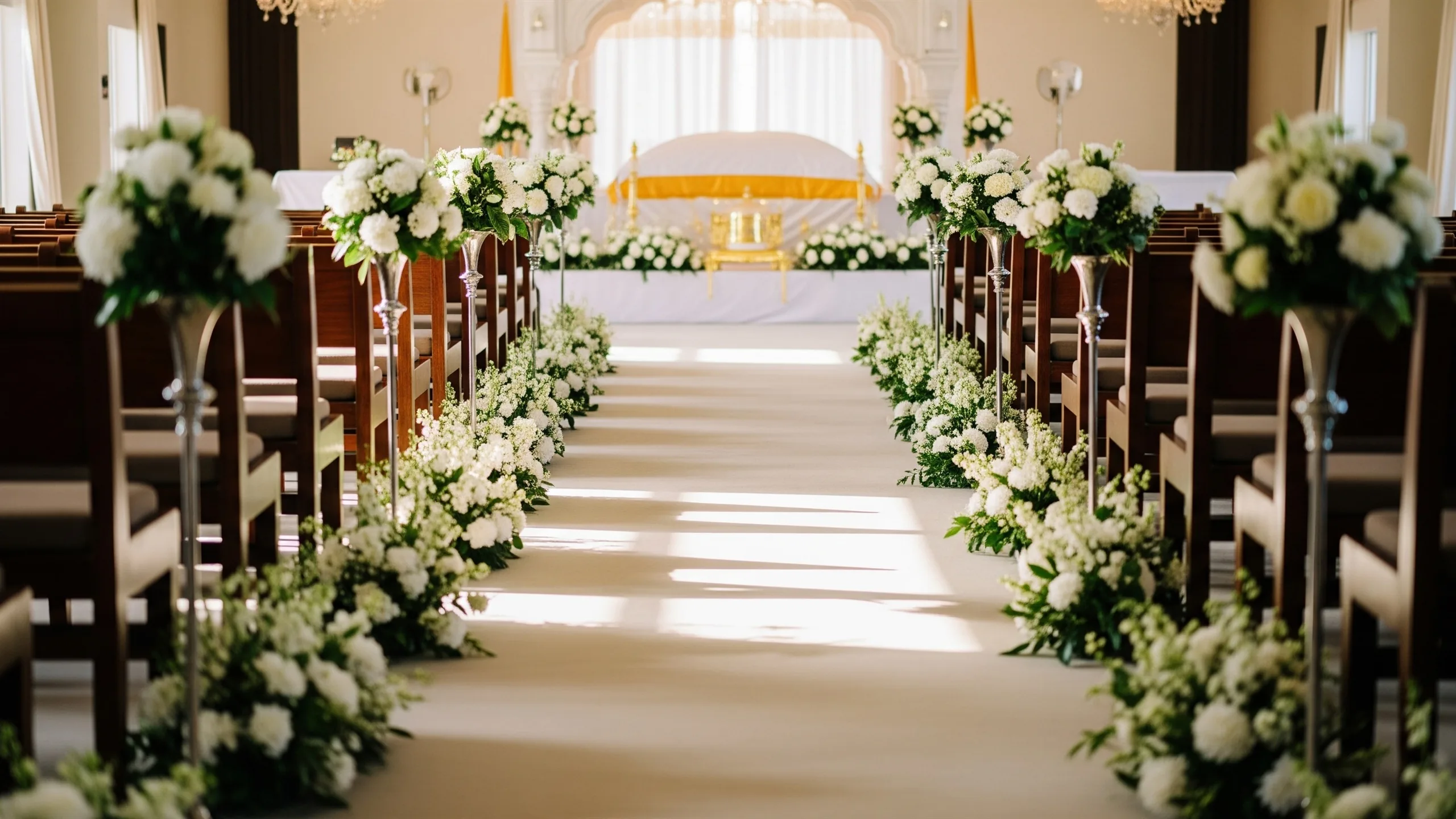
What else your Anand Karaj website should include
- Gurdwara name, address, map, and parking notes
- Timing guidance ("Ceremony begins 10 AM sharp — gurdwaras run on time")
- Whether langar follows and roughly when guests will eat
- Reception venue (separate card with its own dress code)
- Travel/hotels for outstation and NRI guests — Sikh weddings often have large overseas contingents
- RSVP per event
How to build it
- Pick a Sikh wedding template on ShaadiPath
- Add event cards: mehndi, jaago, Anand Karaj, reception
- Paste in the etiquette section and laavan explainer
- publish; share on WhatsApp — couples report finishing in 10–15 minutes
FAQ
Can non-Sikh guests attend an Anand Karaj?
Absolutely — everyone is welcome in a gurdwara, which is exactly why an etiquette explainer on your website is so valuable.
What should guests wear to an Anand Karaj?
Modest festive wear with shoulders and knees covered, plus a head covering. Indian wear (suits, kurtas) is the easy choice but not mandatory.
Is photography allowed in the gurdwara?
Usually yes for the couple's photographers, with restrictions near the Guru Granth Sahib. Tell guests whether personal photography is okay — many gurdwaras prefer phones away during kirtan.
How long is the ceremony?
Typically 1–2 hours including kirtan, the laavan, ardas, and prasad — then langar.
Why is the reception at a different venue?
Gurdwara premises don't permit alcohol or DJ-style parties, so the evening reception happens at a banquet hall or hotel.
Prevent uncertainty at the gurdwara door
Tell every guest that heads are covered, shoes are removed and the prayer hall uses floor seating. Mention whether scarves are provided and where elderly guests can request seating support.
Add the correct entrance, parking and arrival buffer. Guests should have time to store shoes and settle before the ceremony begins.
Describe the laavan without turning the page into a lecture
A short introduction can explain that the couple circles the Guru Granth Sahib during four hymns that describe a spiritual journey. Use language approved by the family or granthi if you include deeper interpretation.
Photography and movement guidance should be explicit. Guests often act more respectfully when they understand the reason behind a request.
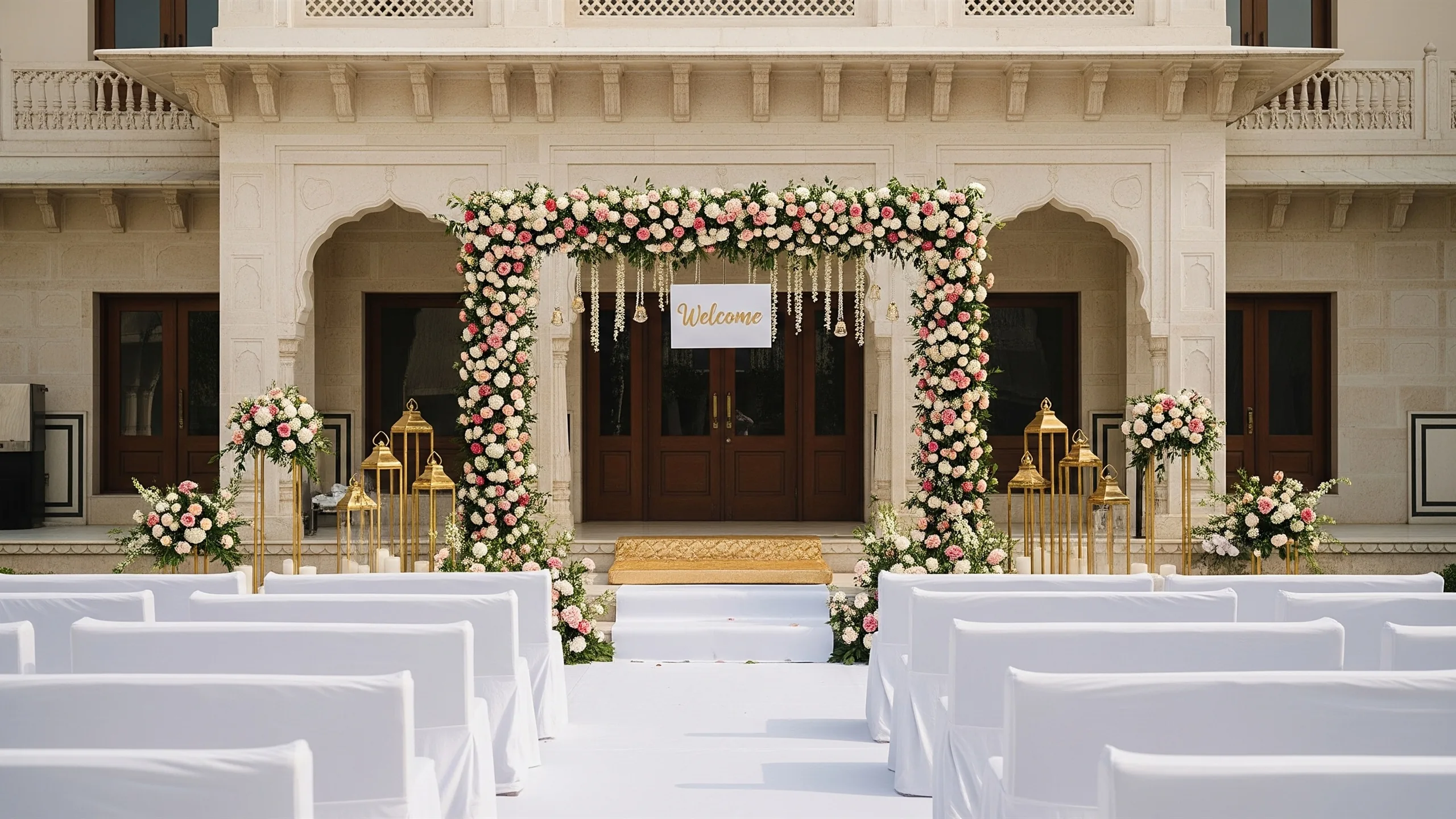
Scope, assumptions and editorial standard
This guide focuses on guest-information architecture, not religious authority. Confirm ceremony language, etiquette and ritual order with your officiant and families before publishing.
Make every detail feel considered.
Invitation, RSVP, gallery and dashboard included. Fully hosted and shareable on WhatsApp.
& Vihaan 12 · 13 · 14 December