
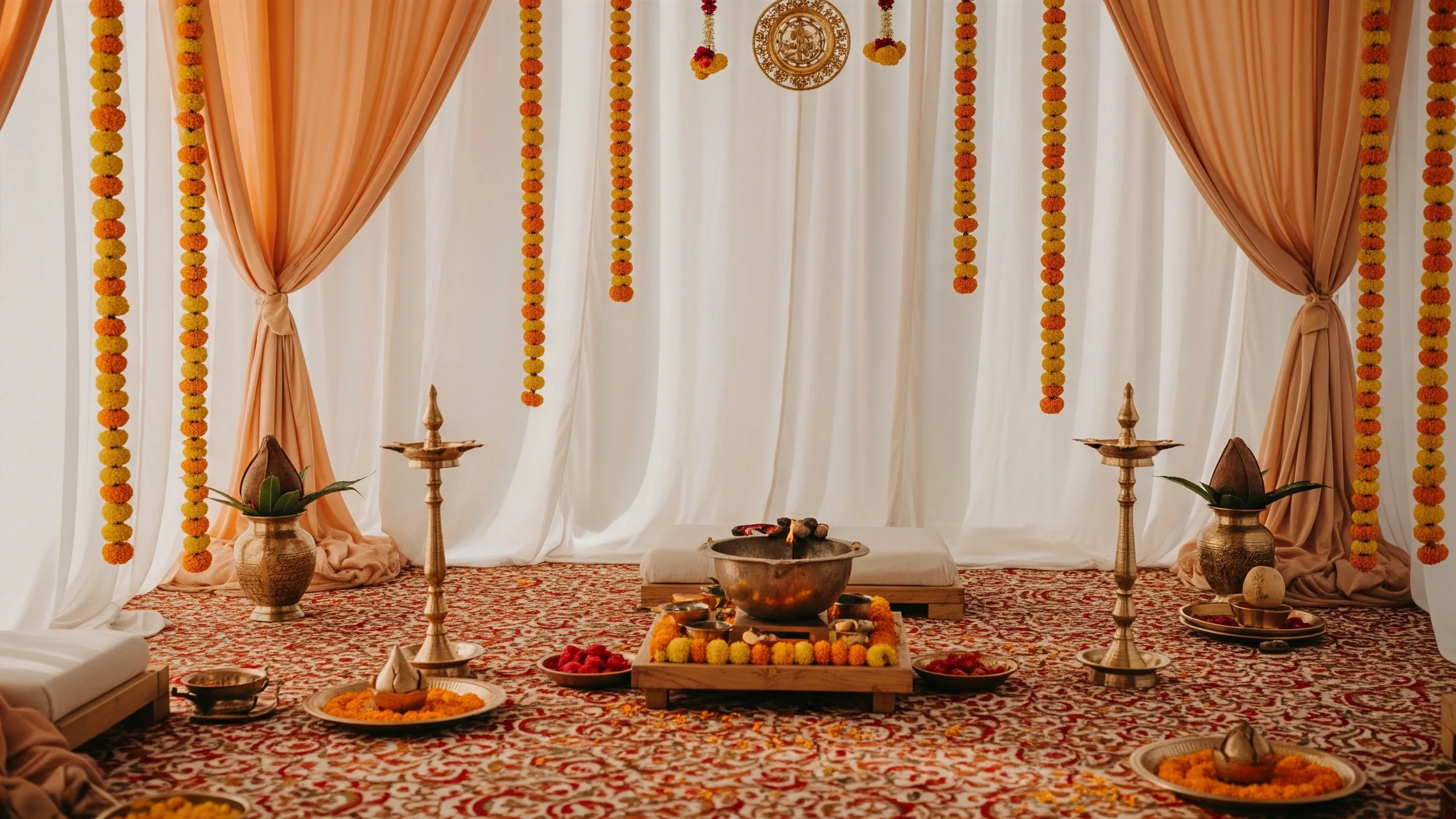
Hindu wedding muhurats cluster in two big windows each year — roughly late January to early July, and again from mid-November to mid-December — and pause during Chaturmas (around mid-July to mid-November) and Kharmas. A muhurat is calculated from the couple's birth charts, the tithi, nakshatra and planetary positions, so always confirm your exact date and time with a pandit using your own kundli. Treat any printed list as indicative, not final.
The decisions that matter most
- 01
A muhurat is personal — it is calculated from the couple's birth details, not just a calendar.
- 02
Two broad seasons carry most dates: spring–early summer and a short late-November to mid-December window.
- 03
Chaturmas and Kharmas are traditionally avoided, so dates thin out for months — plan around them.
- 04
Peak muhurat days mean vendor and venue scarcity — book 9–12 months ahead or pay a premium.
- 05
Always verify the final date and time with your pandit against your own kundli before committing anything.
Use the planning tool, adapt the framework to your family, and verify current prices or policies before committing.
When the muhurats fall
A season-by-season feel for the year. Use it to plan, then confirm exact dates with your pandit.
Cool-season peak
Pleasant weather and a strong run of vivah muhurats. Books out fastest for premium venues.
Summer window
Many auspicious dates before the monsoon; heat planning matters for daytime functions.
Chaturmas pause
Traditionally few or no wedding muhurats. Good for engagements, roka and planning, not the wedding itself.
Festive finish
A short, intense burst of popular dates after Dev Uthani Ekadashi — extremely high demand.
What a wedding muhurat actually is
A vivah muhurat is not a date someone picks off a poster. It is an auspicious window calculated from the panchang — the Hindu almanac — combined with the bride's and groom's birth charts (kundli). A pandit weighs the tithi (lunar day), the nakshatra (star), the day of the week, the position of Jupiter and Venus, and the couple's horoscopes to find a time when the planetary energies are considered favourable for a lifelong union.
*Tip — Because it depends on your kundli, two couples marrying in the same month can get very different "best" dates and times. There is no single universal list that is correct for everyone.
Keep the planning on track with our 12-month wedding planning timeline, wedding pandit booking guide, and monsoon and winter wedding planning.
The two big seasons most dates fall in
Across a typical year, the bulk of Hindu wedding dates concentrate into two broad stretches:
| Window | Rough timing | Why couples like it |
|---|---|---|
| Cool spring to early summer | Late January to early July | Comfortable weather, long run of muhurats, strong festive energy |
| Festive finish | Mid-November to mid-December | The "season" reopens after Chaturmas; short but very popular |
These are indicative seasons, not guarantees — the exact auspicious days inside them shift every year with the lunar calendar.
Why the calendar goes quiet: Chaturmas and Kharmas
Two periods traditionally pause weddings, which is why dates seem to disappear for months:
- Chaturmas — roughly mid-July to mid-November, the four holy months when Lord Vishnu is believed to rest. Weddings are traditionally avoided; the season reopens around Dev Uthani Ekadashi.
- Kharmas (Malmas) — when the Sun transits Sagittarius and Pisces (around mid-December to mid-January, and a stretch in March–April). Auspicious ceremonies are typically deferred.
!Do not assume a long gap in muhurats is a mistake. Chaturmas and Kharmas genuinely thin the calendar — if your only workable date lands inside one, talk to your pandit about alternatives rather than forcing it.
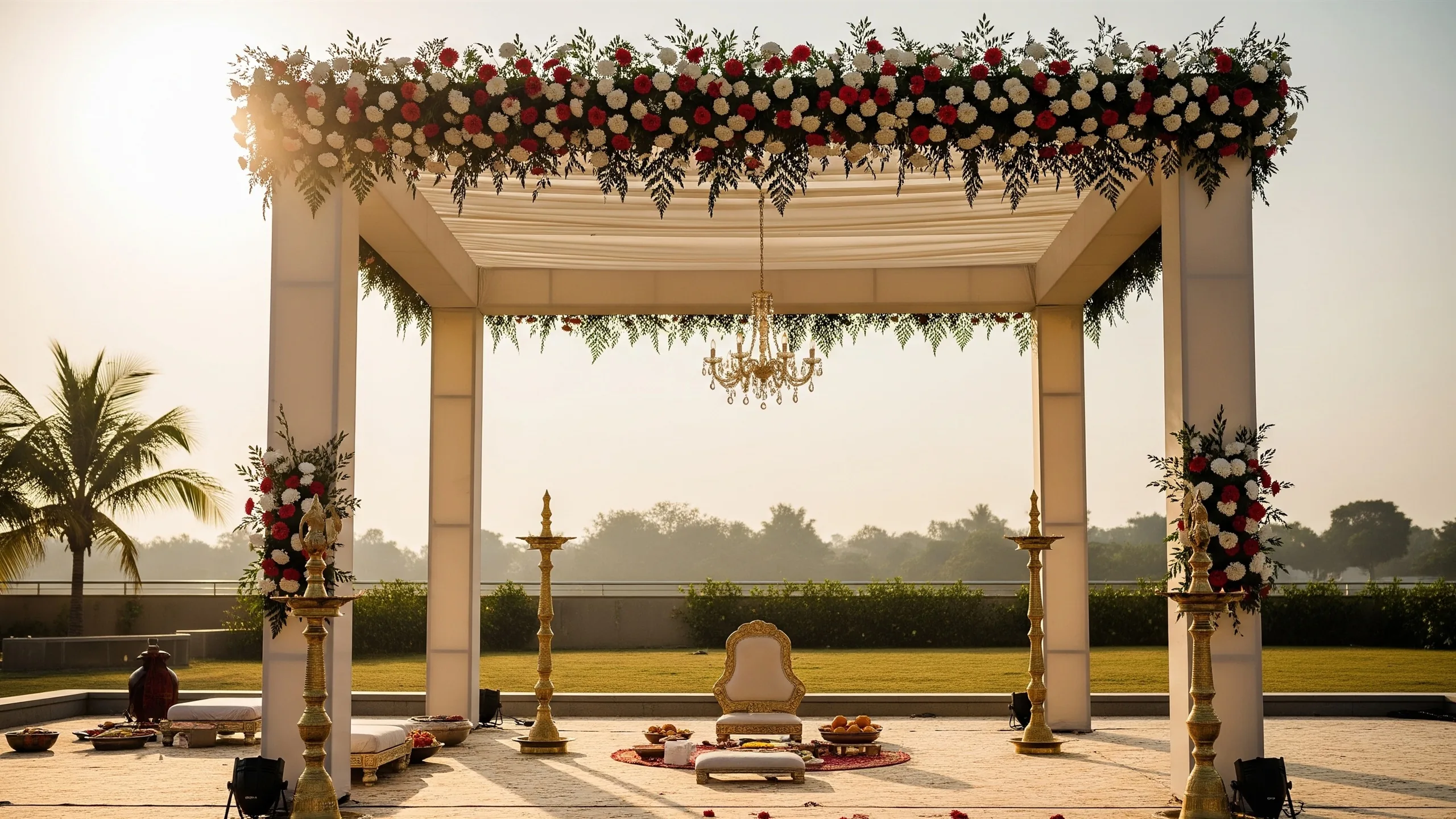
How to lock your own date — the right order
- Share both kundlis with your pandit as early as possible, ideally 12+ months out.
- Ask for three or four candidate dates, not one — flexibility is leverage with venues and vendors.
- Check each candidate against real-world constraints: long weekends, school holidays, and when out-of-town family can travel.
- Confirm the exact lagna (ceremony time), because the pheras window can be early morning or late night and that drives your whole timeline.
- Only then book the venue and big-ticket vendors, working backwards from the confirmed muhurat.
Planning around peak muhurat days
The most auspicious dates are the same ones every family wants, so they behave like a sellers' market.
- Book 9–12 months ahead for premium venues on prime dates; the best photographers and caterers go first.
- A slightly off-peak muhurat can save money and widen your choice of vendors dramatically.
- Build travel buffers — peak dates clog flights and hotels in popular wedding cities.
- Expect "saya" / clustered dates where dozens of weddings happen on one day; confirm your vendors are not double-booked in writing.
Keep the confirmed date in one trusted place
Once the muhurat is fixed, the date and ceremony time become the single most-asked question from guests — and the most expensive thing to get wrong on a printed card if anything shifts. A wedding website lets you publish the confirmed date, the lagna time, and the full multi-day schedule in one link you can update instantly if the pandit refines the timing.
FAQ
How are Hindu wedding muhurat dates decided?
A pandit calculates them from the panchang — the tithi, nakshatra, weekday and planetary positions — combined with the bride's and groom's birth charts. The goal is a time when the planetary influences, especially Jupiter and Venus, are considered favourable. Because it uses your kundli, the ideal date and time are personal to each couple.
Which months have the most wedding dates in 2026 and 2027?
Most auspicious dates fall between late January and early July, and again in a short window from mid-November to mid-December. The exact days change each year with the lunar calendar, so confirm with your pandit before fixing anything.
Why are there no wedding dates for several months?
Two traditional periods pause weddings: Chaturmas (around mid-July to mid-November) and Kharmas/Malmas (around mid-December to mid-January). During these, auspicious vivah muhurats are largely unavailable, which is why the calendar goes quiet.
Can we get married without a muhurat?
Yes — many couples, especially for court marriages, interfaith and destination weddings, choose a convenient date instead. A muhurat is a tradition, not a legal requirement. If tradition matters to your family, a pandit can still suggest a favourable time within a date you have already chosen.
Turn the muhurat into a guest-ready schedule
The hardest part of a confirmed muhurat is not finding it — it is making sure every guest, especially those travelling, sees the same correct date and ceremony time. Printed cards freeze the moment they are sent; a refined lagna time or a venue change then means hundreds of phone calls.
A wedding website holds the live truth. Publish the muhurat date, the exact pheras time and the full sequence of functions, and update it the instant anything changes — everyone sees the latest version on the same link.
- Show the confirmed date and lagna time prominently above the schedule.
- List every function with its own timing, venue and map.
- Update once and reach every guest instantly if the pandit refines the time.
Scope, assumptions and editorial standard
The seasonal windows, Chaturmas and Kharmas timings described here are general editorial guidance based on how the Hindu lunisolar calendar typically behaves; exact auspicious dates and times vary every year and by region, tradition and individual horoscopes. This guide does not publish specific muhurat dates because a valid muhurat must be calculated from the couple's own kundli. Always confirm your date and ceremony time with a qualified pandit before making any booking.
Make every detail feel considered.
Got your muhurat? Publish the date, time and full schedule on one beautiful link.
& Vihaan 12 · 13 · 14 December